The long-simmering rivalry between two of New Orleans’ most iconic hip-hop empires has finally been laid bare, with Cash Money Records co-founder Bryan “Birdman” Williams delivering a bombshell revelation about the true nature of the decades-long cold war with No Limit Records and its founder, Percy “Master P” Miller. In a candid and explosive interview, Birdman detailed for the first time the exact moment he claims Master P actively sabotaged Cash Money’s rise to national prominence, a move that he says permanently fractured any potential for collaboration and cost him a level of respect for his fellow New Orleans native that he has never fully regained. The stunning admission comes just as the two legendary labels prepare to unite for a historic joint tour, a reconciliation that Birdman admits is both a professional milestone and a deeply personal journey through a complicated past.
The revelation centers on a pivotal, previously undisclosed meeting that took place during the mid-1990s, a time when both Cash Money and No Limit were vying for the attention of major record labels. According to Birdman, Cash Money had secured a meeting with a West Coast-based label, a potential deal that could have changed the trajectory of the entire Magnolia Projects-bred roster. However, the deal was abruptly and inexplicably killed at the eleventh hour.
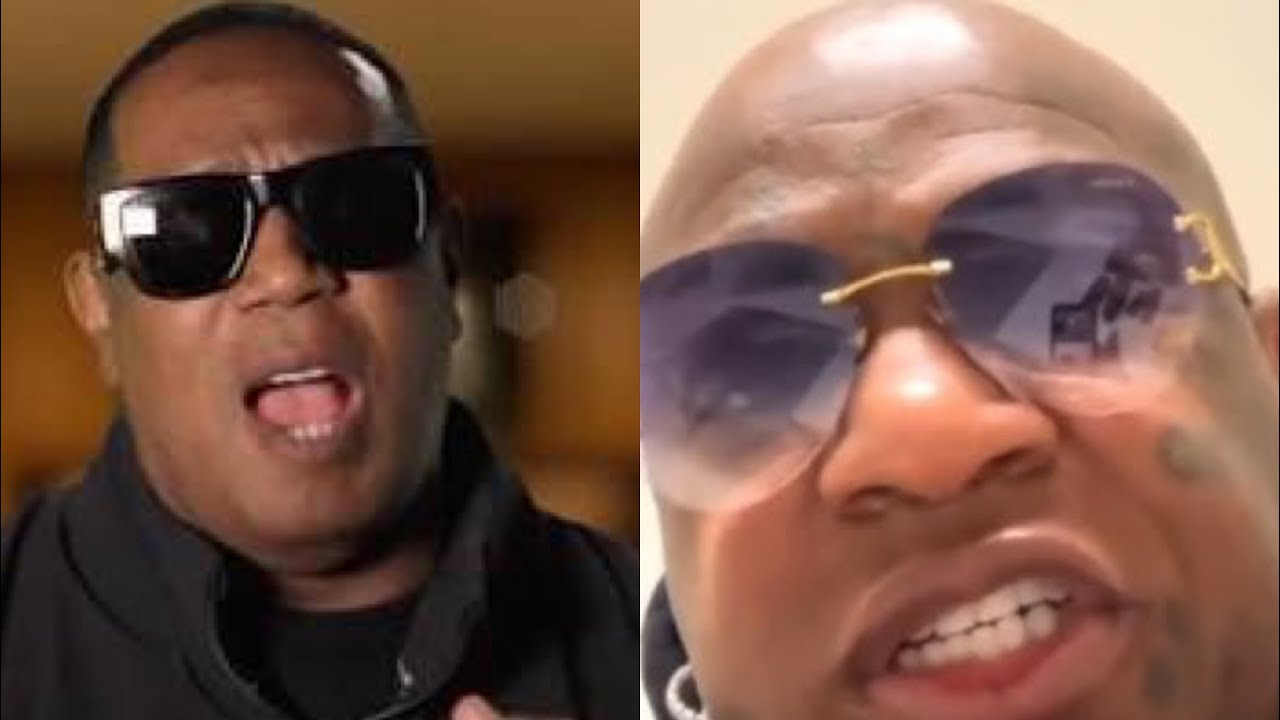 Birdman claims that the label executives delivered a 𝓈𝒽𝓸𝒸𝓀𝒾𝓃𝑔 message directly to him and his team, stating that Master P had issued an ultimatum: if the label signed Cash Money, No Limit would walk away from their own negotiations. This alleged power play, Birdman asserts, was a calculated move to stifle competition from across town, leaving him feeling betrayed and forcing him to return to New Orleans empty-handed, with nothing but a renewed sense of determination to build his empire independently.
Birdman was explicit in his description of the incident, recounting the moment he and his entourage flew out to California, only to be met with the news that their potential partnership was dead on arrival. “We fly out there. [Expletive] coming in and say, ‘Nah, I’m sorry.
We can’t do the deal.’ He said cuz Master P said if he’s if we sign y’all, he’s leaving,” Birdman recalled, his tone a mixture of lingering disbelief and hardened resolve. Rather than engage in a public war of words or attempt to retaliate through the media, Birdman said he simply boarded a jet back to Louisiana, telling his artists to focus on their craft and their hustle.
He framed this moment as a defining one for Cash Money, a catalyst that forced them to grind harder, innovate, and ultimately build a multi-platinum legacy on their own terms, without the corporate backing that No Limit had secured.
The interview delved deeper into the root of the animosity, moving beyond the business maneuver to the cultural and territorial divides that separated the two camps. Birdman was quick to clarify that the friction was not born from a traditional, violent street beef, but rather from a deep-seated lack of camaraderie and a palpable sense of otherness that existed between the Calliope Projects, home to No Limit, and the Magnolia Projects, the birthplace of Cash Money. “We just ain’t never vibe, bro.
We ain’t never had no beef. Ain’t nobody dead. But we just didn’t never vibe,” Birdman stated, attempting to dispel rumors of deadly conflict while simultaneously acknowledging an unbridgeable chasm.
He explained that the artists may have had personal relationships, but the leaders of the respective movements operated in entirely separate spheres, and that separation dictated the terms of engagement for everyone under their banners.
This territorial disconnect, Birdman explained, was absolute. The unspoken rule was that if the bosses didn’t mix, the artists couldn’t either. This strict separation meant that even when there was mutual respect or curiosity between the rosters, any potential collaboration was effectively forbidden.
Birdman noted that while he knew of Master P through basketball and the AAU circuit, their worlds never intersected on the streets or in the music industry. He painted a picture of two parallel universes, both thriving in the same city, yet completely isolated from one another by an unspoken code of conduct that governed their respective territories. This isolation, he suggests, was the true enemy, preventing the kind of creative synergy that fans have dreamed of for decades.
Despite the business sabotage and the personal distance, Birdman was adamant that he never harbored a desire to engage in a lyrical war with No Limit. He revealed a strategic philosophy that guided Cash Money through the years, one that prioritized creation over confrontation. “I never was built on making diss records and all that.
 I think that take you off your hustle. You’re focusing on another man and not feeding people what they’re paying for,” he explained. This mindset, he said, was instilled in his artists, including a young Lil Wayne and Juvenile, who were instructed to channel any competitive energy into their music rather than into attacks on their rivals.
Birdman believed that dedicating songs to another man was a waste of valuable creative capital, a distraction from the ultimate goal of servicing millions of fans.
The narrative took a more personal turn as Birdman addressed the emotional toll the rivalry took on him, revealing a layer of pain that transcends business. He spoke of losing someone “deep that’s dear to me” during that period, a loss he connected to the confusion and lack of communication that defined the era. While he did not elaborate on the specifics of this loss, his words carried a weight of regret and a desire for healing.
He framed the upcoming tour not just as a business venture, but as an opportunity for catharsis and a chance to correct the mistakes of the past. “We got to learn how to communicate. And communicate in love,” he said, suggesting that the passage of time has brought a new perspective on the senselessness of the old divisions.
In a surprising twist, Birdman acknowledged that despite the professional betrayal, he always held a baseline of respect for Master P as a successful Black businessman from their shared hometown. He recalled a moment in 1998 when Master P shouted out Birdman and Cash Money from a stage, a gesture that he says was not lost on him. “I think the media and the other people do that.
But, we always respected each other. Like we don’t have to hang out and be around each other, but that man from New Orleans doing something. I just respected that.
Another black man successful from New Orleans. I’m good, man,” Birdman reflected. This admission complicates the narrative of pure animosity, suggesting a grudging admiration that existed alongside the business rivalry.
The conversation naturally pivoted to the highly anticipated Cash Money and No Limit tour, which is set to kick off this month. Birdman expressed genuine excitement and a sense of historical significance about the event, which will see icons like Juvenile, BG, Mannie Fresh, Silkk the Shocker, Mia X, KLC, and Mr. Serv-On share a stage for the first time in decades.
He acknowledged the logistical challenges, noting that Lil Wayne and Turk may not be present for all dates due to scheduling conflicts, but he emphasized the importance of the moment for the culture. “We about to witness history. All of us on the stage at the same time.
 It’s about to be history. And it’s something that our culture been waiting for a long time,” he declared, his voice filled with anticipation.
Birdman’s tone shifted to one of poignant reflection as he considered the mortality of his peers and the fleeting nature of these opportunities. He referenced the recent passing of Young Bleed, a reminder that time is not on their side. “You just never know when you’re going to see all of us on the stage again like this.
So, I feel like this is celebration,” he said, underscoring the urgency and emotional weight of the reunion. For Birdman, the tour is more than a nostalgia act; it is a chance to honor the legacy of those who are no longer with us and to provide a moment of unity for a city that has endured so much, from the devastation of Hurricane Katrina to the ongoing struggles of its communities.
The interview has sent shockwaves through the hip-hop community, reigniting debates about the true nature of the 90s rivalry and forcing fans to re-evaluate the history they thought they knew. The allegation that Master P actively blocked Cash Money’s deal is a significant piece of untold history, one that paints the No Limit general in a more calculating light. While Master P has yet to respond publicly to these specific claims, the context of the upcoming tour suggests that both parties are willing to move forward, leaving the past in the past for the sake of a greater good.
The narrative of two projects, two labels, and two titans of industry is now more complex than ever, filled with missed opportunities and what-ifs.
As the tour approaches, the focus will inevitably shift from the grievances of the past to the spectacle of the present. The image of Birdman and Master P sharing a stage, flanked by their respective rosters, will be a powerful symbol of reconciliation for a generation of hip-hop fans who grew up choosing sides. The fact that these two men, who for so long refused to even acknowledge each other’s existence, are now preparing to celebrate their collective legacy is a testament to the passage of time and the healing power of shared history.
Birdman’s revelation, while 𝓈𝒽𝓸𝒸𝓀𝒾𝓃𝑔, may ultimately serve as the final chapter in a story that is now ready to be rewritten with a new, more harmonious ending.
The implications of Birdman’s story extend beyond mere gossip, offering a rare glimpse into the cutthroat nature of the music industry in the 1990s, where regional dominance was fiercely protected. The alleged ultimatum issued by Master P is a classic example of the territorialism that defined the era, a time when labels were not just businesses but extensions of the streets they represented. Birdman’s decision to walk away and build his own empire, rather than engage in a bidding war or a public feud, speaks to his business acumen and his long-term vision.
He chose to compete on his own terms, and the result was a legacy that rivals, and arguably surpasses, that of his old adversary.
 For the artists who were caught in the middle of this leadership dispute, the news of the reconciliation is a long-awaited relief. Many of them, like Juvenile and Silkk the Shocker, have spoken publicly about their desire to see the two camps unite, often expressing confusion about the reasons for the split. Birdman’s explanation provides the missing context, revealing that the artists were often as much in the dark as the fans.
The tour now offers them a chance to finally collaborate, share stories, and celebrate their shared New Orleans heritage without the shadow of their bosses’ old conflicts looming over them.
The financial and cultural stakes of the tour are immense. For a city like New Orleans, which has always taken pride in its musical contributions, the unification of its two most successful hip-hop exports is a point of civic pride. The tour is expected to be a major draw, attracting fans from across the country who are eager to relive the glory days of Southern hip-hop.
The economic impact will be significant, but the cultural impact is immeasurable. It represents a closing of a circle, a final resolution to a chapter of division that has lingered for nearly three decades.
Birdman’s comments also serve as a lesson in leadership and conflict resolution. His admission that he “lost somebody that is deep that’s dear to me” during the period of estrangement is a powerful reminder that feuds have real-world consequences that extend far beyond the boardroom or the recording studio. His willingness to now communicate “in love” suggests a personal growth and a recognition that holding onto old grudges is ultimately self-destructive.
The upcoming tour is his public declaration that he is ready to move forward, not just for business, but for his own peace of mind and for the legacy of his city.
As the hip-hop world digests this latest revelation, one thing is certain: the narrative of the Cash Money and No Limit rivalry is far more nuanced than the simple “project vs. project” story that has been told for years. Birdman’s account introduces a layer of corporate intrigue and personal betrayal that adds depth to the legend.
Whether Master P will offer his own version of events remains to be seen, but the fact that both men are willing to share a stage suggests that they have found a way to coexist, if not fully reconcile. The stage is set for a historic moment, and the world will be watching to see how this decades-old saga finally plays out in the spotlight.


