The first time I saw it, I thought it was a toy. A rugged tablet strapped to a soldier’s forearm, glowing with live satellite imagery, responding to taps and swipes like a video game. But this wasn’t a game. It was the reason Russian artillery couldn’t hide anymore, the reason their supply trucks were blowing up miles from the front lines.
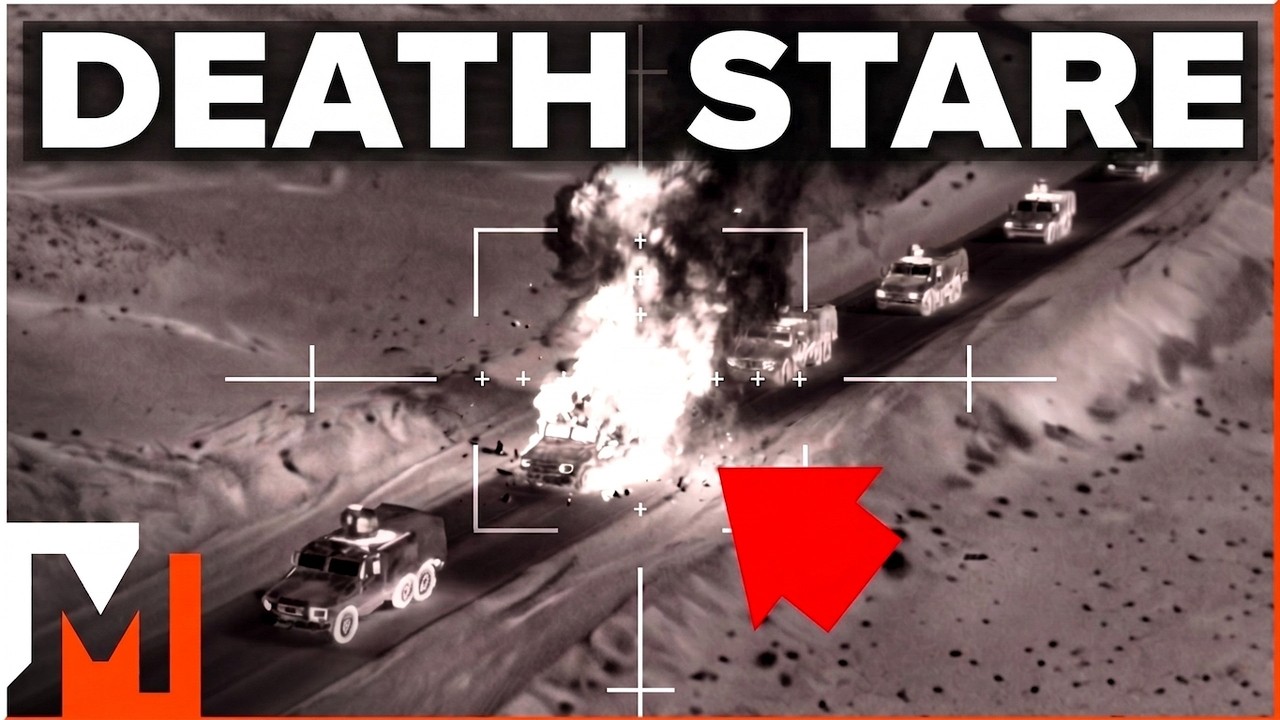
They called it “God’s Eye,” though the official designation was Bravo 1 Alpha. It was Dutch technology, and it had turned the war into something Russia never expected: a one-sided chess match where Ukraine could see every move before it was made. I remember the day the news broke in August. A colleague of mine on the eastern front, a drone operator who’d been flying blind for months, sent me a message that just said: “We were never really in the dark.
They just wanted us to think we were. ” He had used the system to watch a Russian column turn around and retreat before they even made contact. It wasn’t luck. It wasn’t courage.
It was the ability to look over the horizon. The Dutch had handed Ukraine a thousand pairs of eyes, and Moscow couldn’t do a damn thing about it. The system works like this: a soldier on the ground holds the device, and the screen shows images from commercial satellites, fed to him in real time. He scrolls, he pinpoints.
If he finds a radar installation, he can even command the satellite himself, zooming in to confirm before calling in a strike. No waiting for headquarters. No hours of delay. In minutes, he sends coordinates to a pilot or a mortar crew, and the target disappears.
The technology is so close to a movie that I had to ask twice whether it was real. It is. And it’s been running for months under the noses of the Russian General Staff. A Dutch defense minister once said, in a moment of frustration, “This is urgent, and we all know that money, knowledge, and resources are essential.
” He was talking about giving Ukraine the ability to see what was coming. Now the Ukrainians have it, and the Russians are trying to hide in the fog of war that no longer exists for them. Every movement is tracked. Every staging area is photographed.
And every time they think they’ve found cover, a satellite shifts overhead, and the ground beneath them becomes transparent. What shocked me most wasn’t the technology itself. It was the silence around it. While Russia boasted about its hypersonic missiles and electronic warfare, an unremarkable Dutch-built interface was quietly flipping the battlefield.
I think about that soldier with his tablet, standing in a muddy trench, watching a satellite pass over a patch of forest he knows is full of enemy armor. He doesn’t have to pray for luck. He just waits for the satellite to get into position, taps the screen, and whispers the coordinates into his radio. The explosion comes a few minutes later.
And then he does it again, moving to the next grid square, a god of small things in a terrible war. But there’s one detail that keeps me up at night. The system isn’t just used for drones and artillery. It’s being used for something else now, something the public doesn’t fully grasp yet.
I saw a hint of it in a classified report from a liaison officer in Kyiv. One line, almost lost in the technical jargon: “Bravo 1 Alpha integrated with mobile targeting modules for long-range precision strikes. ” That means the picture isn’t just guiding soldiers to targets anymore. It’s guiding the strike itself, without a human finger on a trigger.
And if that’s true, then the question isn’t whether Russia can hide from God’s Eye. It’s whether Ukraine will decide to use it to answer what Russia has done, and I’m terrified of what happens the day they do.