Rapper Boosie Badazz has ignited a firestorm of controversy after issuing a defiant defense of his decision to ban transgender individuals from attending his private parties, doubling down on his stance during a lengthy video statement that has since gone 𝓿𝒾𝓇𝒶𝓁 across social media platforms.
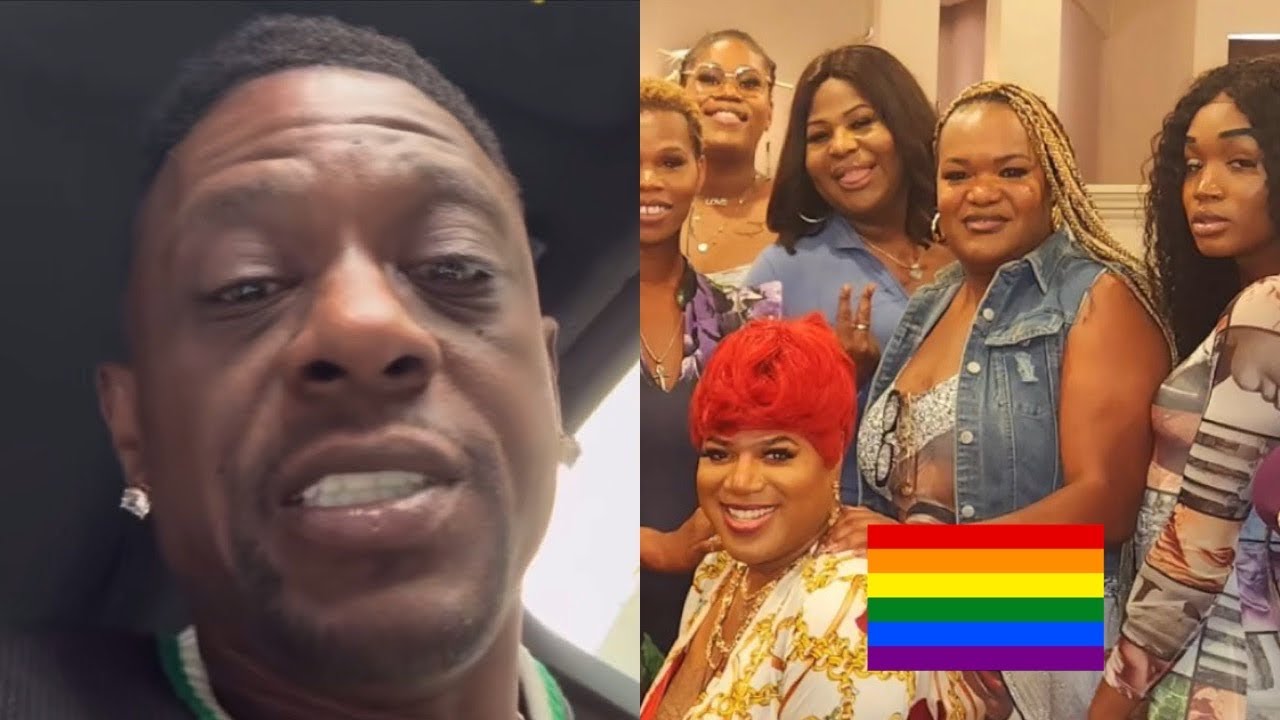 In the video, which was recorded and shared widely on Monday, the Louisiana-born artist addressed the mounting backlash with unapologetic language, comparing his party policies to standard dress codes enforced at restaurants and other private establishments. His remarks have reignited a fierce national debate about the boundaries of free expression, LGBTQ+ rights, and the rights of private property owners.
Boosie, whose real name is Torrence Hatch, began his response by framing the controversy as a matter of personal choice and property rights. He argued that his decision is no different from a venue prohibiting alcohol or requiring clear bags for entry. The rapper insisted that as the owner of the event space, he has the absolute authority to set the rules, regardless of public opinion.
The artist drew a direct parallel to other common restrictions, stating that if a restaurant can ban ripped jeans or hats, he can determine who is welcome at his gatherings. He expressed frustration that his stance has been met with accusations of bigotry, suggesting that critics are attempting to bully him into submission.
Boosie then pivoted to a broader critique of what he perceives as a double standard in the fight for civil rights. He claimed that the LGBTQ+ community has fought for decades for acceptance and legal protections, but now, in his view, does not allow others to disagree without facing severe backlash. He questioned why straight individuals cannot voice their own preferences without being labeled as hateful.
The rapper emphasized that his parties are intended for what he described as real players and bosses, including athletes, attorneys, and fellow rappers. He stated that he is protecting the reputations of his guests and maintaining the atmosphere he desires for his establishment. His tone grew increasingly agitated as he dismissed the criticism as out of control and sad.
The video has sparked a wave of reactions across social media, with supporters praising Boosie for standing his ground and critics condemning his remarks as discriminatory and harmful. Many have pointed out that comparing a person’s identity to a dress code or a ban on alcohol is a false equivalency that fails to recognize the fundamental difference between behavior and inherent characteristics.
Legal experts note that while private property owners generally have broad discretion to set rules for their events, such policies can still be subject to public scrutiny and potential legal challenges under anti-discrimination laws, depending on the jurisdiction and the nature of the event. The distinction between a truly private gathering and a public accommodation is often a key factor in such cases.
The controversy has also drawn commentary from other public figures, including former NFL star Cam Newton and sports commentator Marcellus Wiley, who have weighed in on the broader cultural implications. The discussion has quickly expanded beyond Boosie’s party to encompass larger questions about the limits of tolerance and the responsibilities of public figures.
Some observers have accused Boosie of using inflammatory language to generate attention and maintain his relevance in the entertainment industry. Others argue that he is simply expressing a viewpoint that many people hold privately but are afraid to voice in the current cultural climate. The divide reflects a deepening polarization in American society over issues of identity and inclusion.
The rapper’s comments come at a time when debates over transgender rights are intensifying across the country, with legislative battles over bathroom access, sports participation, and medical care for minors dominating headlines. Boosie’s stance aligns with a growing conservative pushback against what some see as an overreach by progressive activists.
Critics of Boosie argue that his comparison to dress codes is intellectually dishonest, as sexual orientation and gender identity are not choices or accessories that can be removed at the door. They contend that such policies amount to exclusion based on immutable characteristics, which is the very definition of discrimination.
Supporters, however, maintain that Boosie is exercising his right to curate his own social environment, just as LGBTQ+ individuals and groups have the right to host their own events with their own rules. They argue that forcing inclusion in every space is itself a form of coercion that undermines the principle of voluntary association.
The video has also sparked a conversation about the role of black men in the current political landscape, with some commentators suggesting that those who criticize Boosie are being paid or pressured to adopt liberal positions. This line of argument has further inflamed tensions, with accusations of bad faith and manipulation flying in both directions.
Boosie concluded his video by reiterating that his stance is not about hate but about personal preference and the right to control his own property. He urged his critics to respect his decision and move on, warning that he will not be bullied into changing his policies. The rapper made it clear that he intends to continue hosting events on his own terms.
As the backlash continues to unfold, Boosie shows no signs of backing down. His defiant response has only amplified the controversy, ensuring that the debate over his party policies will remain a hot topic in the days ahead. The incident serves as a stark reminder of the deep divisions that persist in American society over issues of identity, rights, and personal freedom.
The rapper’s comments have also drawn attention to the broader cultural war being waged over the boundaries of acceptable speech and behavior. Many see his remarks as a bellwether for a growing resistance to progressive social norms, particularly among certain segments of the black community.
Boosie has a long history of making provocative statements on a range of issues, from politics to social justice, and his latest comments fit a pattern of outspokenness that has both earned him a loyal following and made him a lightning rod for criticism. His willingness to court controversy has kept him in the public eye long after his peak commercial success.
The video has been viewed millions of times across various platforms, with reactions ranging from full-throated support to outright condemnation. The comment sections have become battlegrounds, with users debating the merits of Boosie’s arguments and the implications of his stance for the broader fight for equality.
Some have called for boycotts of Boosie’s music and events, while others have pledged to support him even more vigorously. The polarized response underscores the difficulty of finding common ground on issues where fundamental values appear to be in conflict.
As the story continues to develop, it remains to be seen whether the controversy will have any lasting impact on Boosie’s career or whether it will fade into the background as the news cycle moves on. For now, the rapper has succeeded in capturing the attention of the nation and forcing a conversation that many would prefer to avoid.
The incident also raises questions about the limits of free speech and the responsibilities that come with a public platform. While Boosie is entitled to his opinions, his words carry weight and can influence the behavior of his fans and followers, for better or worse.
In the end, the controversy over Boosie’s party policies is about more than just one man’s event. It is a reflection of the broader struggles over identity, belonging, and the meaning of equality in a diverse and divided society. The resolution of this particular dispute may offer clues about the direction of those larger battles in the years to come.