In a fiery live-stream declaration that has sent shockwaves through the entertainment industry, Demetrius “Big Meech” Flenory has publicly claimed ownership of the creative vision behind the hit Starz series “BMF,” directly challenging longtime executive producer Curtis “50 Cent” Jackson.
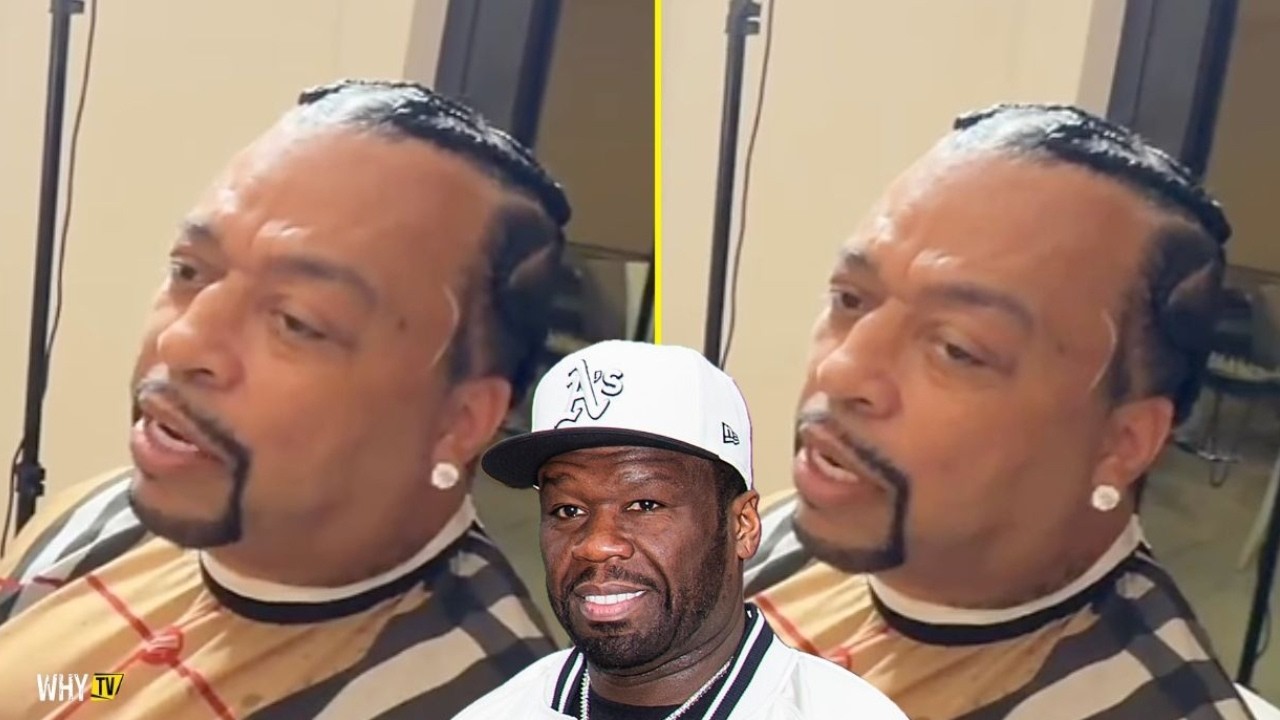 The co-founder of the Black Mafia Family did not mince words when addressing the show’s origins, insisting that the core ideas for the critically acclaimed crime 𝒹𝓇𝒶𝓂𝒶 came from his own mind, not from the rap mogul who has served as the project’s most visible public face since its announcement in 2019.
“No cap, it was my idea,” Meech declared during the live stream, shutting down any suggestion that 50 Cent conceived the series.
“I’m the boss of BMF.” The statement marks one of the most direct public rebukes of Jackson’s involvement in the show to date, igniting a firestorm of debate across social media platforms.
During the broadcast, a user identified as “Build 256” posed a direct question to the imprisoned-turned-released 𝒹𝓇𝓊𝑔 kingpin: “Did you write the BMF show or did you just give 50 Cent ideas?”
Meech’s response was immediate and unflinching, leaving little room for interpretation about where he believes the true credit belongs.
“I did,” Meech answered. “I helped with some of it and some of it they went left with.
But you know, for the most part it was a good show. All the actors did a great job. Actors and actresses I should say did a great job on there to me.”
His words acknowledged the quality of the production while simultaneously undercutting the narrative that 50 Cent was the primary creative architect.
The clarification continued as Meech addressed the writers’ room directly, making a crucial distinction about the chain of creative command. “No, I gave the writers ideas.
Not 50,” he stated, firmly redirecting the narrative toward his own contributions and positioning himself as the intellectual force behind the series that has captivated audiences for two seasons.
The statement represents a significant escalation in the ongoing tension between Meech and the “Power” creator, who have both claimed varying degrees of involvement in “BMF” since its inception. While 50 Cent has frequently promoted the show on his massive social media platforms, Meech has now staked an undeniable claim to its foundational concepts.
Meech also used the live-stream appearance to address the show’s future, expressing a clear desire to see “BMF” continue while laying down a non-negotiable condition for its direction. “Hopefully we can either bring the show back with the same people or we can do something different,” he said, leaving the door open for multiple possibilities.
Yet amid all the uncertainty about production timelines and network decisions, one thing remains absolutely certain in Meech’s mind: “Either way, my son going to play me no matter what.”
That declaration ensures that Demetrius “Lil Meech” Flenory Jr. remains at the center of any future storytelling about the family’s legacy.
 The controversy cuts to the heart of a broader cultural question that has followed Meech throughout his public life.
Unlike so many figures in the hip-hop world who parlayed rap careers into other ventures, Meech was never a rapper. He did not need a hit single, a 𝓿𝒾𝓇𝒶𝓁 dance, or a record deal to become one of the most talked about names in hip hop.
Coming out of Detroit, Meech and his brother Terry “Southwest T” Flenory built BMF into a name that carried money, mystery, loyalty, fear, celebrity, and street legend all at once.
The organization grew from a small Midwest operation into a nationwide 𝒹𝓇𝓊𝑔 trafficking empire with alleged ties to some of the biggest names in entertainment.
The show, which premiered on Starz in September 2021, was produced by 50 Cent’s G-Unit Film and Television and quickly became one of the network’s most successful original programs. Its second season drew critical acclaim for its portrayal of 1980s and 1990s Detroit, with Lil Meech delivering a breakout performance as his own father.
50 Cent has long positioned himself as the driving force behind bringing the BMF story to television, frequently appearing alongside Meech and other family members in promotional materials and behind-the-scenes content shared with his millions of Instagram followers. His fingerprints appear on every aspect of the show’s marketing.
Meech’s revisionist claim, however, threatens to reshape that public perception in real time.
By asserting that he supplied the ideas while 50 Cent merely executed them, Meech is repositioning himself as the intellectual author of the series, a role that carries immense cultural and financial implications in the entertainment landscape.
Legal experts note that such claims could have significant consequences if they ever escalate into formal disputes over credit, royalties, or creative control. Entertainment law heavily favors written agreements, and the absence of public documentation regarding the deal between Meech and the producers leaves substantial room for interpretation.
The live-stream moment also arrives at a precarious time in the relationship between Meech and Jackson. Their alliance has weathered various public tensions over the years, though both have generally maintained a united front when discussing the show in interviews. This latest statement suggests that facade may be cracking.
Industry insiders speculate that Meech’s frustration may stem from growing public perception that 50 Cent is solely responsible for the show’s success. Awards season buzz, critical coverage, and fan discourse have repeatedly centered Jackson as the genius behind the adaptation, potentially marginalizing Meech’s own contributions.
 Meech’s brother and co-founder, Terry “Southwest T” Flenory, appeared in the series’ second season and has also maintained a public presence around the show.
Neither brother has previously made statements as explicit as Meech’s live-stream remarks regarding the division of creative credit with 50 Cent.
The character of the show itself has faced scrutiny from critics who argue that elements were embellished or altered for dramatic effect. Meech’s acknowledgment that “some of it they went left with” implicitly concedes that the series took creative liberties, though he stopped short of specifying which aspects diverged most significantly from reality.
For fans of the show, the revelation adds a compelling new layer to the ongoing saga of BMF’s transition from criminal enterprise to cultural phenomenon. The story of how the show came to exist has become nearly as fascinating as the story it depicts, with competing narratives now emerging from the central figures involved.
Meech’s personal transformation has been well documented since his release from federal prison.
He was sentenced to 30 years in 2008 but received a sentence reduction in 2021 due to compassionate release considerations related to the COVID-19 pandemic, and was later moved to home confinement before achieving full release.
Since returning to civilian life, Meech has reinvented himself as a legitimate entrepreneur, launching various business ventures and building a substantial social media presence. His engagement with fans through platforms like live-streaming has become a cornerstone of his post-incarceration brand, though it now carries unanticipated consequences.
The timing of his comments could not be more significant, as speculation continues to mount about a potential third season for “BMF.” Starz executives have remained tight-lipped about the show’s future, though the program’s strong ratings and dedicated fanbase have naturally fueled expectations of renewal.
Should the show return, the dynamic between Meech and 50 Cent will be under intense scrutiny from audiences who now understand that the two may not be aligned on questions of creative authorship.
The behind-the-scenes friction could either spur more compelling storytelling or complicate production.
Neither 50 Cent nor representatives for Starz have issued an immediate public response to Meech’s live-stream comments. The silence suggests that the entertainment establishment is carefully calculating its next move in what has rapidly become a high-stakes narrative confrontation.
 Meech’s assertion that his son will play him “no matter what” also positions Lil Meech as the irreplaceable anchor of the franchise. The younger Flenory has received widespread praise for his performance, and his continued involvement appears to be the one point on which all parties can agree without reservation.
The broader implications of Meech’s statement extend beyond the show itself, touching on questions of black ownership, narrative control, and the exploitation of street stories by mainstream media.
Meech has positioned himself as reclaiming the story of his own life from external forces.
Observers note that this is not the first time Meech has expressed ambivalence about how his legacy has been portrayed in popular culture. He has previously commented on various projects and documentaries about BMF, often emphasizing the importance of authenticity in telling the family’s story.
In the immediate aftermath of the live stream, social media has erupted with divided opinions. Some fans side firmly with Meech, arguing that no one can tell his story better than he can and that his lived experience gives him ultimate authority over the narrative. Others counter that 50 Cent’s creative and financial investment deserves recognition.
The debate has also reignited conversations about the ethics of linear entertainment packaging real criminal histories for mass consumption. Meech’s insistence on his own authorship forces audiences to confront uncomfortable questions about who profits from stories of violence and survival in America’s streets.
For now, the situation remains volatile and unresolved.
What is clear is that Big Meech is no longer willing to stand silently in the shadow of 50 Cent’s celebrity. His declaration that “I’m the boss of BMF” serves as both a historical assertion and a present-tense warning to anyone who might seek to claim his legacy.
The coming weeks will likely bring clarification, negotiation, or outright conflict as the principals involved determine how to proceed.
One thing is certain: Big Meech has claimed his seat at the creative table, and his voice will now be impossible for the entertainment industry to ignore.