The simmering rivalry between Rick Ross and 50 Cent exploded anew this morning as the MMG mogul delivered a blistering verbal counterattack, responding directly to 50 Cent’s relentless mockery over disappointing first-week album sales. The exchange began hours earlier when 50 Cent took to social media with his characteristic brand of taunting, posting memes and cutting commentary aimed squarely at Ross’s commercial performance.
 The Queens rapper, never one to let an opportunity for public humiliation pass, seized on the numbers with evident glee. The sales figures in question show Ross’s latest album moving approximately 22,000 units in its first week, followed by a second-week total of just 20 copies, a staggering drop that 50 Cent used as evidence of waning relevance.
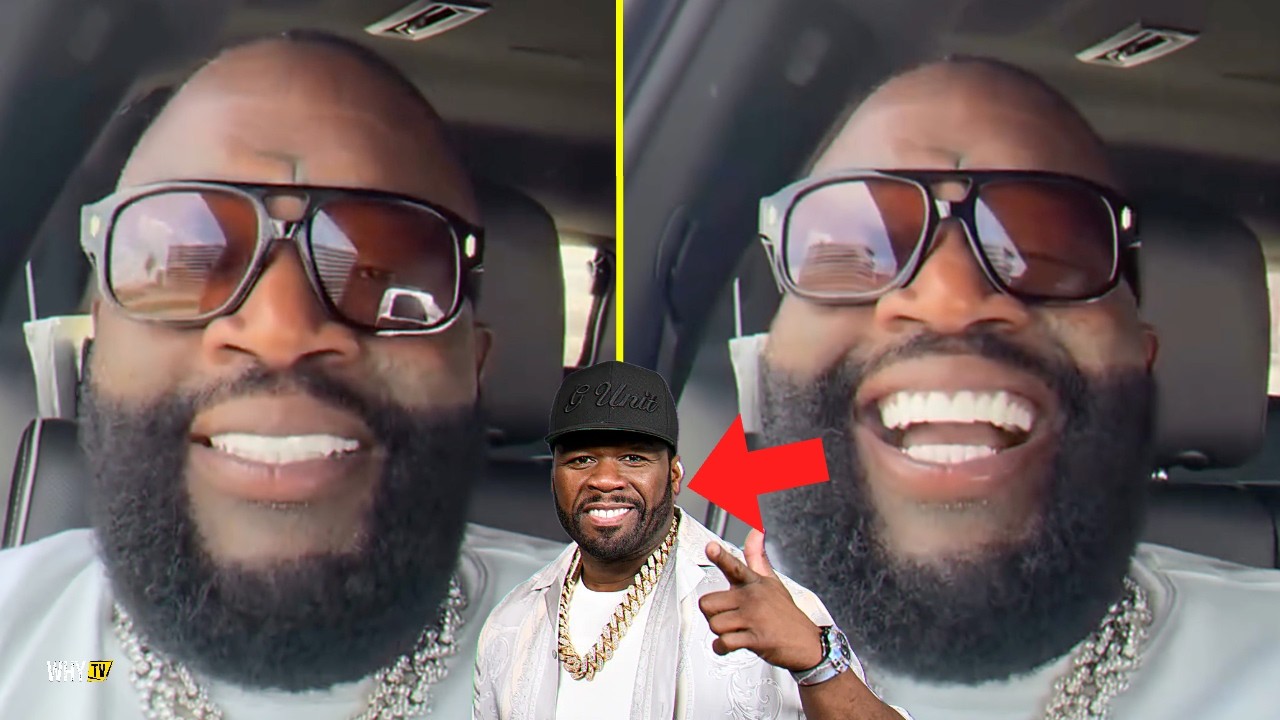
Rick Ross, however, was clearly prepared for the assault. In a video statement released moments ago, the Port of Miami icon addressed the criticism with a mixture of defiance, pride, and carefully calibrated dismissiveness. His response did not merely defend his sales figures but attacked the very foundation of 50 Cent’s argument.
“You’re the boat,” Ross declared, referencing 50 Cent’s notorious history of positioning himself as an industry sage. The comment was delivered with the kind of measured intensity that has defined Ross’s public persona throughout his two-decade career.
Ross offered a radically different interpretation of the numbers that 50 Cent sought to weaponize. He suggested that the drastic drop-offs seen across the industry are not evidence of his own failure but rather proof of his commitment to authenticity in an era of manufactured success.
“Those drastic falloffs that you see with a lot of those other artists is when the numbers are inflated,” Ross said, directly accusing unnamed peers of employing automated streaming bots. “The bots to me, the new flexes. No bots.
Keep it genuine. Keep it pure.”
The accusation of bot usage carries significant weight in the modern music industry, where streaming numbers have become the dominant metric of commercial success. Many artists have faced allegations of artificially inflating their streaming counts, and Ross’s decision to address this publicly is notable.
By framing his lower numbers as the product of authenticity rather than failure, Ross attempts to flip the narrative entirely. In his telling, his sales figures reflect something more valuable than chart position, they reflect integrity. “Let the music fight any battles,” Ross insisted.
“You understand? Come on now. This is the biggest boss,” he continued, asserting his dominance.
“I’m letting it know. Do the long game, baby. That’s how we hustling.
That’s how we winning. We here 20 years later.”
The mention of two decades is deliberate. Ross’s staying power in an industry notorious for brief careers forms a central pillar of his argument against 50 Cent’s obsession with week-to-week sales metrics. He positions himself as playing chess while his rivals play checkers.
Ross then pivoted to attack 50 Cent’s business ventures beyond music, questioning why an artist with allegedly massive reach cannot translate that influence into commercial success across other product categories. The sneaker reference was particularly pointed.
“Those Gun sneakers gonna be in Costco, baby,” Ross said, taking direct aim at 50 Cent’s merchandise lines. He then added a layered insult, praising the sneakers associated with Lloyd Banks, a G-Unit affiliate who has never achieved 50 Cent’s solo success.
 “I like the Lloyd Banks ones better than all the other ones,” Ross continued. “Even got no sneakers. But 50, give Lloyd Banks his own high top sneaker.
And since the free boy happening no more, you know what I’m saying? You can focus on the sneakers.”
Ross then pressed his advantage with a series of rhetorical questions designed to expose what he sees as the hollowness of his rival’s arguments. His logic is elegant in its simplicity, if the streaming numbers are real, where is the corresponding commercial power?
“For example, if those numbers not inflated, why can’t these same people with all these followers sell other products outside of the music?” Ross challenged. “Why that sneakers can’t sell?
Why that alcohol can’t sell?”
The question cuts to the heart of a broader industry debate. Ross argues that truly influential artists can move consumers across multiple channels, pointing to his own ventures including Luc Belaire champagne and Wingstop franchises as evidence of his entrepreneurial acumen.
“Why this genuinely gotten a gazillion people that could do this with your music the first week? Why everything else you do outside of music is unsuccessful,” Ross continued, his voice carrying a tone of evident frustration. “Now the new flex is no bots.”
The phrase “you the boat” appeared again in his statement, a reference to long-standing jokes about Ross’s physical stature that he has consistently reclaimed as a symbol of his immovable presence in the culture. “What Ricky Rose is,” he said. “You know what I’m saying?
You feel me?”
The irony of this latest exchange is not lost on industry observers. Both men have spent nearly two decades trading barbs, with each claiming superiority over the other. Their feud dates back over 15 years, rooted in a web of alliances, betrayals, and territorial disputes within hip-hop.
The conflict has produced some of the most memorable diss tracks in modern rap history. 50 Cent’s relentless social media presence has kept the feud simmering even during periods when Ross appeared to lose interest. Now, with both men in their 40s, the tone carries different weight.
This latest response from Ross feels notably different from his past replies. He spoke slowly, deliberately, almost educationally, as if explaining fundamental principles to someone who should already understand them. The tone suggested he considers 50 Cent beneath him.
“Now the new flex is no bots,” Ross repeated, returning to his central theme. His repetition of the authenticity argument suggests he believes this message resonates with fans who are increasingly skeptical of inflated industry numbers.
Industry analysts note that chart manipulation through streaming bots has become a persistent controversy, with platforms like Spotify and Apple Music investing heavily in detection systems. Ross’s willingness to name the practice publicly is courageous but also strategically convenient.

The timing of this feud is also significant. Both artists are in transitional phases of their careers, no longer competing for the same chart positions they once dominated. Their conflict has evolved from commercial competition to a battle over legacy and relevance.
Ross’s conclusion carried a note of confident finality as he asserted his continued importance in the culture. His framing of himself as an artist who has survived two decades of industry turbulence is a powerful counterpoint to the weekly fluctuations of album sales.
Supporters of Ross have already flooded social media with praise for his measured, philosophical approach to the criticism. They argue that his response demonstrates the maturity of a veteran artist secure in his legacy, in contrast to what they characterize as 50 Cent’s petty obsession with numbers.
Supporters of 50 Cent, however, point out that Ross’s defensiveness suggests the sales figures genuinely stung. They argue that no amount of philosophical framing can obscure the fact that a major label release moving only 22,000 units in its first week represents a commercial disappointment.
The broader music industry is watching this exchange with interest, as it touches on questions that have become increasingly urgent in the streaming era. What constitutes genuine success in an industry where numbers can be manufactured? How should artists be evaluated?
Physical album sales have declined dramatically over the past decade, with streaming now dominating consumption. The charts reflect a complex mix of streaming numbers, digital sales, and traditional purchases, making direct comparisons across eras increasingly difficult.
Ross’s insistence on authenticity is a powerful rhetorical position, but it also reflects a genuine frustration. After 20 years in the industry, he wants to be judged on the totality of his work, not on a single week’s performance. His longevity is his argument.
The question of whether Ross’s stance represents principled authenticity or merely a rationalization for commercial decline is one that fans will continue to debate. What cannot be disputed is that his response has successfully redirected the conversation from his sales figures.
At the time of this reporting, 50 Cent has not yet responded to Ross’s latest remarks. Given his history of rapid-fire social media activity, a response is anticipated imminently. The Queens rapper is known for his quick wit and his ability to escalate online conflicts.
For now, however, the last word belongs to Ross. His word is that he remains untouched, unbothered, and utterly convinced of his own enduring significance. Whether the public agrees remains to be seen, but one thing is certain.
The 𝒹𝓇𝒶𝓂𝒶 between these two titans of hip-hop shows no signs of concluding. Each iteration of their feud draws renewed attention from fans who have followed the conflict since its earliest days, and this latest chapter has already generated substantial engagement.

Breaking news teams are monitoring both artists’ social media accounts for further developments. The hip-hop community, industry executives, and casual observers alike are waiting to see how 50 Cent will answer the challenge that Ross has laid down.
Ross’s decision to emphasize his business ventures alongside his musical career reflects a broader shift in how artists define success in the modern era. The most durable figures in hip-hop have diversified beyond music, building empires that outlast any single album cycle.
The Costco sneaker jab was a calculated strike at 50 Cent’s commercial reach, suggesting that his products lack the premium positioning he claims. Ross’s mention of Lloyd Banks added another layer of psychological complexity to an already intricate exchange.
Observers note that both artists have mastered the art of using controversy to maintain relevance. Their feud generates headlines, drives engagement, and keeps their names in circulation in ways that traditional promotion cannot match.
The numbers themselves deserve context. An album selling 22,000 units in its first week would have been considered a catastrophic failure in the 1990s but represents a more complex picture in the current fragmented music landscape, where superstars routinely see dramatic week-to-week declines.
Ross’s reference to previously reported figures, including his mention of what he described as the second-week total of 20 copies, indicates that he is fully aware of the numbers and has prepared his counter-narrative in advance. This was not an improvised response.
The “no bots” flex is likely to become a central talking point in the coming days. Ross has positioned himself as an artist who would rather succeed genuinely than top the charts artificially, a stance that resonates with fans who value artistic integrity.
Whether that stance convinces the broader public, or whether 50 Cent’s mockery finds more fertile ground, remains an open question. The next 48 hours will likely determine the direction of this latest chapter in their storied rivalry.
This story is developing rapidly, and further responses from either artist could arrive at any moment. Both camps are believed to be monitoring public reaction closely, with teams ready to amplify whatever message best serves their respective narratives.
The legacy stakes here are considerable. Both Rick Ross and 50 Cent are establishing how they will be remembered in the pantheon of hip-hop greats. Their feud, while entertaining, is also deeply serious business for two men who built their careers on competitive dominance.
For now, Rick Ross has successfully transformed a conversation about album sales into a broader discussion about authenticity, longevity, and the true measures of success in the music industry. Whether that represents victory or merely spin is a matter of perspective.
All parties are advised to stay tuned. The exchanges show no signs of slowing, and the history of this particular feud suggests that the most explosive moments often arrive when they are least expected. Hip-hop’s longest-running rivalry has entered another chapter.