Lionel Richie, the legendary singer and former Commodores frontman, unleashed a fiery rant during a recent performance that directly called out contemporary R&B stars Chris Brown and Usher, sparking an immediate and emotional response from Brown himself. The iconic musician, known for timeless hits like “Hello” and “All Night Long,” did not hold back as he drew a sharp contrast between his generation’s stage antics and the modern era, punctuating his critique with a pointed reference to incarceration. “The only difference is between then and now we DIDN’T GO TO JAIL,” Richie declared to a roaring crowd, a statement that has since ignited a firestorm of debate across social media platforms and within the music industry.
Chris Brown, who has faced his own well-documented legal troubles including a 2009 assault conviction, reacted swiftly and with surprising warmth. In a post shared on his social media channels, Brown wrote, “It’s damn monk, we love you, Paw Paw,” using affectionate nicknames for Richie that suggest a familial respect despite the sting of the criticism. The phrase “damn monk” appears to be a colloquial expression of disbelief or amusement, while “Paw Paw” is a term of endearment often used for grandfathers, indicating Brown’s refusal to engage in a public feud.
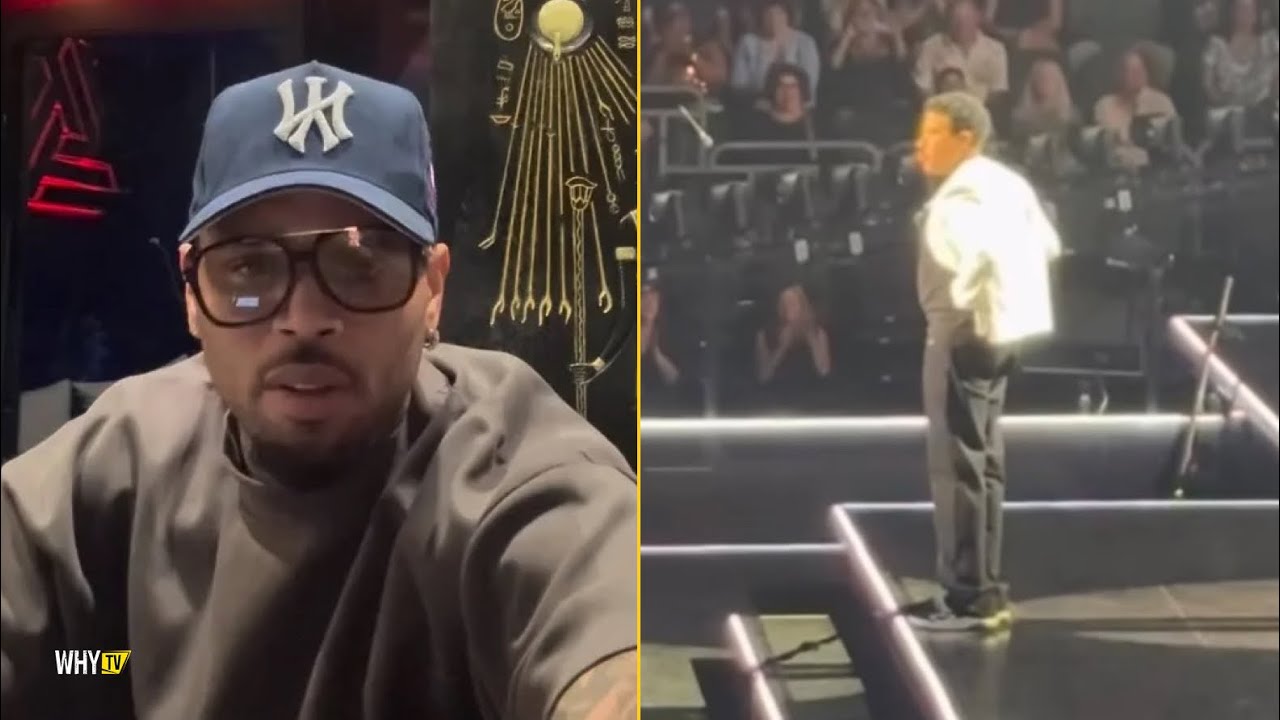 Instead, he chose to acknowledge Richie’s legendary status, even as the elder artist’s words cut deep.
The incident occurred during one of Richie’s live shows, where he launched into an extended monologue comparing the stage presence of his own era with that of today’s biggest stars. According to eyewitness accounts and footage circulating online, Richie specifically named Usher and Chris Brown, suggesting that their energetic performances and crowd interactions were nothing new. “Commodores, Earth Wind & Fire, we were doing that back 40 years ago,” Richie thundered, referencing the groundbreaking funk and soul groups that defined the 1970s and 1980s.
He then delivered the jab that has become the focal point of the controversy: “Only difference is between then and now we DIDN’T GO TO JAIL.”
The remark is a clear allusion to Chris Brown’s criminal record, which includes a felony assault charge for attacking then-girlfriend Rihanna in 2009, as well as subsequent legal issues involving probation violations and altercations. Usher, while not having a jail sentence, has faced legal battles of his own, including a child custody dispute and a lawsuit over alleged HIV transmission. However, Richie’s comment zeroes in on the most glaring contrast between his generation and the current crop of R&B stars: the intersection of fame, misconduct, and the justice system.
Chris Brown’s reaction has been widely interpreted as a masterclass in defusing tension. By referring to Richie as “Unk” and “Paw Paw,” Brown positioned himself as a respectful younger relative rather than a defensive rival. The post has garnered millions of views and thousands of comments, with fans divided between those who see Richie’s rant as unnecessary and those who believe he was simply stating a factual generational difference.
“He didn’t have to bring up jail. That was a low blow,” one user wrote on X, formerly Twitter. Another countered: “Lionel is telling the truth.
These new guys need to respect the game and stay out of trouble.”
The context of Richie’s rant is crucial. The legendary singer was likely addressing the evolution of live performance, where artists like Chris Brown and Usher are known for high-energy choreography, pyrotechnics, and intimate crowd engagement. Richie’s point, as parsed by many commentators, was that the Commodores and Earth Wind & Fire were equally wild and interactive on stage decades ago, but without the legal baggage that has shadowed some of today’s stars.
The absence of social media in the 1970s meant that backstage antics and personal missteps rarely became public scandals, whereas today every move is captured and amplified.
 This is not the first time Lionel Richie has spoken candidly about the younger generation of musicians. In past interviews, he has praised the talent of artists like Bruno Mars and Beyoncé while lamenting the lack of longevity in modern careers. However, directly naming Chris Brown and Usher in a live setting represents a significant escalation.
Richie, now 74, has enjoyed a career spanning over five decades with no major legal controversies, making his comments all the more pointed.
The music industry has been quick to react. Representatives for Usher have not yet issued a statement, but sources close to the singer indicate he is taking the high road, focusing on his upcoming tour. Chris Brown’s team, meanwhile, has emphasized that his response was genuine and not a PR move.
“Chris has always respected the legends who paved the way,” a spokesperson said in a brief statement. “He took Lionel’s words as a challenge to be better, not as an attack.”
Social media has exploded with memes, hot takes, and deep dives into the histories of all three artists. Some users have pointed out that Lionel Richie himself was no stranger to controversy during the Commodores’ heyday, with rumors of wild parties and backstage excesses, though none resulting in arrests. Others have noted that Usher’s legal issues are far less severe than Brown’s, making Richie’s blanket statement somewhat unfair.
The term “Paw Paw” used by Chris Brown has also sparked curiosity. In African American Vernacular English, “paw paw” can refer to a grandfather or an older male figure, often used affectionately. Brown’s choice of words suggests he views Richie as a patriarch of R&B, someone whose criticism carries weight and should be met with love rather than anger.
This is a departure from Brown’s often combative public persona, which has included feuds with other artists and legal battles.
As the story continues to develop, music historians are weighing in on the generational divide. Dr. Maya Thompson, a professor of popular culture at UCLA, noted: “Lionel Richie’s rant is emblematic of a broader tension between old-school values and new-school realities.
 The jail comment is incendiary, but it also reflects a genuine concern about how fame and accountability have changed. Chris Brown’s gracious response, however, may ultimately defuse the situation and even earn him some goodwill.”
The video of Richie’s rant, originally posted by a fan, has been viewed over 10 million times across various platforms. The clip shows the crowd cheering when Richie mentions the Commodores and Earth Wind & Fire, but the energy shifts noticeably when he brings up jail. Some audience members can be heard gasping, while others laugh nervously.
It is unclear whether Richie intended his words as a joke or a serious critique, but the impact has been anything but lighthearted.
Chris Brown’s career has been a rollercoaster of redemption and relapse. After the 2009 incident, he faced years of public scorn and legal restrictions, but he managed to rebuild his fanbase through hit albums and electrifying performances. However, his past continues to haunt him, with many venues and awards shows still reluctant to fully embrace him.
Lionel Richie’s comment, whether intentional or not, has reopened old wounds.
Usher, who has largely avoided major legal trouble, has also been dragged into the conversation. The 45-year-old singer has had his own share of scandals, including a highly publicized custody battle and a lawsuit alleging he knowingly 𝓮𝔁𝓹𝓸𝓼𝓮𝓭 a partner to HIV, which he denied. While he was never jailed, the association with Chris Brown in Richie’s rant has led to renewed scrutiny of his past.
The phrase “damn monk” used by Chris Brown has puzzled some fans. It appears to be a slang term that could mean “damn, man” or “damn, uncle” with a playful twist. Brown’s use of it suggests a lighthearted dismissal of any offense, turning Richie’s critique into a moment of bonding.
This strategic move may help Brown avoid a public relations disaster, as a war of words with a beloved legend like Lionel Richie would likely end badly for the younger artist.
 Industry insiders are now speculating whether Richie will respond to Brown’s post. So far, the legendary singer has remained silent, but his team is reportedly monitoring the situation. Richie is known for his diplomatic nature and may choose to clarify his remarks in a future interview.
Alternatively, he could let the moment pass, allowing the controversy to fade.
The debate over the role of jail in the comparison has also raised questions about racial and generational biases in the music industry. Some critics argue that Richie’s comment unfairly stigmatizes Black artists who have faced legal issues, ignoring the systemic factors that lead to higher incarceration rates. Others contend that personal accountability should be universal, regardless of era.
As the news cycle churns, one thing is clear: Lionel Richie’s rant has struck a nerve. It has forced a conversation about how we measure success, legacy, and redemption in the music world. Chris Brown’s response, meanwhile, has shown a maturity that many did not expect.
Whether this moment will lead to reconciliation or further division remains to be seen.
For now, the ball is in Lionel Richie’s court. Will he accept Brown’s olive branch, or will he double down? Fans on both sides are watching closely.
The music industry, always hungry for 𝒹𝓇𝒶𝓂𝒶, is ready for the next chapter. Stay tuned as this breaking story develops.


