The silence has been shattered. From a jail cell in Las Vegas, Duane “Keefe D” Davis, the man authorities have charged with orchestrating the 1996 murder of Tupac Shakur, has finally spoken, and his words have sent shockwaves through the hip-hop world and the criminal justice system. In a recorded statement obtained by The Nation Upation podcast, Davis vehemently denied any involvement in the killing, claiming he never wrote the tell-all book that implicated him and that he was merely “exaggerating stories” for profit.
This dramatic reversal marks a stunning departure from decades of public bragging and detailed confessions that Davis himself had peddled for years. For nearly 30 years, the 60-year-old former gang leader had been the primary source of information regarding the drive-by shooting that claimed the life of the legendary rapper. He spoke freely on podcasts, in interviews, and in his own memoir, “Compton Street Legend,” painting a vivid picture of the night of September 7, 1996, when Shakur was gunned down on the Las Vegas Strip.
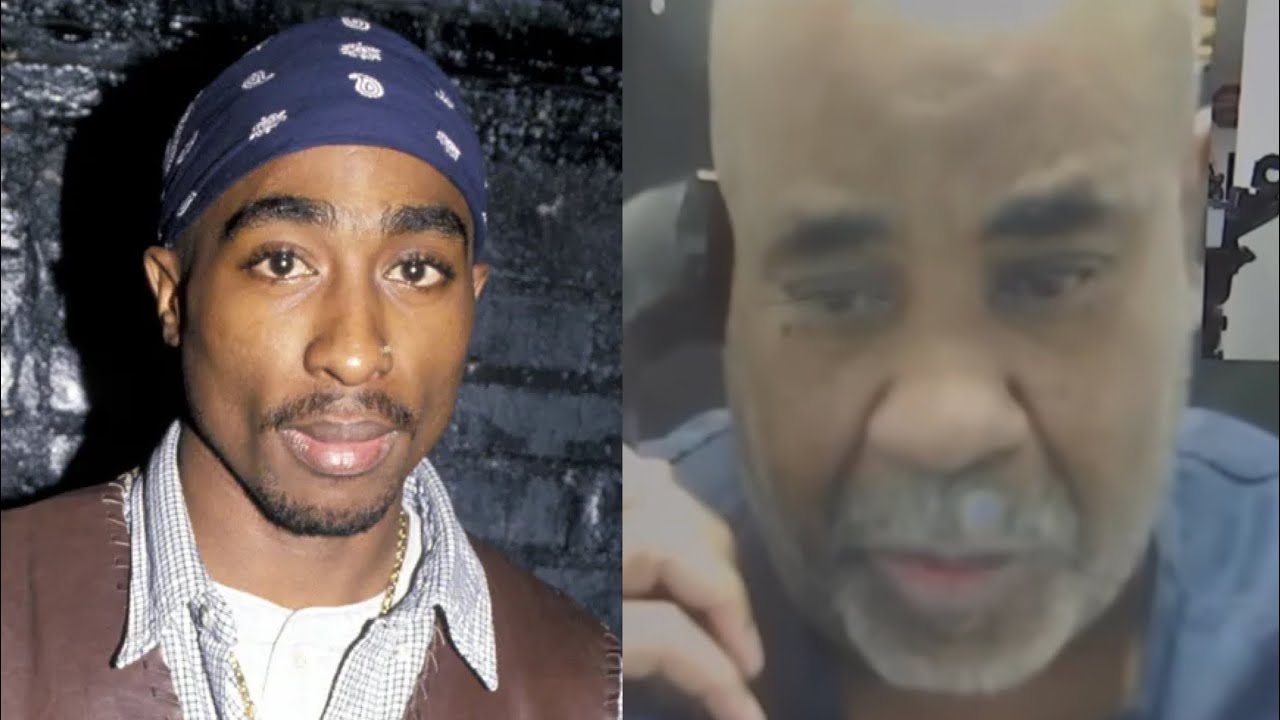 Now, facing a first-degree murder charge and life behind bars, Davis is singing a very different tune. “I ain’t killed nobody,” he stated flatly in the clip, his voice carrying a mix of defiance and desperation. “Never did ever 𝓀𝒾𝓁𝓁 nobody.
They don’t have no evidence against me.” He challenged the prosecution directly, claiming they have no case. “Prove that I orchestrated this,” he demanded, a stark contrast to the man who once detailed the entire plot on camera for federal investigators.
The audacity of his new claim is staggering to those who have followed the case. Davis did not just hint at his involvement over the years; he provided a step-by-step account of the alleged conspiracy. In a 2008 interview with federal agents, he admitted to being in the white Cadillac from which the fatal shots were fired.
He named the shooter, identified the source of the weapon, and explained the motive tied to a confrontation between Shakur and Orlando Anderson, a member of the Southside Crips, hours before the murder.
“He told the whole play,” the podcast host, Oshay, remarked in his commentary, summarizing the disbelief felt by many. “He was telling who was the one who paid you, where y’all went to prepare for this, where y’all went afterwards, who y’all called, everything.” This detailed confession, captured on official recordings, was the cornerstone of the evidence that finally led to Davis’s arrest in September 2023.
The prosecution’s case is built almost entirely on his own words.
Yet, from behind bars, Davis now claims those words were fiction. He alleges that his book and his numerous media appearances were a calculated hustle, a way to capitalize on the enduring mystery of Tupac’s death. “I didn’t write my book,” he insisted, suggesting that the narrative was exaggerated to sell copies and generate controversy.
This position, however, is a perilous tightrope walk, as it directly contradicts the sworn statements and recorded interviews that law enforcement has spent years compiling.
The legal implications are profound. If Davis is now claiming he lied for decades, he is essentially admitting to obstruction of justice and providing false statements to federal agents. If he is telling the truth now, it would mean the entire narrative of Tupac’s murder, the one that has been the accepted version of events for nearly three decades, is a fabrication.
Either way, his credibility is in tatters, and a jury will have to decide which version of Keefe D is the real one.
The podcast host captured the public’s bewilderment perfectly. “What is going on with the world now where these folks is self snitching?” he asked.
“If you would have got away with that back in the day, you confessed to it, did all of that stuff to it and got away with it, why would you resurface it, bringing it back up?” This is the central paradox of the case. Davis was a free man for 27 years.
 He was not a suspect until he turned himself into a celebrity informant, selling his story for fame and money.
The defense strategy appears to be a classic “the confession was a lie” argument. Davis’s legal team is expected to argue that their client was a storyteller, not a killer. They will likely point to the lack of forensic evidence, the absence of eyewitnesses who can place him at the scene, and the fact that the alleged shooter, Orlando Anderson, was killed in a gang-related shooting in 1998 and was never charged.
The prosecution, however, will argue that Davis’s detailed, consistent, and voluntary confessions over three decades are the most compelling evidence of guilt.
The video transcript reveals a man who is now acutely aware of the gravity of his situation. “Shouldn’t have said nothing, man,” Davis lamented in the clip, a clear reference to his years of loose talk. This admission of regret is perhaps the most telling part of his statement.
He knows that his own words have built the cage he now finds himself in. The question is whether a jury will believe that he was simply a fabulist or a murderer who finally got caught.
The case has reignited a global conversation about true crime, celebrity, and the ethics of self-incrimination. Davis’s journey from street legend to podcast guest to murder defendant is a cautionary tale for the digital age. In an era where everyone is seeking a platform and a payday, the line between storytelling and confession has become dangerously blurred.
Davis crossed that line, and now he is paying the price.
The public reaction has been swift and divided. Some believe Davis is finally telling the truth, that the pressure of a life sentence has forced him to recant a tall tale that got out of control. Others see it as a desperate, last-ditch attempt to avoid accountability.
“You out here implicating yourself in a crime where it’s unsolved. Folks want answers to this,” Oshay noted, highlighting the frustration of a community that has waited decades for closure.
The Shakur family has remained largely silent since the arrest, but the development is undoubtedly a painful reopening of old wounds. For Afeni Shakur, Tupac’s mother who passed away in 2016, the arrest came too late. For the rest of the family, watching Davis attempt to walk back his confessions is a new form of torment.
They have heard his stories for years; now they must hear him call them lies.
 The legal proceedings are expected to be a media circus. Davis’s trial, currently scheduled for later this year, will be one of the most high-profile murder cases in recent history. The prosecution will play the tapes.
The defense will attack the source. And the jury will be tasked with parsing the truth from a man who has spent a lifetime blurring the lines between fact and fiction.
Davis’s claim that “the shots came from the back” is a specific detail that has been consistent in his accounts. In his earlier versions, he said he was in the front passenger seat and that the shooter, Anderson, was in the back seat. This detail, if proven false, could unravel his entire new narrative.
If he is now saying he wasn’t there at all, why would he still be talking about where the shots came from? The contradictions are piling up.
The podcast host’s commentary also touched on a deeper cultural issue. “I remember a day when folks did crime where they didn’t say nothing about it,” he said. “It’s like nowadays people want people to know that they doing crime.”
This observation speaks to the modern phenomenon of “snitching on yourself” for clout. Davis is the most extreme example, a man who traded his freedom for a book deal and a few 𝓿𝒾𝓇𝒶𝓁 moments.
The investigation into Shakur’s murder was officially closed for decades before a renewed task force in Las Vegas, working with federal agencies, reopened it. The key piece of new evidence was not DNA or a new witness; it was Davis’s own memoir and his numerous podcast appearances. He essentially wrote the prosecution’s opening statement.
Now, he is trying to erase it.
Davis’s legal team will likely file motions to suppress his prior statements, arguing that they were made under duress or were part of a plea agreement in a separate federal case. In 2009, Davis was granted immunity for his testimony against other gang members. He used that platform to detail the Shakur murder.
The prosecution will argue that his statements were voluntary and made with full knowledge of the consequences.
The question of whether Davis will serve the rest of his life behind bars is now more uncertain than ever. If he can convince a jury that he was lying then, he might walk free. If the jury believes the tapes, he will likely die in prison.
 The stakes could not be higher. The man who once boasted about being the last person alive who knew the truth about Tupac’s death is now fighting to convince the world that he knows nothing at all.
The Nation Upation podcast clip has gone 𝓿𝒾𝓇𝒶𝓁, sparking heated debates across social media platforms. Fans of Tupac are expressing outrage, while true crime enthusiasts are dissecting every word for inconsistencies. The case has taken yet another bizarre turn, and the public is hungry for the next development.
The silence has been broken, but it has only created more noise.
As the sun sets on another day in the Las Vegas detention center, Keefe D sits in his cell, a man caught between two irreconcilable stories. One story made him a legend on the streets. The other might make him a free man.
The world is watching, waiting to see which version of history will prevail. The trial has not even begun, but the battle for the narrative is already in full swing.
The legacy of Tupac Shakur, a man who was no stranger to controversy himself, is now entangled in the legal fate of his alleged killer. The music icon’s death has been a cold case for so long that a generation grew up believing it would never be solved. Now, with the alleged mastermind behind bars and changing his story, the case is more alive than ever.
The truth, whatever it may be, is finally being forced into the light.
For now, Davis’s words hang in the air, a desperate plea from a man who realizes he talked too much. “I’m innocent, man. I ain’t killed nobody.
Never.” It is a simple statement, but it is backed by decades of contrary evidence. The jury will have to decide if this is a moment of clarity or a final act of deception.
The world is listening, and the answer will not come easily.
The investigation continues, but the focus is now squarely on the courtroom. Detectives are re-interviewing witnesses and reviewing old evidence to corroborate or refute Davis’s new claims. The prosecution is confident, but they know that a recantation can be powerful.
If Davis can create reasonable doubt, he could walk. The next chapter in this tragic saga is about to be written, and it promises to be the most dramatic yet.