Boosie has revealed a 𝓈𝒽𝓸𝒸𝓀𝒾𝓃𝑔 and dangerous stalker situation that has plagued him for nearly four years, involving a female stalker who reportedly showed up at his mansion naked and armed with a BB gun. This alarming saga escalated to arrests, bail bonds, and a desperate plea for mental health intervention.
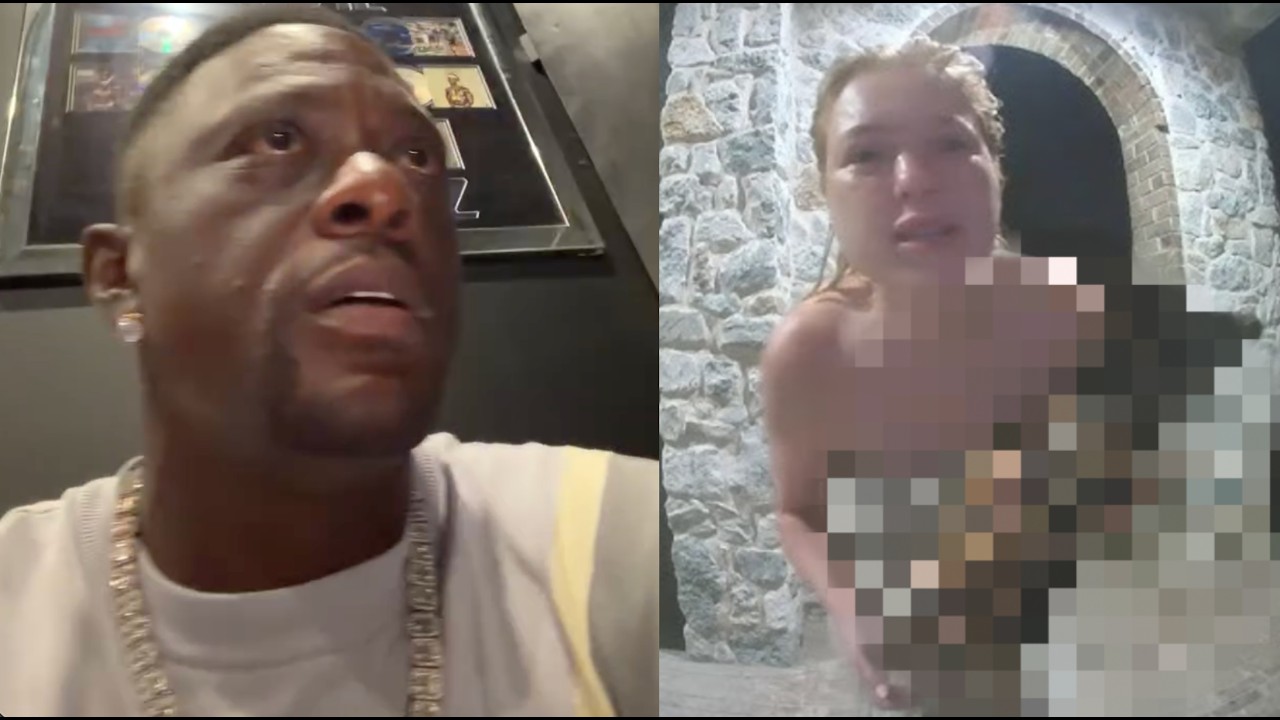 In a chilling confession, Boosie detailed how this relentless woman has haunted him for years, turning what might have seemed like a fan’s fixation into a terrifying ordeal. Over multiple incidents, she allegedly trespassed his property, blocked his driveway, and threw jewelry at his doorstep, demanding items back, showing extreme obsession.
The situation took a serious turn when the stalker reportedly brandished a BB gun, aiming it directly at Boosie on several occasions. Despite the non-lethal nature of the weapon, the threat was real enough to prompt police involvement. This weaponized intrusion has made clear just how vulnerable the rapper felt during these alarming encounters.
Boosie’s frustration and fear grew as the woman returned repeatedly, even after prior arrests. He admitted to seeing her two or three times in one week, including an incident just last month where she appeared buck naked at his gate, wearing only Timberlands—a stark, unsettling display signaling her unstable state.
This bizarre and protracted harassment has evolved beyond simple trespassing or fan obsession; it’s a serious safety concern with deep emotional and mental health implications. Boosie’s decision to go public now underlines the toll this stalking has taken, and highlights the darker side of fame few understand.
Remarkably, Boosie took an unconventional approach by bonding the woman out of jail himself. Spending roughly $3,500, he justified this move with a plea for compassion, believing she needs mental health assistance rather than being locked up indefinitely. This decision has sparked debate about the best way to handle such dangerous behavior.

The rapper explained that despite the threats and arrests, his priority became ensuring the woman received proper help. He openly called for mental health programs to take over her case, highlighting the complexities involved when public figures encounter troubled individuals who blur the line between fan and threat.
Police initially arrested the woman following multiple reports of stalking and the BB gun incident, but the story grew even stranger after Boosie posted video footage of the arrest and described letting her go—actions unusual in high-risk stalking cases, attracting widespread attention online.
Boosie recounted previous episodes where the woman reportedly threatened to “shoot up” his house and repeatedly showed up to his residence, sometimes as many as eight times in just a few months. Such persistent behavior crosses boundaries into harassment and criminal intimidation, escalating the danger he faced.
The rapper’s harrowing experience casts light on an often-overlooked hazard of celebrity: relentless fans crossing into illegal, even violent conduct. Despite fame offering many opportunities, it also places individuals at risk of fixation and stalking, situations more common and perilous than the public might realize.

Boosie’s openness about this ordeal is rare for public figures who tend to keep personal safety issues private. By revealing the full extent of the stalking, including the alarming BB gun incident and the woman’s erratic appearances, he raises important awareness about stalking’s serious impact.
As this story continues to unfold, Boosie’s candid updates provide a glimpse into the balancing act between security, compassion, and legal action. His approach—to confront the situation publicly, get law enforcement involved, then try to address the woman’s mental health needs—sparks discussion about best practices.
Fans and observers worldwide now weigh in: should victims of stalking show leniency or demand strict legal consequences? Boosie’s choice to bond out his alleged stalker with hopes of rehabilitation challenges typical responses and invites debate on managing such complex, prolonged threats.
The psychological toll on Boosie and his family is undeniable, and the rapper’s rare vulnerability in discussing the stalking shines a light on the urgent need for better mental health resources for individuals exhibiting dangerous behaviors. It’s a stark reminder that fear, trauma, and uncertainty often accompany fame.

Authorities remain involved, and Boosie promises to keep the public informed with any new developments. This precedent-setting case underscores the evolving nature of celebrity harassment and the thin line separating obsessive admiration from life-𝓉𝒽𝓇𝑒𝒶𝓉𝑒𝓃𝒾𝓃𝑔 menace.
With every new disclosure, the gravity of Boosie’s stalking ordeal deepens, exposing the dark reality behind headlines and social media posts—a persistent threat to personal safety hiding in plain sight, demanding urgent attention from law enforcement and healthcare professionals alike.
As Boosie’s story gains traction, it becomes a pivotal moment in conversations about celebrity security, mental health intervention, and the legal system’s role in protecting victims from prolonged stalking. The rapper’s decision to speak out may inspire others facing similar ordeals to seek help and demand action.
The ongoing saga also compels us to question how society supports those struggling with mental illness while simultaneously safeguarding individuals under threat. Boosie’s unusual yet empathetic response to bond out his stalker fuels a vital dialogue on these intertwined issues.
Ultimately, Boosie’s harrowing encounter with a stalker who escalated to armed trespassing serves as a powerful wake-up call to the dangers celebrities face daily. His public disclosure is a courageous step toward awareness, safety, and hopefully, change—for himself and others 𝒄𝒂𝓊𝓰𝒉𝓉 in similar predicaments.


