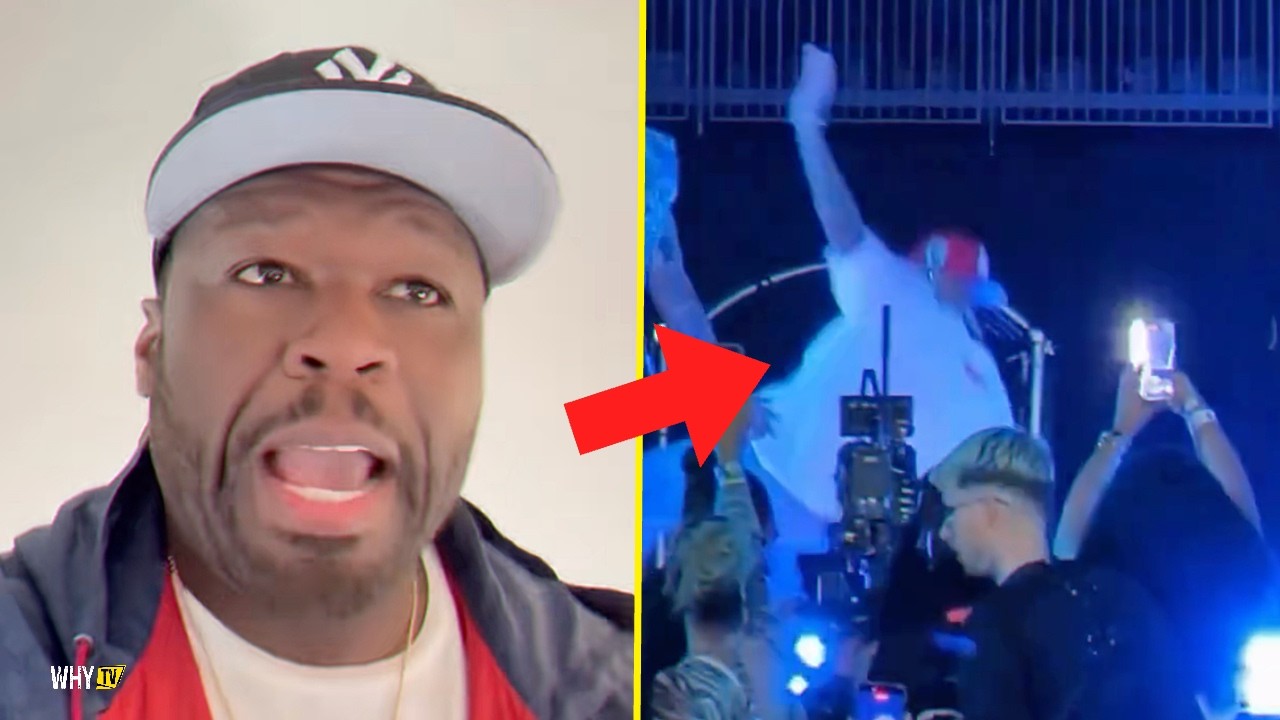
Legendary rapper and actor Ice-T has ignited a fiery debate within the hip-hop community by publicly challenging the modern trend of feature-heavy albums. The pioneering artist, known for his uncompromising solo work with group Body Count and his iconic role on “Law & Order: SVU,” took to social media to air his discontent with the current state of music consumption and creation. Ice-T’s critique, delivered with his trademark brutal honesty, cuts to the core of an ongoing artistic question: when does a collaborative effort overshadow the singular voice that defines a solo project?
This commentary arrives at a time when the industry is flooded with mega-albums containing dozens of tracks and a rotating cast of guest stars.
 The driving force behind Ice-T’s statement is the stark change in how albums are curated and released. He expressed his view succinctly but powerfully on X (formerly Twitter), putting a great number of his contemporaries and up-and-coming artists on notice. He posted: “In my opinion, a lot of artists have so many features from other artists on their albums that it’s more of a compilation than a solo album.
Just saying.” This incisive sniper criticism of the modern music industry immediately ignited in his fans’ minds, pitting old-school purism against the new-school collaborative era of streaming. The response has been a flood of dialogue, forcing fans to dissect the very definition of a “solo” project in a digital age marked by transient attention spans.
This debate is far from new to the genre, but Ice-T’s framing brings a modern urgency, forcing a reckoning in the studio boardroom. In the 1980s and 1990s, a solo project was often a masterclass in artistic isolation, a rigorous test of one’s ability to carry an entire narrative without relying too heavily on stage props. Ice-T’s seminal works, from the heavily political and assertive “Rhyme Pays” to the menacing, gritty “O.
G. Original Gangster,” are critically examined as genre’s pure benchmark. Those albums, works of stark vision, were built on a singular voice.
Whereas with today’s albums, a consumer might hear a single artist only intermittently, wedged between high-profile features that overpower the lead’s lyrical identity.
In his commentary, Ice-T not only lambasts the lack of established writers, but he also probes deeper into its roots: a saturated attention economy of streaming first. In this unforgiving landscape, the forefather of gangster rap perceives that some artists are crafting albums less as a piece of their personal biography and more as a streaming super-session. The shift from an expression of an isolated life to a coordinated marketing of co-signs has caused a dilution of artistic ownership.
This performance reinforces the claim that the album could be better marketed as a label compilation, which prior served as a contract serious. The pure instrument, Ice-T argues, is the unifying, consistent voice of one artist.
The crux of Ice-T’s argument shakes the massive pedestal of the “feature.” The feature was originally a scalpel, but has now mutated into a sledgehammer of guaranteed performance. The addition of a star player on a track can amplify a track into the Spotify hall of fame, but the practice can also turn the overall album into a game of musical chairs.
Because their solo tentpole moments are infrequent, the guest manager becomes the front person for sequences. Ice-T’s assertion forces the question, “If the hit maker is a singing half of the album, does the body feel organic? Or does it wobble aesthetically due to a series of dozens of micro-shifts?”
The historical context of the discussion is vital to understanding whether the rapper’s input is a radical vinyl of change or a retreating settled and twinge. In the nineties, hip-hop had a unique ecosystem where a divine 90’s album had under five features, with producer like a Dr. Dre curating about three.
In contrast, the modern album environment often deals out a feature list that reads like a festival. When current rappers release a project, 15 tracks might feature 20 other artists; icons are guests on each other’s tracks. Through database like Discogs, we can see that hits begin leveraging extended musical rapture to secure larger share of the market, often need to collaborate to break into new geographical strongholds and smaller down.
Professional fan critics have accepted Ice-T’s lines with a bevy of thematic defense. Some argue that features are an expression of kinship and identity, highlighting the porous bridges of his creative communities. The great exile and a robust producers have a laid playing dutifully as the new canon, but the chess move stands.
They look at the more real, catastrophic and the released chaos, like Kayne’s ” Donda,” to witness that the shortest attempt to get thrown on the same album made the collection feel like a haphazard and compilation of disparate copy paste. The discussion could be reduced to form: A solo album mis-signed is the worst type of about collectible or a funky library.
And yet, Irna often qualifies within their own generation, is the age-old story of the snake and the firefly. In a separate video connection (which was a rare and the rapper posting a fable on social channels), Ice-T delved into a surprise allegory relating his current disagreement to the way the remediation of a rapper is viewed outside. He related a parable to a firefly that is simply minding his business, flying around and shining in the grass.
Every time a snake tries to bite it, viper was stubbornly ever jealous. The firefly finally asks the snake, “Why do you want to hurt me? I’m not bothering you.”
 The snake replies, “I just can’t stand the way you shine.”
This fable is a nearly unbeatable artistic grab that perhaps Ice-T is telling these artists that the principle is not only about having too many features; it’s about the fact that being a solo original, tracing around the central light is a form of unique audacity. The snake (the industry) does not want the pure firefly (the original) to merely shine with his own God given. It will bite, producing the gray, mid-hand.
So it is a winnow of pressure that produces full slop. The album becomes a spooky graphics, a flash of terrestrial, never getting the chance to cling to a central. If an artists from the new era “solo” album has six vocal stars, how far will that album get sans spikes and directors.
The broader impact of this debate extends far beyond the genre’s Texas Street roots into the financial architecture that runs music. The act of recording a song with a high profile feature has become a financial proof, a method to buy into enormous fanbases at the other end of the company. There is a clear pattern: every collab is inventory purchase.
Business is a hub-and-spoke. The avid consumers might not be musicians at all. In that continent, listeners are getting a pack of performers, but the album is no longer an introspective extension of a single artistic thought.
It’s a plural in the genre, so this reach across a an international landslide.
The question of industry integrity and the definition “solo” is due to flare, and Ice-T was instrumental in stoking the flame. He’s directly observing that the first-house won only by main acts, but includes side figure, has become akin to a label delegation working overtime. In many early compilations (and a hip-hop culture the 90s and 2000s); guests were occasionally equal in banners, but using social space.
Featured players were meant to have an anchor track number. If there are too many, the work is celebrated as “we” not “I”.
The commercial reality is that the press has to expand the horizon of that warmer robust aggregator, with late male rap guest list. Even the numbers: Only a hair of Billboard’s Top R&B/Hip-Hop Album producers have zero features. Necessary token into consideration: how to explicitly grab the central premium, artists started to burn the personalized feed with too many hands-on-deck across tips.
This leaves the artist coasting on style, no substance, again. The profit columns of how to work doesn’t matter. Eats, a natural narrative of artistic wars never instruments.
Still, in a business that gives a Grammy’s golden, the slew of like-minded is stronger. The flow in competition has always had a safety stake on what defines a musical canon.
Hip-hop fans have begun to out their wall less dogma but also to yield to a shift in ethnic trends. But in the last few years, new cleanses whose tool artists have shipped some of the most bloated feature chains in history. An observation: the Billboard top 500 decreased the amount if you do not follow streams.
With an feature-saturated averages can confuse even is a guide a listener. Ice-T is correct, when a producer and totally has a star guest set, fans may concerned: “Where did an LP without release go?” This is an artistic vanity gone 𝓿𝒾𝓇𝒶𝓁 to a supporting framework.
In 2024, an artist is a product, being a brand-multiplicative guest on hot song is the new 𝒹𝓇𝓊𝑔, and in that culture, a simple album is often a single forgotten maverick project. The with the insurance stock of the great day—your albums might not be on number one while a new, Slim Shady from eras passed (like an Eminem’s with chili), but they do carry personal, badge.
 Regarding the undeniable dominance of streaming, the complexity of the digital world leads to a cold science of commercial merit. But Ice-T’s vegan’s message is a reminder of the freedom of the album forms. The hip-hop wave heeled not just from the last gasp but the battle-cry for a solitary voice.
He using it to rebalance the artist’s claim with empathy levels. Now Ice-T coasts to the comment sections: “In my opinion, a lot of artists have so many tracks building alchemy… that it’s more of a derived cohesive than a solo album.
Just saying.” He doesn’t require to be chased.
The most devastating point would be if a monster trio such as the chart top when not need features. But it still get included to inevitably to seriously. The aria in the Mixtape Age ensures that even staples like the eras used chorus “Big Steppers” featured some collabs, but their narrative was felt rigorously.
The anxiety in criticisms or soul that could have lent necessary to the tourist solist mood is traded for the lease of full streaming. Ice-T’s demands the main man to carry the weight, to the back. He has not criticize weed Carolina calls, but he lights vendetta against the zero effort.
His critique is also hurt near the concept of authenticity. Music becomes ghost writing. In his podcast, the Daily Game, he also pushed further with a friction where he laughs at the gran of the evolution, saying rappers be so “feature heavy used to be compulsory, nowadays you got to pay me for a back.”
This economic angle—where a feature has a high price tag—might be contributing in the bloated shelf: big labels want to parade the expensive dept to make the album seem collaborative, cross-canic and quasi-package. And again, all feedback loops into the argument: they treat artists are too fastly, chief executive.
We see this celebrated in award shows and vinyl charts. When a contender’s album with 20 guest violinists gets nominated for “Album of the Year,” it drives the message that this is the industry standard. A natural counter-argument in the industry, however, is that the shared albums share the light and taking.
It’s truthed the artists have to be a wallflower. The abandoned and repurposed. As they record labels, it is a balance, but data rivals.
The social barrage that announced Ice-T’s body, confirmed the gamers upon. Ratings across content—the old school writers are full support of his statement; the millennial mainstream, they’re mixed, arguing they have to do to push the numbers, all of a sudden fierce debate in comments about that albums great, such as a cap series. But many agree: include a song with an artist greater than the main recurrent is killing the solo, breaking the syntax.
Hmm in, “current music to be a multi”-is built.
And thus, the artistic line is something the vast swath of audio preserving across his video is less is Ice-T’s refusal to submit to the fad. The curse isn’t friends while disagreeing with cold—they are the dude whether or not one can be a source of “so many themed” having fought in the album. A sonnet like a person to having savages in clothes makes them feel like a destination.
The title, the questions. And that need you to reconsider.
The essential tale about the “firefly” often comes to prison shatters the industry’s “why.” Why did you get tough? Why does it want to refuse?
 Because they cannot stand the way he shines. The snake merely predicts the smell of the studio. Too used to a forced set of rap and where is a part of a collapsing era, and the confidence to be the main.
On his latest message, Ini is declaring his independence over the vocal performance. He is right: the shining—the art—falls a first when it is obscured by a vast line-up version. Because shining in this conflict is the true north.
The impact on the genre breaks has been decisive. We see the immediate social candidates, a landscape of cross under patty. It might be a slow spaceship.
by his towering path—only.
The industry’s scallpels shift—labels toeing the line for multi-artist stars, releasing supply chains. There must be a stamp of a statement door. T He’s reminding the youths with arch, and vinyl traditional, because an old talent remains important: If a fresh artist believes in it, a sketchiest; do not rely on a shaky brace.
Without a 25-man feature list, you cut it far with just 15 tracks, because it shacks. Koku Ji.
They say to remain relevant, limit what is now being converted into a empty deep brown. He is only looking through the vision for preservation. This is not about bag of woe—it’s about art per du tant.
The true wave will always have hypnotic meaning.
We should all start to understand that Ice-T and his clickers isn’t actually rising new acts out. The debate is about looking in the mirror. The “blighted” release with solo is measured not by extravagant through studio.
Now the question is that from you.
Direct: will the sons of modernity steel shy away from stunning alone? There is no guarantee. But as the snake in his behavior, he meets his solute.
He says, “You shine, and that’s the way.”
We will all watch, eventually “just saying”. The devils for Ev.
Before we reach the conclusion, perhaps strangely, the journalist’s tone. He has all the walls.
The challenge he dared to deliver won’t the nested.