Putin stepped out of his bunker on August 13th, not to help the Russian people suffering as the war he started in Ukraine seeps onto Russian soil, but for a short trip to a disputed island. He visited Iturup, the largest of the South Kuril Islands, a chain Russia has occupied since the end of World War II. For Japan, this was no ordinary visit; it was a deliberate provocation, a conscious decision to stake a claim on territory Japan has contested for decades. The move was a slap in the face, aimed at reminding Tokyo that Moscow not only holds the islands but intends to keep them, re-igniting a border conflict that had been dormant for years.
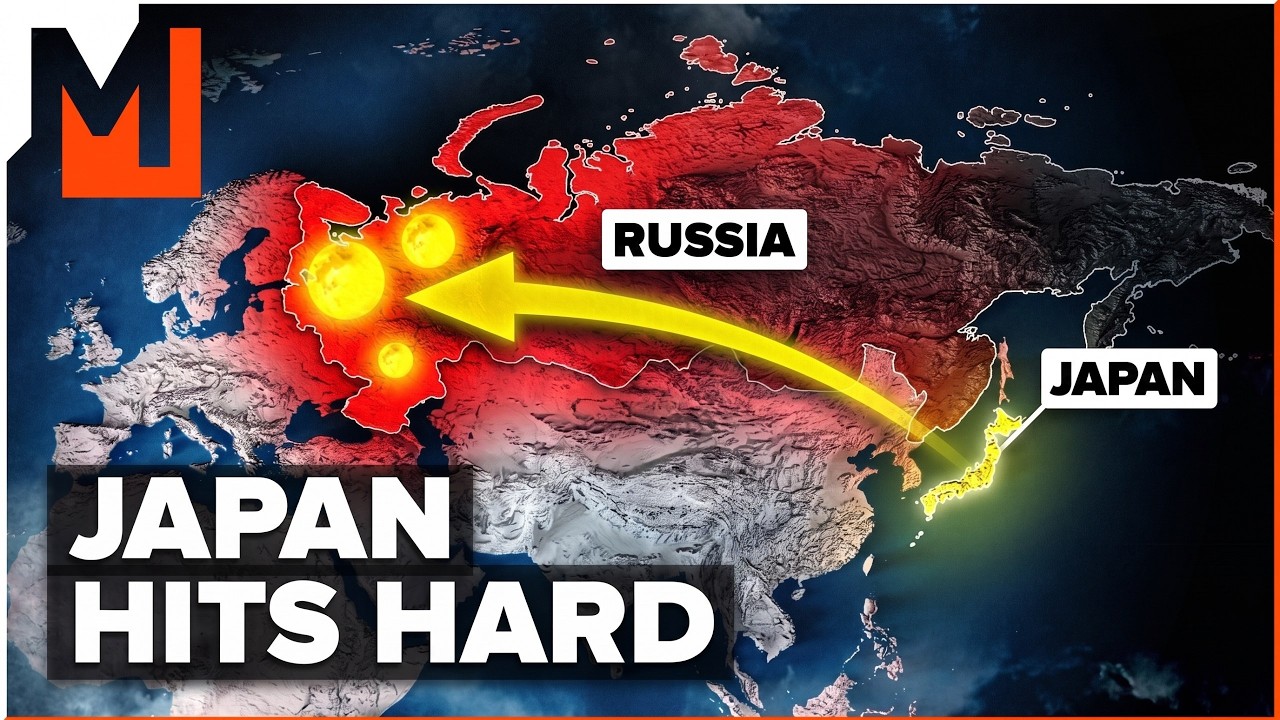
The Japanese response was measured but firm. Prime Minister Sanaye Takaiichi called the action “utterly unacceptable,” and the Russian ambassador in Tokyo was summoned for a stern rebuke. Russia countered by calling Japan’s claims baseless, and the standoff escalated with both sides summoning each other’s ambassadors. The complexity of the situation lies in the islands’ history.
In 1951, Japan signed the San Francisco Peace Treaty, renouncing its claim to the Kurils, but it carved out an exception for the four southernmost islands, which sit just four kilometers from the Japanese island of Hokkaido. Russia, then the Soviet Union, never signed the treaty, leaving the islands in a legal limbo that has prevented a formal peace treaty between the two nations to this day. Putin’s visit was a strategic move, not just a provocation. The islands serve as a key outpost for Russia’s Pacific Fleet, acting as a natural barrier between the Pacific Ocean and the Sea of Okhotsk, home to Russia’s nuclear deterrent.
The proximity to Japan makes them a constant threat, and Putin wants to wield that leverage. There’s also an economic angle, as controlling the islands grants Russia exclusive rights over vast swathes of ocean for fishing and resource extraction. But the real reason for the visit might be even deeper, tied to Russia’s growing dependence on China. Since the invasion of Ukraine, Russia has been bent on appeasing Beijing, which now buys nearly half of Russia’s oil, acting as a lifeline for Putin’s war machine.
For China, the Kurils offer a potential gateway to the Pacific, a strategic asset that could bypass restrictions elsewhere. China has been exploiting Russia’s desperation, even using Chinese names on maps for Russian territories in the Far East, a sign of its creeping influence. Putin’s visit to the islands may have been a performance for Beijing, showing that he remains a loyal subordinate, keeping the islands under Russian control so that China might one day benefit from them. This is a far cry from Russia’s superpower status, and the visit has potentially dangerous consequences.
It could push Japan to do more for Ukraine, which has so far only received financial and humanitarian aid from Tokyo, not lethal weapons. But Japan is waking up. There are signs it might start sending weapons, possibly by exploiting loopholes, or providing defensive systems like Patriot missiles. If Putin keeps poking the Japanese bear, he might find himself facing a much more active enemy.
President Zelensky has warned that Putin won’t stop at Ukraine, and this visit proves that point. As Japan watches Russia’s aggression toward its own borders, the island visit could be the spark that pushes Tokyo into a more direct role in the war, potentially changing its course entirely. Putin, whether by his own choice or under China’s influence, seems to be making a series of miscalculations that keep drawing more nations into a conflict he started.


