The rap feud between Rick Ross and Uncle Murda has escalated to a new and unexpected battleground, with the Miami mogul firing back at his longtime rival not with threats of violence, but with an offer of free dental work. In a bizarre and pointed response to Uncle Murda catching him on an economy flight, Ross turned the tables by questioning his opponent’s credibility and extending a charitable olive branch that cuts deeper than any diss track. The exchange, which unfolded on the Greg Street radio show, has sent shockwaves through the hip-hop community, transforming a petty airport sighting into a masterclass in psychological warfare.
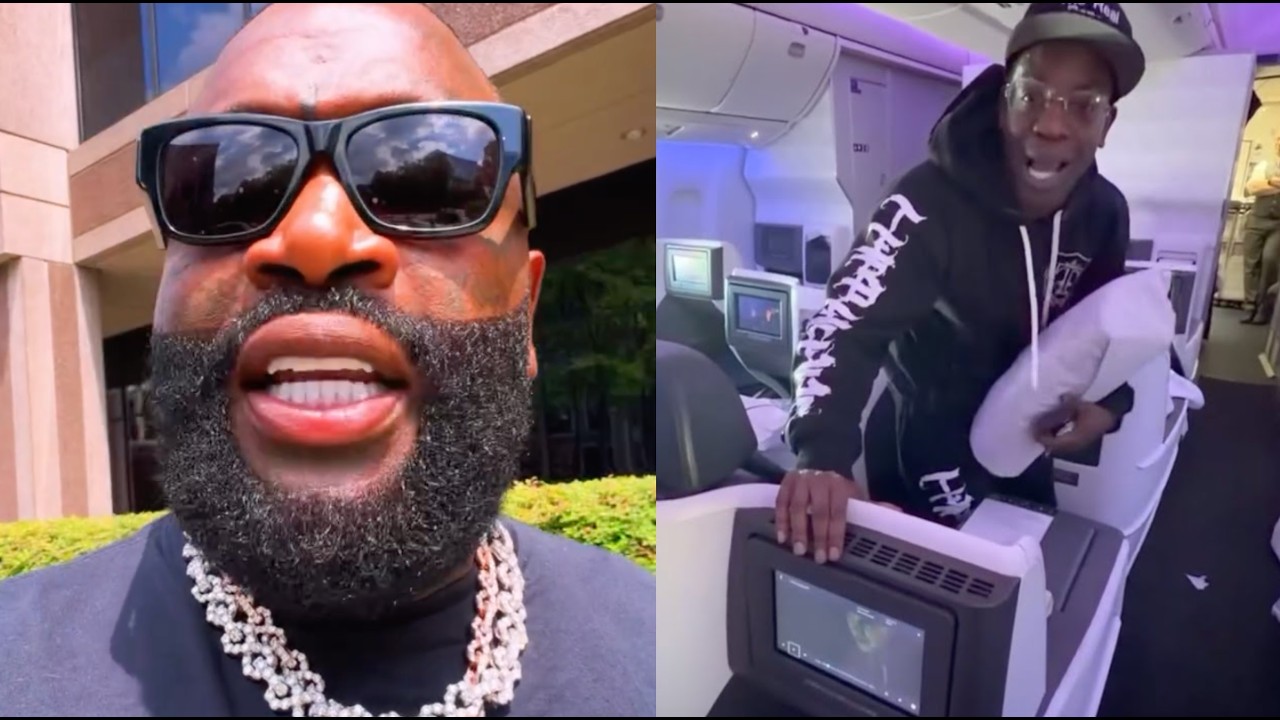 The 𝒹𝓇𝒶𝓂𝒶 ignited when Uncle Murda posted footage of Ross boarding a commercial flight, a moment that was meant to embarrass the self-proclaimed boss. In the video, Murda taunted, “We ain’t high like Rick Ross in the airport, neither,” as he filmed himself running through the terminal. The implication was clear: Ross, who often flaunts a lavish lifestyle of private jets and luxury cars, was caught slipping in the mundane reality of economy class. But Ross, never one to back down, turned the narrative on its head with a calculated response that reframed the entire incident.
“Uncle Murda, you ain’t never killed nothing, but what I want to do is give you and all your kids a free cleaning,” Ross declared on the airwaves, his voice dripping with condescension. He then introduced Mario Montoya, whom he called the “number one dentist in the game,” as the vehicle for his retaliation. The offer was not just a petty jab; it was a strategic move to highlight what Ross sees as Murda’s lack of street credibility and financial standing. By offering dental care, Ross positioned himself as a benefactor, while painting Murda as someone in need of charity.
The response was layered with references to other figures in the rap world, including 50 Cent, who has been embroiled in his own legal and personal battles. Ross mentioned 50’s recent ordeal in Detroit, where a man reportedly confronted him with a chopper, and extended the same dental offer to 50’s son, Sire. “I know what 50 going through right now. He may not be in the mood for this, you know, the after Detroit. A man was standing there with that chopper,” Ross said, weaving current events into his diss. This move showed Ross’s ability to stay relevant and connected to the broader hip-hop landscape.
The dental offer was not just a one-time gesture; Ross detailed a full package that included cleanings, cavity repairs, and even a horse ride for Murda’s favorite child. “I want to give back. Uncle Murda, I’mma let your kids get in the car show totally free. And after that you pick your favorite child and I’mma let that one ride the horses free,” he said, adding a layer of absurdity to the insult. The imagery of Murda’s children enjoying a day at the dentist and a pony ride was a stark contrast to the gritty street narratives that define their music.

The response has sparked intense debate among fans and industry insiders, with many praising Ross’s creativity in turning a potential embarrassment into a PR victory. By framing the encounter as an opportunity to give back, Ross deflected the shame of being caught on a budget flight and instead highlighted his own success and generosity. The move also underscored a key difference between the two rappers: Ross, despite his flaws, is seen as a mogul who can afford to be magnanimous, while Murda is viewed as a provocateur who relies on cheap shots.
Uncle Murda’s original video was intended to humiliate Ross, showing him in a vulnerable position that contradicted his larger-than-life persona. But Ross’s response transformed the narrative into a commentary on class and status within the rap game. By offering dental services, Ross implicitly questioned Murda’s ability to provide for his family, a far more damaging insult than any lyrical jab. The offer also played on the stereotype of rappers neglecting their dental health, a subtle dig that resonated with listeners.
The feud between Ross and Murda has a long history, dating back to Murda’s diss tracks and public criticisms. But this latest exchange marks a departure from the usual back-and-forth of insults and threats. Ross’s decision to use a dentist as his weapon is a testament to his evolution as a businessman and his understanding of the power of optics. In a genre where violence often dominates headlines, Ross chose a path that was both unexpected and effective.

The response has also drawn attention to Mario Montoya, the dentist Ross endorsed, turning a personal feud into a promotional opportunity. Montoya, who Ross called the “number one smile in the game,” likely gained significant exposure from the mention. This blend of personal vendetta and business savvy is a hallmark of Ross’s career, from his music to his ventures in the beverage and hospitality industries.
As the story continues to unfold, the hip-hop world is watching to see how Uncle Murda will respond. Will he accept the offer, or will he fire back with another diss? The ball is now in Murda’s court, but Ross has set the stage for a response that will be difficult to top. By turning a moment of weakness into a display of strength, Ross has once again proven why he remains a dominant figure in the rap game.
The incident also raises broader questions about the nature of feuds in the digital age. With social media and 𝓿𝒾𝓇𝒶𝓁 videos, rappers are constantly under scrutiny, and every move is subject to public judgment. Ross’s ability to spin a negative situation into a positive narrative is a skill that few possess, and it highlights the importance of strategy in maintaining a public image. In a world where perception is reality, Ross’s response was a masterstroke.

For now, the focus remains on Ross’s offer and what it says about his character. While some may see it as a petty insult, others view it as a genuine attempt to bridge divides through charity. Ross himself framed it as giving back, a theme that resonates with his philanthropic efforts in the past. “It’s too easy and you could never say Rosay don’t give back,” he said, daring Murda to challenge his generosity.
The response has also reignited discussions about the state of rap beefs, with many noting that Ross’s approach is a refreshing change from the violence that has plagued the genre. By using humor and generosity as weapons, Ross has set a new standard for how conflicts can be resolved in the public eye. Whether Murda takes the bait or not, this exchange will be remembered as a turning point in their rivalry.
As the story develops, one thing is clear: Rick Ross has once again proven that he is a master of the game, both on and off the mic. His response to Uncle Murda’s airport taunt is a lesson in turning a loss into a win, and it will be studied by fans and critics alike for years to come. The dental offer may seem trivial, but in the world of hip-hop, it is a powerful statement that speaks volumes about status, respect, and the art of the comeback.