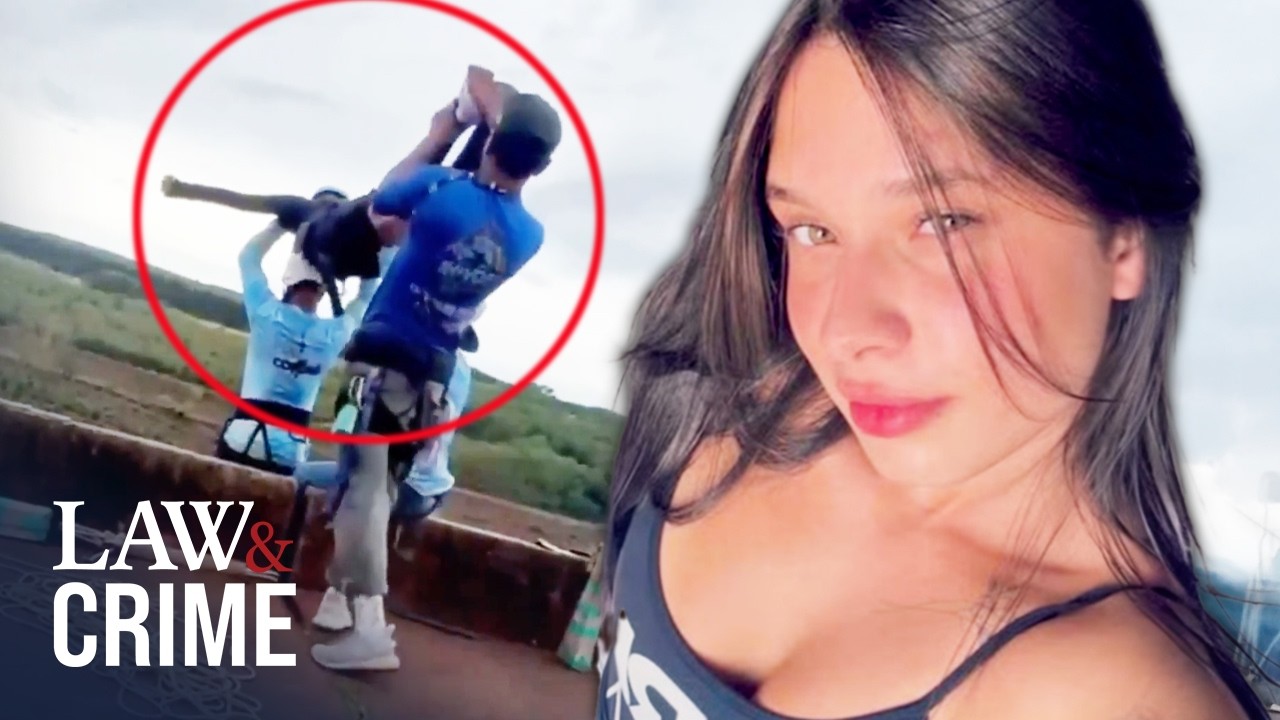
A 21-year-old woman was hurled 130 feet to her death from an abandoned bridge in Brazil after instructors allegedly failed to attach her safety rope, and now chilling new details are emerging in the investigation that has sparked outrage and raised urgent questions about oversight and accountability. Maria Eduarda Rodrigues de Freitas plunged from the Skeleton Bridge in Lumiar, a city over 90 miles north of São Paulo, on what was supposed to be a thrill-seeking rope jump. Instead, video footage circulating on social media captures the horrifying moment she falls, with bystanders screaming in Portuguese, “The rope, people, the rope.” Three instructors have been arrested and charged with homicide with eventual intent, a Brazilian legal concept that describes killing someone not necessarily with the intent to 𝓀𝒾𝓁𝓁 but by engaging in a dangerous act carrying a known risk of death. The suspects, identified as Luis Felipe Feliciano Egoroff, 32, Vitor de Freitas Gonçalves, 27, and Maicon Fernandes Cintra, 42, allegedly fled the scene before being captured.
 The bridge, a former rail line that has been out of operation for 30 years, is now slated for demolition by the federal government, a move that came only after Freitas’s death. Councilwoman Bruna Magalhães confirmed to local media that the federal government authorized the demolition, with the mayor providing equipment. “The important thing is that lives will not be lost here,” she said. This decision has raised suspicions of a consciousness of guilt, as critics argue it took a tragedy to address known risks. The city government had previously sent letters to the federal government requesting security inspections of the bridge, but those pleas were ignored until now. The demolition, while intended to prevent future deaths, has done little to quell the fury over what many see as a preventable catastrophe.
Adding to the disturbing revelations, social media influencer Estefani Gonzalez revealed she had engaged in the same rope jumping activity at the same bridge with the same instructors just one month before Freitas’s death. Gonzalez posted a video of her Superman-style jump on Instagram in May, and she said there were 90 participants that day. After Freitas’s death, Gonzalez opened up about her experience, stating that the organizers told participants not to distract the rope operators because they didn’t want them to lose attention or focus. She claimed there were several safety checks of the equipment and that operators shared duties, leaving her baffled about what went wrong. “I don’t really know what happened,” she said, underscoring the confusion surrounding the fatal incident.
Authorities have revealed that the company operating the rope jump did not have authorization to be there. Delegate Andrea Dantas Leavy told outlet O Globo that the death was a result of a failure to verify and supervise the placement of the rope on the jump. The men allegedly carrying Freitas were wearing shirts emblazoned with the brands Andre Cordas and Evoy, which authorities say are informal groups of rope jumping practitioners, not an official company. Defense attorneys for the suspects have claimed they don’t know who was responsible for attaching the safety line that day, describing the individuals as highly experienced and noting that this was the company’s only death in years. According to NBC News, the defense lawyer said the suspects are in shock, and reports from O Globo indicate they appeared disoriented, unable to explain why the rope wasn’t attached or why a safety check wasn’t performed.

One of the arrested individuals allegedly told authorities he didn’t even realize Freitas hadn’t been secured and only understood what was happening when he heard people screaming. He claims he left the platform, saw what happened, repelled down, and found police and a healthcare professional performing life-saving measures. This account has been met with skepticism, as experts question how such a critical oversight could occur. The video footage shows Freitas wearing a helmet and harness, but she was not attached to the safety equipment, while the instructors appeared to be attached to a safety rope. This discrepancy has fueled accusations of gross negligence and a lack of basic safety protocols.
Bungee and rope jumping expert Matt Lawrence, director of Bungee Consultants International, weighed in on the case, highlighting the fundamental differences between bungee jumping and rope jumping. He explained that rope jumping, which dissipates energy through air drag and pendulum motion, is less regulated than bungee jumping, which uses rubber cords and has established safety standards. “The barriers for entry into that activity are quite low, and anybody with a harness and a rope can really go ahead and do this, making a quick buck,” Lawrence said. He emphasized that without a site operations manual, checklists, and redundant safety measures, such tragedies become more likely. “If you have a site operations manual, you have a series of checklists that everybody has to go through. Before that person gets to the edge, there are 10 things that have to happen,” he said.

Lawrence pointed to the lack of redundancy in the operation, noting that proper procedures would include double-checking harnesses, connections, and anchor points. “You can ride a horse backward your whole life and never fall off, but eventually, it catches up to you,” he said, suggesting that the instructors may have gotten away with unsafe practices for years until this fatal mistake. The expert also advised consumers to look for red flags, such as whether a company has a real website, insurance, and a permanent operation. “If a company has a real brick-and-mortar presence, they have a lot more to lose and a lot more to be careful for,” he said.
The legal landscape in Brazil has added another layer of complexity to the case. Brazilian criminal defense attorney Adriel de Barca explained that the suspects are being charged with homicide with eventual intent, a charge that requires proving they knew the risk and didn’t care if someone died. She argued that this charge is often used in high-profile cases to justify preventive detention, but she believes the defense will argue for a lesser charge of negligent homicide. “In court, it’s going to be very hard to prove intent,” she said, noting that the government’s failure to secure the bridge and the lack of authorization for the operation could shift blame away from the instructors. The suspects remain in preventive detention as the case unfolds.

The demolition of the Skeleton Bridge has done little to address the systemic issues that allowed this tragedy to occur. The city government had previously warned about the bridge’s dangers, but no action was taken until a young woman lost her life. The informal nature of the rope jumping operation, with no official company or regulatory oversight, has raised calls for stricter regulations and enforcement. As the investigation continues, the focus remains on the three instructors who allegedly failed to secure Freitas, but questions linger about the broader responsibility of authorities and the culture of unregulated adventure sports.
The case has drawn international attention, with many expressing shock at the sheer negligence involved. The video of the incident, which has been widely circulated, serves as a grim reminder of the consequences when safety is compromised. Freitas’s family is left to grieve, while the suspects face an uncertain legal future. The defense attorneys maintain that their clients are experienced and that this was a tragic accident, but prosecutors argue that the lack of a safety check and the failure to attach the rope constitute criminal recklessness. The outcome of this case could set a precedent for how such incidents are handled in Brazil and beyond.
As the story develops, more details are expected to emerge about the events leading up to that fatal jump. The influencer’s testimony, the demolition of the bridge, and the expert analysis all point to a systemic failure that prioritized profit over safety. For now, the world watches as Brazil grapples with the aftermath of a death that could have been prevented. The question remains: how many more lives will be lost before meaningful change is implemented? The answer may lie in the outcome of this investigation and the legal proceedings that follow.