The simmering tension between Cash Money Records mogul Birdman and former Hot Boys standout Hot Boy Turk has exploded into the open, with Birdman finally delivering a blunt and unfiltered explanation for why he refused to embrace Turk following his release from a nearly nine-year prison stint. The revelation, which surfaced during a candid interview, has sent shockwaves through the hip-hop community and reignited a decade-old debate about loyalty, obligation, and the true nature of the bonds forged during Cash Money’s meteoric rise to dominance.
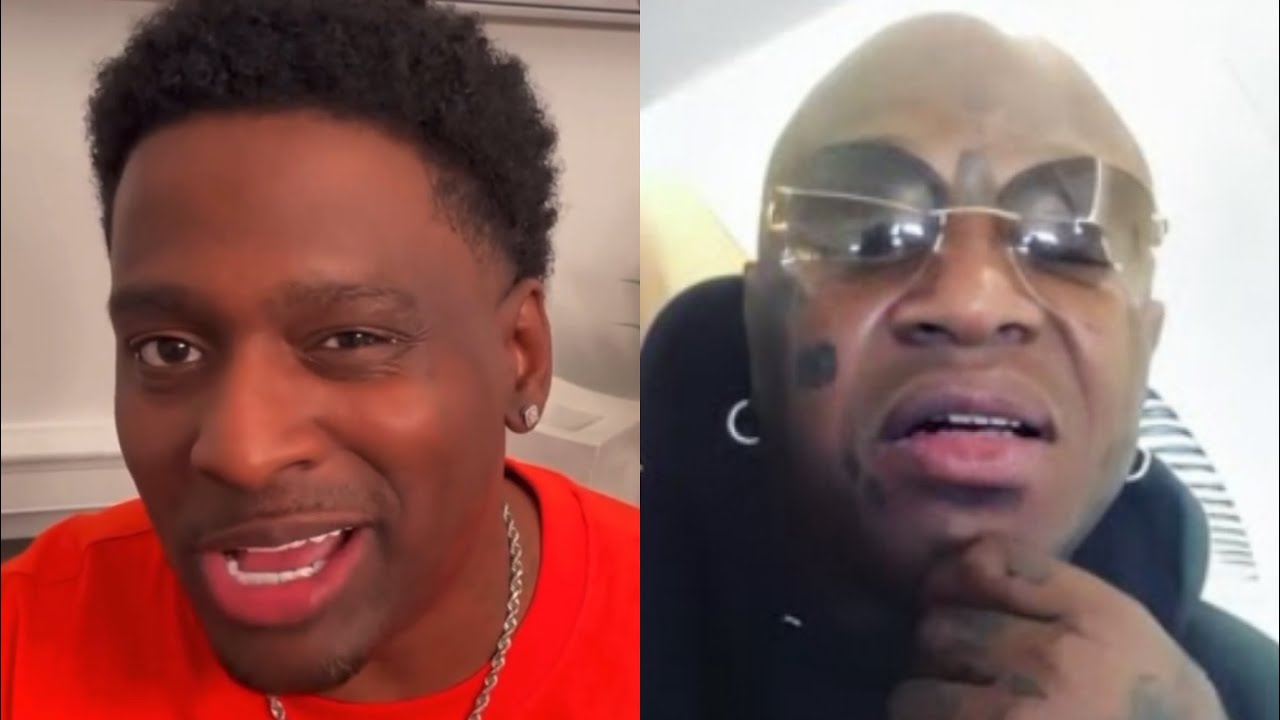
For months, Turk has used social media platforms to air his grievances, painting a picture of abandonment and neglect that stood in stark contrast to the lavish homecoming Birdman orchestrated for fellow Hot Boys member BG. The imagery was impossible to ignore: BG emerged from incarceration to a red carpet rollout that included a brand new Cash Money chain, a customized Cash Money charm, a luxury watch, and dental work that restored his smile to its former glory. It was the kind of treatment one might expect for royalty, and in the world of Cash Money, BG had long been viewed as the cornerstone of the empire.
Turk, by contrast, described a vastly different reality upon his own release. According to the rapper, the only people waiting for him were his wife and perhaps one or two loyal friends. There was no red carpet, no custom jewelry, no entourage of label executives ready to reintegrate him into the fold.
Turk stated that he walked out of prison with roughly a thousand dollars to his name, forcing him and his wife to hustle and grind from nothing to rebuild their lives from the ground up.
The disparity between the two homecomings became a flashpoint for Turk, who has repeatedly questioned why Birdman extended such generosity to BG while offering him nothing. His frustration was palpable in recent social media posts, where he accused the label and its leadership of turning their backs on him despite his contributions to the Hot Boys legacy. The optics, as Turk framed them, were painful: one veteran celebrated, the other left to fend for himself.
Now Birdman has responded, and his words carry the weight of a man who feels no obligation to explain himself, yet chose to do so anyway. In a clip that has since gone 𝓿𝒾𝓇𝒶𝓁, Birdman dismissed the controversy as small talk and made his position unmistakably clear. He stated that when Turk came home after those long years in prison, he had no relationship with him whatsoever, and that is the fundamental reason why he did not extend the same treatment that BG received.
Birdman was direct and unapologetic, asserting that he did not choose Turk because there was no real connection there. He emphasized that his decision was not rooted in malice but in the absence of a genuine bond. The mogul invoked his old school sensibilities and the G-code, a reference to the unwritten rules of loyalty and street ethics that have guided his career.
For Birdman, the equation is simple: if there was no relationship before the prison sentence, there was no obligation upon release.
His comments, however, have opened a fresh wound in the ongoing narrative of Cash Money’s fractured family tree. The Hot Boys, once a cohesive unit featuring Juvenile, Lil Wayne, BG, and Turk, have long been the subject of reunion speculation and nostalgic reflection. But the reality of their interpersonal dynamics has always been more complicated than the music suggested, and Birdman’s latest remarks have laid bare the hierarchies that existed within the label’s roster.
Birdman did offer a measure of goodwill, noting that he holds no hatred toward Turk and that he wishes him nothing but the best. But the qualifying language that followed was telling. He described Turk in terms that suggested a certain temperament, a personality that perhaps did not align with the inner circle that Birdman cultivated.
The mogul reiterated that his lack of involvement was not a recent development but a longstanding reality that predated Turk’s incarceration.
The broader context is essential to understanding the full weight of this dispute. Cash Money Records, founded by Birdman and his brother Ronald Slim Williams, rose from the streets of New Orleans to become one of the most influential labels in hip-hop history. The Hot Boys served as the vehicle for that rise, with their multi-platinum albums and relentless touring bringing the label national attention.
But within that group, roles were not equal, and the dynamics were often driven by business as much as brotherhood.
BG, often referred to as the heart of Cash Money in its early years, holds a special place in the label’s mythology. It was BG who carried the Cash Money flag during the formative period, delivering records that connected with audiences on a deep level and helping to pave the way for the national distribution deal that would eventually transform the label into an empire. His contributions, while sometimes overshadowed by the later superstardom of Lil Wayne, are undeniable in the eyes of longtime fans and industry insiders.
The host of the podcast that first amplified this story, Oshea, offered his own perspective on the controversy, expressing a measure of sympathy for Turk’s position. He suggested that while a full BG-style homecoming may not have been warranted, Birdman could have at least extended a gesture of financial support, perhaps five or ten thousand dollars, to help Turk get back on his feet. The argument being that even a small token of goodwill would have gone a long way toward demonstrating that the label still cared about its alumni.
But Oshea also acknowledged the validity of Birdman’s defense. If there was no genuine relationship prior to Turk’s incarceration, then the expectation of support may have been unrealistic. The label helped set Turk up for success during his time with the Hot Boys, providing him with a platform and opportunities that many artists could only dream of.
From Birdman’s perspective, that initial investment may have been the extent of his obligation.

This is not the first time that Cash Money’s handling of its artists has come under scrutiny. Over the years, a litany of former signees has raised complaints about royalty payments, creative control, and the label’s willingness to support artists once they were no longer generating revenue. The broader pattern has led to questions about the sustainability of the label’s artist relationships and whether the loyalty that Birdman preaches is extended only to those who remain within his inner circle.
Turk’s story, in particular, resonates with fans who have followed his career arc. As a member of the Hot Boys, he was part of a movement that defined a generation of Southern hip-hop. His energetic delivery and streetwise lyrics made him a fan favorite, and his absence from the group’s later activities has always been a point of curiosity.
His legal troubles and subsequent imprisonment effectively removed him from the spotlight, and his reemergence has been marked by a desire to reclaim his place in the narrative.
The timing of this latest controversy is notable, as Cash Money and No Limit Records are reportedly planning joint tour dates beginning in September. The potential for a reunion of the Hot Boys has been a topic of intense speculation among fans, who have long hoped to see Juvenile, Lil Wayne, BG, and Turk share a stage once again. Birdman’s comments, however, cast doubt on whether Turk will be included in any of these planned appearances.
Oshea raised this very question, wondering aloud whether Turk would pop up on any of the upcoming Cash Money No Limit tour dates. The answer remains unclear, but the public airing of these grievances does not bode well for a reconciliation. If Birdman is unwilling to acknowledge a relationship with Turk, it seems unlikely that he would extend an invitation to participate in what would be a highly lucrative and high-profile series of shows.
For Turk, the stakes extend beyond mere financial compensation. There is an emotional component to this dispute that cannot be ignored. To see a fellow Hot Boys member receive the full treatment, complete with jewelry, watches, and a public show of affection, while you are left to rebuild your life with only a thousand dollars and a wife, is a bitter pill to swallow.
The public nature of the comparison only amplifies the pain.
Birdman, for his part, appears unmoved by such appeals to sentimentality. His worldview is shaped by a code that values genuine connections over superficial allegiances. If a person was not part of his inner circle before, he sees no reason to pretend otherwise now.
This is a man who has built an empire on personal relationships, and he is not in the habit of extending grace to those outside his trusted orbit.
The reaction from the hip-hop community has been divided. Some fans side with Turk, arguing that Birdman’s wealth and influence carry with them a certain responsibility to support those who helped build the brand. Others side with Birdman, noting that he is under no obligation to support an artist with whom he had no personal relationship, regardless of past professional associations.
The debate reflects a broader tension in the culture about the nature of loyalty and the expectations placed on successful artists.
There is also the question of Turk’s role in the Hot Boys’ legacy and whether he is being treated fairly in the historical record. While BG was undeniably a driving force in the group’s early success, Turk was also an integral part of the equation. His presence on classic records and his chemistry with the other members contributed to the group’s unique sound.
To diminish his contribution is to rewrite history in a way that serves the interests of the label.
The podcast host’s commentary highlighted this tension, noting that while BG deserves recognition for his role in putting Cash Money on the map, Turk’s contributions should not be so easily dismissed. The suggestion that Birdman could have offered a modest financial gesture to help Turk transition back into society seems like a reasonable middle ground, yet it is a suggestion that Birdman has effectively rejected through his words and actions.
Industry observers have noted that this kind of public friction is rarely without consequence. The upcoming tour could be affected, with fans potentially choosing sides and ticket sales reflecting the controversy. More importantly, the dispute could have lasting implications for the Hot Boys’ legacy, complicating any future attempts at a full reunion.
The window for such a reunion is already narrow, and public infighting only narrows it further.
Birdman’s reference to the G-code is particularly significant in this context. The G-code, in its various interpretations, emphasizes loyalty, honor, and the importance of standing by those who have stood by you. By invoking this code, Birdman is framing his decision as an adherence to principles rather than a failure of character.
He is suggesting that Turk was never truly his man, and therefore, the code does not require him to act as if he were.

Turk’s response to Birdman’s comments has not yet been delivered, but it is almost certain to come. He has shown a willingness to use social media as a platform to address perceived slights, and this latest provocation is unlikely to go unanswered. The back-and-forth could escalate, drawing in other members of the Hot Boys and forcing them to take sides in a dispute that many would prefer to avoid.
Juvenile and Lil Wayne, in particular, may find themselves in an awkward position. Both have had their own complicated relationships with Birdman over the years, and both have maintained some level of connection to Turk. Their public statements, or lack thereof, will be closely scrutinized by fans eager to understand the internal dynamics of the group.
The silence of BG, who is currently enjoying the fruits of his reconciliation with Birdman, will also be notable.
The larger story here is about the nature of loyalty in the music industry and the often transactional realities that underpin relationships between artists and executives. For every story of a label supporting an artist through difficult times, there are countless stories of artists being left behind once their commercial value diminishes. Turk’s experience, while uniquely painful in its public dimensions, is far from uncommon.
The Cash Money No Limit tour, when it launches in September, will be a test case for the label’s ability to navigate these interpersonal challenges. The lineup has not been fully announced, and the inclusion or exclusion of Turk will be a major talking point. If he is excluded, the snub will be interpreted as a confirmation of Birdman’s comments.
If he is included, it will be seen as a sign that the mogul is willing to separate business from personal feelings.
For now, the ball is in Turk’s court. He has the opportunity to respond to Birdman’s remarks, and his choice of words will shape the next chapter of this unfolding saga. He could choose to escalate the conflict, matching Birdman’s bluntness with his own grievances.
He could also choose to take the high road, acknowledging Birdman’s position while continuing to build his own legacy independent of the Cash Money umbrella.
The podcast host concluded his commentary with a philosophical reflection, noting that there is validity on both sides of the argument. He understands Turk’s frustration and the feeling of being left behind, but he also understands Birdman’s insistence on the primacy of genuine relationships. In the end, he suggested, each man is entitled to his own perspective, and the world will move on regardless of whether this dispute is ever fully resolved.
What remains clear is that this story has touched a nerve. It speaks to fundamental questions about family, loyalty, and the obligations that come with success. It also serves as a reminder that the glamorous world of hip-hop is often built on a foundation of complicated personal histories and unresolved tensions.
The public may never know the full truth of what transpired between Birdman and Turk, but the fragments that have emerged are enough to fuel endless speculation.
As the industry watches and waits for the next development, one thing is certain: the relationship between Birdman and Turk, whatever it once was, will never be the same. The words have been spoken, the positions have been staked, and the divide has been made public in dramatic fashion. Whether this leads to a reconciliation or a permanent rupture remains to be seen, but the scars left by this exchange will be lasting.
The fans who grew up listening to the Hot Boys, who watched Cash Money rise from the streets of New Orleans to global dominance, are left to grapple with the reality that the brotherhood portrayed in the music was not always reflected in the actual relationships. The mythology of the label, carefully cultivated over decades, has been pierced by the candid words of its founder. The image of a unified family has given way to a more complicated picture of selective loyalty and hard-edged business decisions.
In the coming days, the reaction to Birdman’s comments will continue to unfold across social media, in interviews, and in the court of public opinion. Turk will likely have his say, and the discourse will evolve. But no amount of commentary can undo the fundamental truth that Birdman has articulated: he did not view Turk as someone with whom he shared a deep bond, and he feels no obligation to pretend otherwise.
The broader implications for Cash Money Records are significant. The label, once a powerhouse in the industry, has seen its roster shrink and its influence wane in recent years. Rebuilding that legacy will require careful management of its remaining assets, including the relationships with its surviving stars.
 Public disputes like this one do little to inspire confidence in the label’s ability to rally its troops for a comeback.
There is also the question of legacy and how Birdman wishes to be remembered. He has positioned himself as a patriarch, a figure who built an empire and nurtured generations of talent. His treatment of Turk, as perceived by many, complicates that narrative.
The image of a benevolent father figure is difficult to maintain when a former protégé is openly accusing him of neglect. Birdman’s defense, while logically consistent, may not be emotionally satisfying to those who expected more from a man who has so often spoken of family.
Turk’s journey since his release has been one of resilience and determination. He and his wife have worked to build something from nothing, and he has been vocal about the challenges of reintegrating into a society and an industry that moved on without him. His story is one of survival, and the fact that he has managed to rebuild his life in the face of such indifference is a testament to his character.
Whether he receives recognition from his former label or not, his accomplishments since his release are worthy of respect.
The comparison between his homecoming and BG’s will continue to be a point of contention. It is a stark illustration of how the same institution can treat its artists in vastly different ways, and it raises uncomfortable questions about favoritism and the criteria by which support is extended. Why was BG deemed worthy of the full treatment while Turk was not?
The answer, according to Birdman, is simple: the relationship was different. But for Turk, and for many observers, that answer feels insufficient.
The upcoming tour dates add a layer of urgency to the situation. If Turk is not included, the narrative will be that Birdman followed through on his comments, excluding the rapper from the festivities. If he is included, it will be a surprise that contradicts the implied distance between them.
Either outcome will be dissected by fans and media alike, and the tour itself will be overshadowed by the ongoing 𝒹𝓇𝒶𝓂𝒶.
For now, the hip-hop world waits. The next move belongs to Turk, and his response will determine the trajectory of this story. He has been silent since Birdman’s comments emerged, but his silence is unlikely to last.
The man who has never been afraid to speak his mind will almost certainly have something to say, and the ensuing exchange could be the most dramatic chapter yet in this long-running saga.
In the broader cultural landscape, this dispute is a reminder that the bonds forged in the crucible of creativity and commerce are often fragile. The music that brings joy to millions is the product of human relationships that are as messy and complicated as any other. The mythology of the family, so central to hip-hop’s self-image, is constantly being tested by the realities of ego, ambition, and money.
Birdman’s comments have been characterized by some as cold and by others as honest. The truth likely lies somewhere in between. He is a man who has built his life around a code, and he has applied that code consistently, even when it leads to uncomfortable outcomes.
His refusal to feign a relationship that does not exist is, in a sense, a form of integrity. But integrity, in this context, comes at the cost of a young man who once believed he was part of something bigger than himself.
The story of Birdman and Turk is ultimately a story about the limits of loyalty and the boundaries of obligation. It is a story about what we owe to those who were once part of our lives and what we are entitled to expect in return. It is a story that will resonate far beyond the world of hip-hop, touching on universal questions about family, friendship, and the meaning of community.
As the days pass and the story continues to develop, one can only hope that some measure of resolution is achieved. Whether that resolution comes in the form of a public reconciliation, a private understanding, or a permanent parting of ways, the hope is that both men find peace. The music they created together will endure, and the fans who love them will continue to hold out hope that the Hot Boys can one day be whole again.
For now, however, the focus is on the words that were spoken and the wounds that were opened. Birdman has made his position clear, and the ball is in Turk’s court. The nation watches, the debates rage, and the story evolves in real time.
This is the nature of breaking news in the digital age, and this is the moment that will define the next chapter of a saga that has captivated hip-hop for decades.