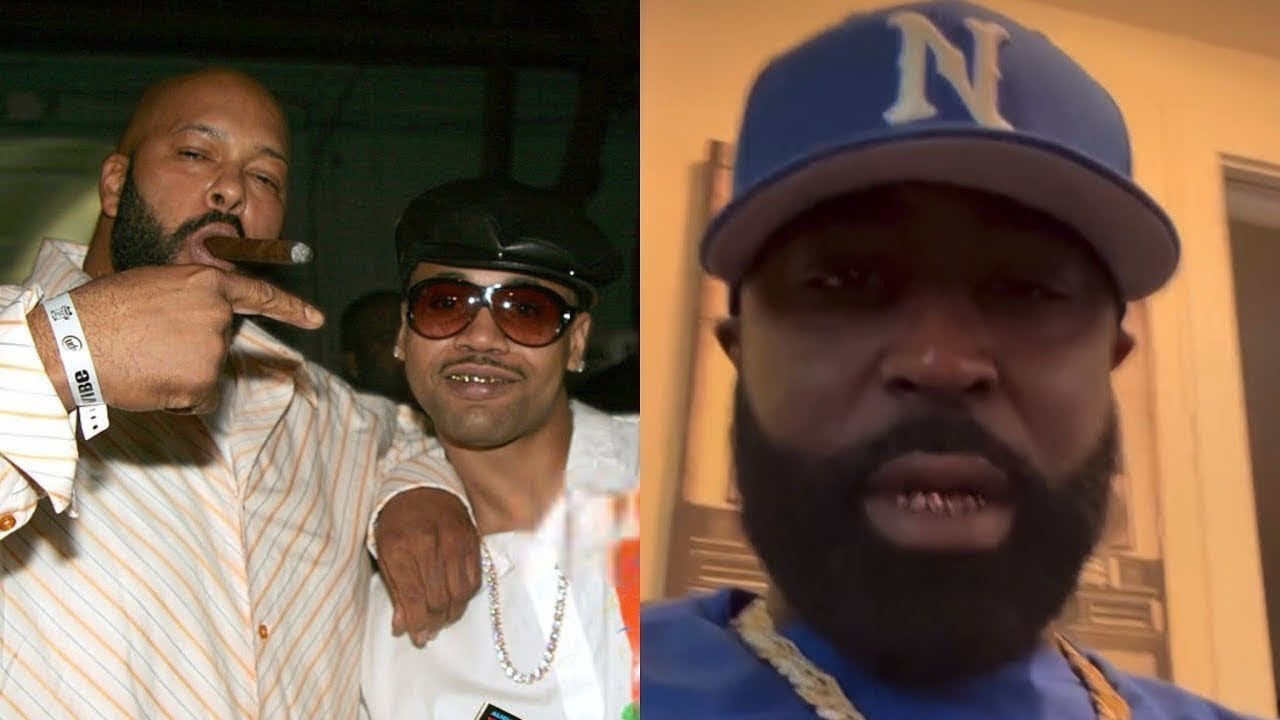
The silence that has defined the fractured relationship between Cash Money Records co-founder Birdman and former Hot Boys member Hot Boy Turk for nearly a decade has finally been broken, and the explanation delivered by the hip-hop mogul is cutthroat, unapologetic, and steeped in an old-school code of loyalty that leaves no room for sentimentality.
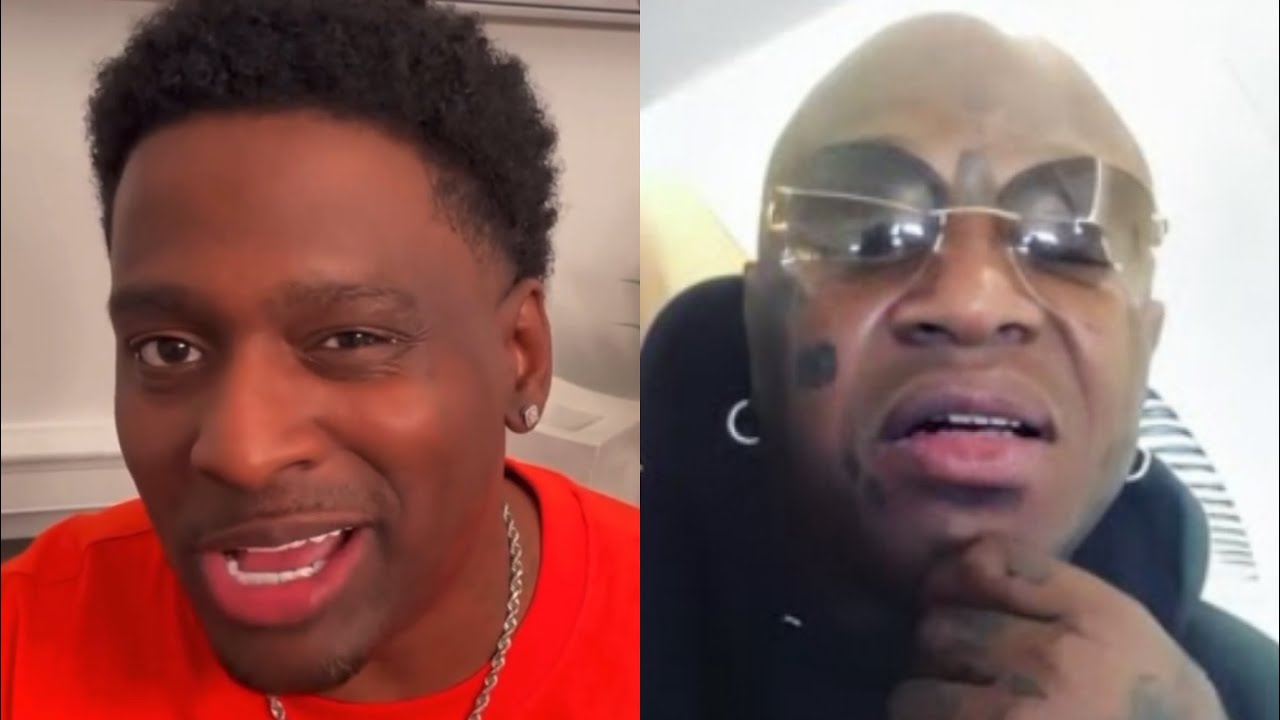 In an exclusive clip that surfaced on the Nation of Our Occasion Daily podcast, Birdman addressed head-on the long-simmering accusations from Turk, who has repeatedly claimed that upon his release from prison after serving almost nine years, he received zero support from the Cash Money machine, zero red carpets, and zero financial assistance from the man who once served as his label boss.
Birdman, however, is not budging.
His response is a masterclass in cold-blooded business logic wrapped in the language of the streets. He admitted, point-blank, that he never had a real relationship with Turk leading up to the rapper’s incarceration, and therefore felt absolutely no obligation to check for him when he came home.
“Believe me, when he came home after being in prison almost nine years,” Birdman stated in the clip, his tone carrying the weight of a man uninterested in public relations spin.
“To be honest, that’s small talk. I ain’t have a relationship with Turk. Not at all.
So, I ain’t chose Turk.”
The comment was jarring in its directness, a stark departure from the performative reconciliation that often characterizes hip-hop feuds. Birdman made it abundantly clear that he does not hand out loyalty like charity, and the relationship with Turk was never deep enough to warrant the kind of homecoming celebration that was lavished on another Hot Boys alum, BG.
“I ain’t forgiving everybody,” Birdman continued, his voice unwavering. “I ain’t one of them. I’m old school, old love, G-code.
You heard me talk, but I ain’t got nothing but love for Turk. I didn’t have a relationship with Turk before he went to jail. So I didn’t chose Turk.”
That admission has sent shockwaves through the fanbase of the Hot Boys, the legendary New Orleans quartet that once dominated the late nineties and early 2000s alongside Juvenile, Lil Wayne, and BG. For years, the story of the Hot Boys was told as a brotherhood, a unit that rose from the Magnolia Projects to global superstardom under the Cash Money banner.
Now, Birdman is rewriting that narrative, at least as it pertains to Turk.
The message is clear: Turk was part of the roster, not part of the inner circle, and there is a monumental difference between the two statuses in the Birdman hierarchy.
This public airing of grievances did not occur in a vacuum. It is the culmination of months of social media warfare initiated by Turk, who took to various platforms to speak candidly about his frustration and disappointment with the lack of support he received upon his release.
Turk has painted a vivid picture of his homecoming: no champagne, no private jets, no new chains, and no executive phone calls. Instead, he described himself as surviving on roughly one thousand dollars, forced to lean on his wife and a handful of loyal friends to rebuild his life from the ashes of a nearly decade-long prison stint.
“I had like a thousand dollars to my name when I got out,” Turk has said, his words dripping with bitterness and a sense of abandonment.
He described the grind he and his wife endured to reach their current position, a hustle that he claims took place entirely without the assistance of his former label family.
The contrast that has fueled this fire is the treatment Birdman extended to BG, a fellow Cash Money original who also faced serious legal troubles. When BG was released, Birdman rolled out what can only be described as a red-carpet welcome home fit for royalty.
The optics were impossible to ignore. BG was draped in a brand-new Cash Money chain, adorned with a fresh Cash Money charm, gifted a luxury watch, and even taken to have his dental work completely restored. It was a full-court press of love, resources, and public endorsement, a clear signal that BG remained a cornerstone of the Cash Money legacy.
Turk watched that homecoming from the sidelines, and the visual comparison has haunted him. He has openly questioned why his homecoming was met with silence while BG received an all-out mobilization of the Cash Money infrastructure, leaving fans to wonder if there was a deeper, more sinister reason for the disparate treatment.
In the court of public opinion, the jury is still deliberating.
The podcast host who conducted the interview offered a nuanced take, finding himself torn between the two narratives, each of which holds a degree of validity depending on the lens through which one views the situation.
On one hand, the host expressed empathy for Turk, noting that a token financial gesture, even just five or ten thousand dollars, would have gone a long way in helping the rapper stabilize his life after such a lengthy incarceration. When a man who helped build your label from the ground up is released with nothing, the optics are devastating.
 “Y’all could have at least done something,” the host argued. “You didn’t have to give me the BG treatment, because BG was Cash Money, is Cash Money. He’s the one that put Cash Money on the map.
In the beginning days, BG was the heart of the operation.”
The host’s point is historically significant. BG is widely credited by hardcore fans as the engine that propelled Cash Money Records to national prominence.
Long before the mainstream explosion of the Hot Boys, BG was the voice carrying the label’s flag, releasing projects that laid the foundation for the empire that would follow.
Records like “Chopper City” and his work on the early Cash Money compilations are considered foundational texts of southern hip-hop. The argument follows that BG’s historical contribution to the label’s success warranted the immense show of gratitude and support he received upon his release from prison.
In contrast, while Turk was an essential part of the Hot Boys dynamic, he was often viewed as a supporting player rather than the primary draw. His solo work, while respected in the underground, never reached the commercial stratosphere of his counterparts, potentially explaining why Birdman did not classify him in the same category of loyalty.
However, the other side of this polarized debate is pure G-code logic, a philosophy that Birdman embodies with almost religious fervor.
The idea is simple: loyalty must be earned, relationship must exist, and no one outside one’s immediate circle is entitled to the spoils of the empire.
“If I don’t rock with you, if you was just part of the team, not really one of my guys, then hey, I really don’t owe you nothing,” the host echoed, channeling the avian mogul’s defense. “I helped set you up for success.
So you know, I’m kind of split between the two poles.”
That split sentiment mirrors the reaction across social media, where fans have taken to Twitter, Instagram, and YouTube to battle over the ethics of Birdman’s decision. The comments sections of hip-hop blogs have become battlegrounds, with one faction calling Birdman a heartless billionaire who abandoned a soldier, while the other side applauds him for refusing to 𝒻𝒶𝓀𝑒 an allegiance that was never genuinely forged.
The discussion has resonated deeply within the hip-hop community, which has consistently romanticized the idea of the record label as a family. The reality, as Birdman’s comments brutally illustrate, is that labels are businesses first and foremost, and the familial imagery is often just a marketing tactic that dissolves when the financial incentives no longer align.
This 𝒹𝓇𝒶𝓂𝒶 is certain to intensify with the announcement of the upcoming Cash Money No Limit Tours, a historic joint venture that is slated to kick off beginning in September.
The tour, which will merge the rosters of two of the most iconic southern labels in hip-hop history, has fans salivating at the possibility of classic collaborations and long-awaited reunions.
The question now hanging over the tour is whether Hot Boy Turk will appear on any of the dates. If Birdman’s dismissive comments are any indication, fans should not hold their breath for a Turk cameo.
The cold shoulder Birdman has exhibited toward Turk is not the behavior of a man planning to celebrate his former artist on a national stage.
The tour represents a massive financial opportunity for all involved, and the exclusion of Turk would be a symbolic final nail in the coffin of the Hot Boys reunion dreams. For the fans who grew up on the group’s four-man chemistry, it is a tragic realization that the brotherhood they cherished may have been largely a myth.
This is not the first time Birdman has been accused of cold-hearted treatment toward those who helped build his empire. The late nineties and early 2000s saw a litany of lawsuits and bitter public disputes from artists who claimed they were financially shortchanged by the Cash Money system. Juvenile departed under acrimonious circumstances, and even Lil Wayne’s relationship with Birdman deteriorated into a prolonged and venomous legal war.
The pattern that emerges is one of a businessman who views music as a transactional endeavor. Those who are perceived as assets are rewarded with lavish displays of affection; those who are perceived as liabilities are left to fend for themselves. Turk, from Birdman’s vantage point, clearly fell into the latter category.
Turk’s legal history is a complicated chapter in the Cash Money saga. He faced a series of 𝒹𝓇𝓊𝑔 and weapons charges over the years, culminating in a significant federal case that resulted in a lengthy sentence. During those nearly nine years, the world moved on, the industry evolved, and his relationship with his label boss withered to nothing.
Was that decay a natural consequence of time and distance, or was it a premeditated decision by Birdman to cut ties with an artist he no longer felt was useful? The mogul’s recent comments suggest the latter, but they also provide a glimpse into the deep psychological wounds that Turk has carried since his release.
 Turk has been open about the emotional toll of feeling abandoned, describing a reality where his release was met with a silence so loud it was deafening.
The public perception of him being a forgotten man, relegated to the dustbin of hip-hop history, has driven him to use social media as his only avenue for airing his grievances.
His rawness on these platforms has been both praised and criticized. Supporters view him as a victim of corporate greed, a genuine artist who gave his all to a label that discarded him like yesterday’s trash.
Detractors view his online rants as bitter, entitled complaining from a man who refuses to accept responsibility for his own choices and outcomes.
Birdman’s response, delivered with the icy calm of a man who has been in this position countless times before, suggests he is entirely unbothered by the criticism being levied against him. He has been around long enough to know that in the music industry, memories are short, and public opinion is fickle.
He seems content to stand on his record and his philosophy.
“I ain’t one of them,” Birdman said, drawing a clear line in the sand. He positioned himself as an old-school figure, a relic of an era where the G-code, the street law that governs loyalty and reciprocity, superseded public relations sensibilities.
In his mind, addressing Turk with love does not necessitate addressing his bank account.
The nuance of that distinction is lost on many of his critics, who see the disparity in how Turk and BG were treated as a glaring example of hypocrisy. Why should BG, who also had a lengthy criminal history, be welcomed back with open arms and a jewelry store, while Turk, who equally served his time, was cast aside?
The answer, according to Birdman, is relationship. BG, despite his legal troubles, remained in the inner circle. He had continued to record, to appear at events, and to maintain the personal bonds that kept him in good stead with the label.
Turk, conversely, had largely been out of sight and out of mind for years prior to his incarceration.
This explanation offers little comfort to Turk, who has spent the better part of two years airing his frustration. From his perspective, he was a core member of the Hot Boys, a group that generated millions for Cash Money Records.
He feels that his historical contribution should have earned him a baseline level of support, independent of personal relationships.
That argument, while emotionally compelling, does not operate within the framework of Birdman’s world. In the rarefied air of the hip-hop executive suite, memories of past contributions fade quickly in the face of present-day utility.
Turk, at this stage, represents little more than nostalgia, and nostalgia does not command a six-figure welcome package.
The situation is further complicated by the interweaving of personal and professional histories. These are men who grew up together, who shared stages and tour buses and sleepless nights in the studio.
The brotherhood that was forged in New Orleans in the nineties was real, but all bonds are tested by time, money, and the pressures of fame.
Perhaps the most tragic element of this entire saga is that both men, deep down, probably feel justified in their positions. Birdman, with his legacy of building a multi-million-dollar empire, believes he has the right to choose who receives his favor.
Turk, struggling to rebuild his life in a changed world, believes he was owed a debt of gratitude that was never paid.
The collision of those two worldviews creates an impasse that no amount of media commentary can resolve. The only resolution, if it ever comes, will be a private conversation between the two men, away from the cameras and the hot takes.
Until then, the public will be left to pick sides.
Industry observers note that Birdman’s handling of the Turk situation could have downstream effects on the upcoming tour. If Turk chooses to record a diss track or escalate his social media rhetoric during the promotion of the Cash Money No Limit Tours, it could create an unwelcome distraction for the brand.
Conversely, Birdman’s hardline stance could galvanize fans who admire his uncompromising authenticity. In an era where public apologies and forced reconciliations are commonplace, there is something refreshingly candid about a mogul who simply says, “I did not rock with him, and I am not going to pretend I did.”
There is also the legal angle to consider.
Turk, like many artists of his era, has previously expressed frustration about royalty payments and contractual obligations. While there has been no explicit mention of legal action in this dispute, the emotional weight of his comments suggests a level of resentment that could potentially manifest in a courtroom.
 Whether that would be a viable avenue for Turk is a question for legal experts, but the music industry has a long history of artists suing labels over unpaid royalties years after their commercial peak.
If Turk is sitting on substantial unpaid earnings, the financial dynamics of this feud could shift dramatically.
For now, however, the ball is in Turk’s court. He must decide whether to continue pressing this issue publicly or to silently pivot and focus on his own career.
His recent output has shown flashes of the old fire, and he still commands a devoted niche following that would support new music, but the shadow of this feud looms large.
The biggest loser in all of this is the legacy of the Hot Boys. A group that was once the embodiment of southern hip-hop dominance is now fractured beyond repair.
Juvenile and Lil Wayne, each of whom has navigated their own complicated relationship with Birdman, remain the unifying figures, but that union may never again include the full roster.
Fans of Turk are rallying behind him, using the hashtag of support across social media platforms, urging him to channel this pain into his music rather than letting it consume him. They point to the dedication of his wife, who stood by him through the entire ordeal, as evidence of his worth and the strength of his support system outside the label structure.
Birdman’s supporters, meanwhile, are quick to remind the critics that the mogul is under no obligation to be anyone’s savior. They argue that the handouts he provided to BG were a business decision, not a charity program, and that Turk’s entitlement is a symptom of modern coddling that has no place in the G-code worldview.
This philosophical divide is fascinating to observe in real-time because it lays bare the uncomfortable truths of the music industry.
The romanticized image of the “label as family” is 𝓮𝔁𝓹𝓸𝓼𝓮𝓭 as a fiction the moment the money runs out or the legal troubles begin. The industry is a business, and businesses do not run on sentiment.
The upcoming tour, however, represents a potential olive branch if the parties involved are willing to grasp it.
The Cash Money No Limit Tours promises to be a spectacle of nostalgia, bringing together the surviving icons of an era that shaped the modern sound of hip-hop. A Turk appearance, even with minimal involvement, would be a powerful counter-narrative to the 𝒹𝓇𝒶𝓂𝒶.
But given the current trajectory of the feud, such an appearance seems increasingly unlikely.
Birdman controls the purse strings and the booking decisions, and he has made it crystal clear that Turk is not part of his plans. To expect him to reverse course now would be to expect him to betray his own stated principles.
The national conversation has also been dominated by a broader question: what does loyalty actually mean in hip-hop?
Is it transactional, based on what you did for the brand previously? Or is it emotional, based on the bonds you formed during the journey? Birdman’s answer is unequivocally the former, while Turk’s entire argument is rooted in the latter.
This clash of definitions is at the heart of the matter, and it explains why the dispute has captured so much attention. It is not merely a story about two rappers feuding; it is a case study in the philosophical underpinnings of an entire industry, and it has forced fans to interrogate their own expectations of artist-label relationships.
The interview with Birdman, which is expected to air on the Nation of Our Occasion Daily podcast, promises to generate even more controversy when the full episode is released.
The clip that has surfaced is just a taste of what is to come, and the label scion may have plenty more to say about his decision to cut Turk loose.
For Turk, the immediate imperative is to use this wave of attention to his advantage. The exposure from this feud could revitalize his solo career, drawing listeners back to his catalog and building anticipation for whatever he releases next.
In the music business, even negative attention can be monetized with the right strategy.
The situation remains fluid, and developments are expected in the coming weeks as the tour dates approach and both camps presumably ramp up their promotional efforts. It is entirely possible that this feud will escalate further before any sort of cooling period sets in.
One thing is for certain: the saga of Birdman and Hot Boy Turk is far from over. The wounds are deep, the stakes are personal, and the pride on both sides is immense. This is a story that will continue to dominate headlines, and the hip-hop nation is watching with bated breath to see what the next chapter holds.