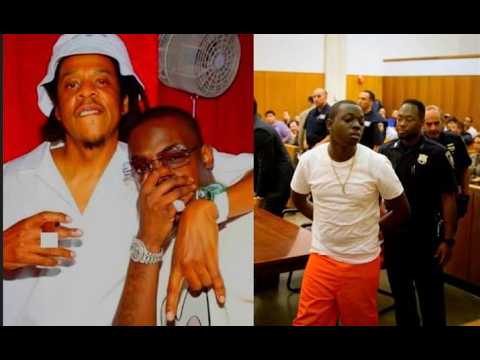
Charleston White has unleashed a blistering, expletive-laden tirade against Young Thug and Lil Baby, accusing the two Atlanta rappers of orchestrating a hit on media personality DJ Akademiks and warning that Young Thug is destined to return to prison before his 15-year probation term expires. The controversial commentator, known for his unfiltered rhetoric on the Nation of Higher Education Daily podcast, did not hold back in a segment that has already ignited fierce debate across the hip-hop community.

White’s explosive monologue comes at a precarious moment for Young Thug, who has been navigating the aftermath of his high-profile YSL RICO case. After spending roughly two and a half years behind bars, the rapper secured his freedom through a negotiated plea deal, but that freedom came with conditions that White insists Thug is already violating. The commentator points to a recent traffic stop involving California Highway Patrol as evidence that the rapper is careening toward a revocation of his probation.
According to reports referenced in White’s rant, Young Thug was pulled over in the middle of the night for speeding and reckless driving while operating a vehicle on a suspended license. The average person in that situation, White argued, would have been taken into custody immediately for violating the terms of their probation. Instead, the rapper allegedly pleaded for leniency with the officer, a moment that White seized upon as proof that Thug is not taking his second chance seriously.
The core of White’s argument rests on a simple but devastating premise: Young Thug has not changed the people, places, or behaviors that put him in legal jeopardy in the first place. White emphasized that any individual who has successfully transitioned from a life of wrongdoing to one of righteousness understands that two critical elements must be addressed, and those are the company you keep and the environments you frequent. By White’s assessment, Thug has altered neither.
The commentary took an even darker turn when White pivoted to Lil Baby, alleging that the rapper was involved in putting out a hit on DJ Akademiks. White referenced an incident where four men approached him at an event with no apparent justification for their presence, suggesting that he was himself a target or witness to criminal plotting. He claimed that all he had to do was press charges or blow the whistle on what he knew about the alleged scheme targeting Akademiks, a figure who has been embroiled in multiple conflicts within the hip-hop media landscape.
White’s accusations against Lil Baby carry a familiar pattern of rhetoric, as the commentator has long positioned himself as an antagonist to mainstream Atlanta rap culture. The claim that Lil Baby would order a hit on a media figure represents one of the most serious allegations leveled against the rapper in recent memory. While no criminal charges have been publicly filed in connection with the alleged Akademiks plot, White’s willingness to air these claims on a public platform has thrust the matter into the national spotlight.
The feud between Charleston White and Young Thug is not new. The two have a documented history of conflict, with White previously accusing the rapper of cowardice and hypocrisy. The latest salvo, however, arrives with heightened stakes, as Young Thug’s legal status now hangs in the balance of every decision he makes.
White pointed out that Thug’s probation carries a 15-year term, a staggering length that demands an extraordinary level of compliance and discipline.
Court records and reporting suggest that judges have already been asked to revisit Young Thug’s status on multiple occasions since his release. White claimed that at least three separate attempts have been made to return the rapper to custody, a claim that, if true, indicates the judicial system is closely monitoring his every move. The tension between Thug’s continued presence in Atlanta and the terms of his release has created an increasingly volatile situation.

The broader context of the YSL RICO case looms large over this new controversy. Young Thug, whose real name is Jeffery Williams, was charged alongside numerous associates in a sweeping conspiracy indictment that accused the label of functioning as a criminal street gang. The case became one of the most closely watched legal battles in hip-hop history, drawing attention to the intersection of rap lyrics, gang allegations, and the criminal justice system.
Charleston White’s critique extends beyond mere legal analysis, however. He framed his argument in moral terms, suggesting that Young Thug’s artistic credibility has suffered irreversible damage in the eyes of his audience. White referenced a song by Thug that alienated portions of his fan base, leaving him unable to be taken seriously as the talent he once was.
By White’s telling, the rapper now occupies a liminal space, neither fully redeemed nor fully condemned, but trapped in a cycle of self-destruction.
The reference to Lil Baby’s alleged gambling and shootouts during Super Bowl weekend adds another layer to the narrative. White painted a picture of reckless behavior that continues unabated despite the legal consequences looming over the broader rap community. His suggestion that these artists are still “sending hits on well-known media figures” transforms the discourse from mere celebrity gossip into a discussion about violence, accountability, and the power dynamics within the industry.
DJ Akademiks, the target of the alleged hit, has built a career on covering hip-hop 𝒹𝓇𝒶𝓂𝒶 and controversy. His platform has made him both a beloved figure among fans seeking news and a lightning rod for criticism from artists who feel misrepresented. If the allegations made by White hold any weight, the situation represents a dangerous escalation in the ongoing tension between rappers and the media personalities who profit from covering them.
The response to White’s outburst has been predictably polarized. Supporters of the commentator argue that he is speaking uncomfortable truths about a culture that celebrates criminality while condemning its consequences. Detractors dismiss him as a provocateur who manufactures controversy for clicks and attention.
The reality, as is often the case, lies somewhere in between, but the questions he raises about Young Thug’s future are difficult to dismiss entirely.
Young Thug’s legal situation warrants serious scrutiny regardless of one’s opinion of Charleston White. A 15-year probation term represents an extraordinary restriction on a person’s freedom, and the margin for error is virtually nonexistent. Any interaction with law enforcement, any association with individuals deemed inappropriate, any unauthorized travel could trigger consequences that send the rapper back to prison for a substantial portion of that term.
The traffic stop referenced by White is particularly troubling given the circumstances. Driving on a suspended license while speeding in the middle of the night is precisely the kind of behavior that probation officers and judges view as a sign of disregard for the conditions of release. The fact that Thug allegedly begged for mercy rather than facing immediate consequences suggests a pattern of expecting leniency that may not hold up over time.

White’s assertion that Young Thug is “sneaking back into Atlanta” despite restrictions on his movements raises additional concerns about the rapper’s compliance with his release terms. If the courts have indeed prohibited certain travel or required prior approval for movement, and if Thug is circumventing those restrictions, the consequences could be swift and severe. Judges who feel their authority is being undermined rarely respond with patience.
The tangled web of relationships between Charleston White, Young Thug, Lil Baby, and DJ Akademiks reflects a broader dysfunction within the hip-hop ecosystem. Feuds that once stayed within the confines of rap battles and diss tracks now spill over into accusations of criminal conspiracy and retaliatory violence. The stakes have risen dramatically, and the potential for real-world harm has become impossible to ignore.
Whether Lil Baby is actually connected to any plot against Akademiks remains a matter of unverified allegation. Charlton White has a history of making explosive claims without producing evidence, and his credibility on such matters is frequently challenged. Yet the decision to air these accusations on a podcast with a substantial audience ensures that law enforcement agencies will be aware of the claims, potentially triggering investigations that could have far-reaching implications.
The narrative arc of Young Thug’s career has been defined by a constant tension between artistic brilliance and legal peril. His innovative approach to hip-hop has earned him critical acclaim and commercial success, but his affiliation with individuals and activities associated with street violence has repeatedly placed him in jeopardy. The question now is whether he can navigate the next 15 years with the discipline required to remain free.
Charleston White’s ultimate message is one of inevitability. He asserts with absolute confidence that Young Thug will fail to complete his probation, that the same patterns of behavior that led to his incarceration will ultimately lead back to it. Whether that prediction comes to pass depends entirely on choices that Thug has yet to make, but the early indicators, as White notes, are not encouraging.
The situation also highlights the extraordinary difficulty faced by individuals who return to their communities after lengthy incarceration or legal battles. The gravitational pull of familiar environments and longstanding relationships can overwhelm even the strongest intentions to change. White’s argument that Thug must fundamentally alter his circumstances to survive his probation reflects a basic understanding of criminology and recidivism.
In the days ahead, all eyes will be on Young Thug’s next moves. Will he demonstrate the restraint necessary to satisfy the conditions of his release, or will he continue to operate as if the consequences do not apply to him? The answer to that question will determine not only his personal freedom but also the trajectory of his career and the stability of his family and business interests.

Lil Baby’s camp has not yet issued a formal response to White’s allegations. The absence of an immediate rebuttal is notable, as silence in the face of such serious claims can be interpreted in multiple ways. If the allegations are baseless, a vigorous denial would seem to be the obvious course of action.
The failure to respond may suggest the accusations have touched a nerve, or it may simply reflect a strategic decision to avoid amplifying White’s platform.
DJ Akademiks, for his part, has been uncharacteristically quiet about the allegation that a hit was ordered on him. Given his history of responding to criticism and controversy with lengthy streams and social media posts, the silence raises questions about whether he is taking the matter seriously or attempting to handle it through more formal channels.
The broader implications for the hip-hop industry are significant. If the allegations of plots against media figures become a recurring theme, the relationship between artists and the press will become increasingly hostile. Media personalities may become more cautious in their coverage, and artists may face heightened scrutiny from law enforcement.
Neither outcome benefits the culture as a whole.
Charleston White’s commentary, regardless of its factual accuracy, has succeeded in forcing a conversation about accountability, consequences, and the fragility of freedom. His assertion that “they know he’s sneaking back in Atlanta, they just can’t catch him” suggests a game of cat and mouse between Young Thug and the authorities that cannot continue indefinitely. Eventually, in White’s estimation, the rapper will make a mistake that cannot be overlooked.
The passion with which White delivered his remarks underscores the depth of his animosity toward the figures he was criticizing. This is not the detached analysis of an observer, but the aggressive attack of an adversary who believes he has been wronged and is seeking vindication. Whether that vindication comes through the criminal justice system or through public humiliation seems to matter little to White.
For Young Thug, the path forward requires a level of discipline and humility that has not been evident in his public behavior since his release. The rapper has a dedicated fan base that wants to see him succeed, and a legal team that is presumably advising caution. But ultimately, the decisions rest with Thug himself, and the consequences of those decisions will be borne by him alone.
This developing story continues to evolve by the hour. Legal experts, music industry insiders, and fans are all watching closely to see how the situation unfolds. Charleston White has made his position unmistakably clear, and his prediction of doom for Young Thug’s probation now hangs over the rapper like a dark cloud.
Only time will reveal whether White’s words are prophecy or merely provocation, but the stakes could not be higher.