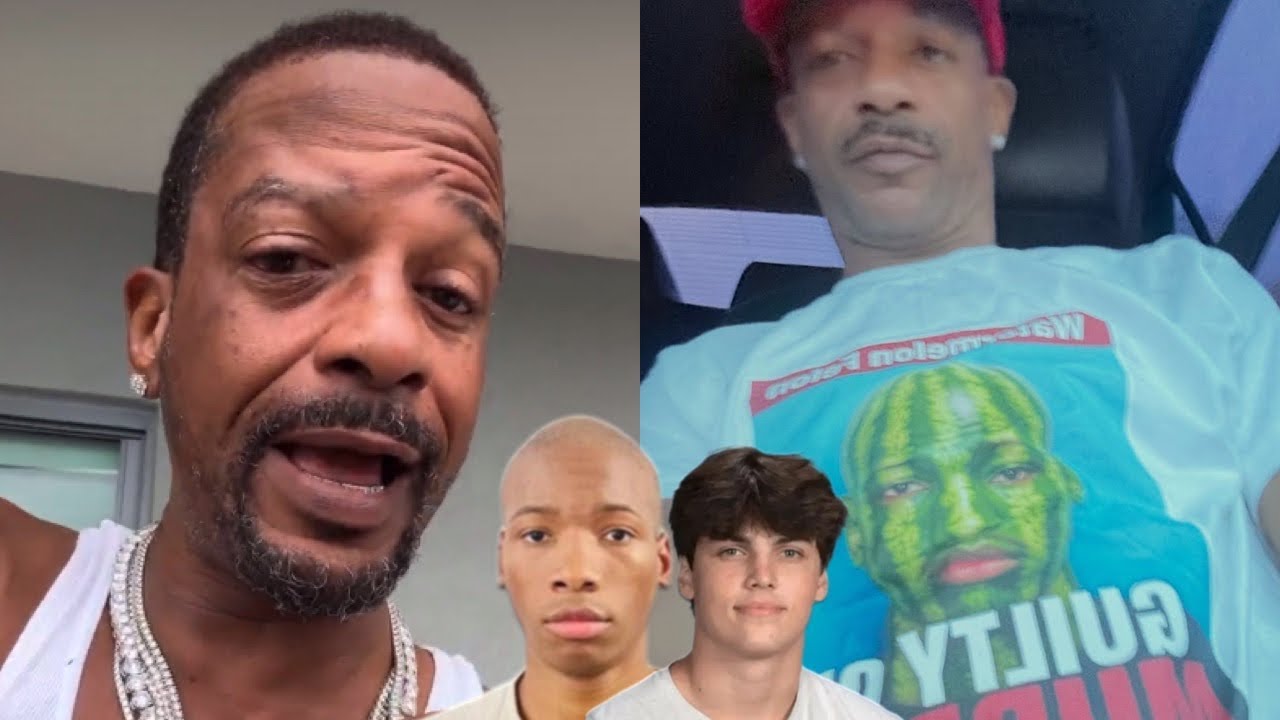
The internet was set ablaze this week when a video surfaced showing rap legend Busta Rhymes and Dipset icon Jim Jones in a compromising, heavily scrutinized moment inside a packed club, and now Jones is finally breaking his silence. The footage, which circulated rapidly across social media platforms, captured the two veteran MCs in what appeared to be a playful yet undeniably suggestive exchange, leaving fans and commentators questioning the nature of their on-camera chemistry. The clip became so 𝓿𝒾𝓇𝒶𝓁, and the discourse so intense, that Jones made the unprecedented decision to delete the original post from his own social media pages, a move that only fueled further speculation before he provided clarity.
The video in question, filmed during a live concert appearance, showed Jones leaning backward in a dramatic fashion while Busta Rhymes hovered over him in a pose that many viewers interpreted as highly suggestive. The imagery was immediate fodder for memes, reaction clips, and heated debate across the culture, with some fans defending the interaction as harmless fun between longtime friends and colleagues, while others declared the visual too wild to ignore. The term “zesty,” which has become a popular internet slang descriptor for behavior perceived as flamboyant or homoerotic, was quickly attached to the clip, propelling it to trending status on multiple platforms within hours.
 Neither artist initially addressed the footage, but the silence did nothing to quell the frenzy.
During a recent appearance on the widely followed Nation Upation daily podcast, hosted by Oshay, Jim Jones offered his first public explanation for why he pulled the video down. In a moment of candid reflection, Jones revealed that the decision to delete the post was not driven by embarrassment over the content itself, but rather by the overwhelming wave of mockery and commentary that followed. The rapper admitted that the backlash, while playful in some corners, reached a level where he felt the need to press pause on the narrative.
Jones maintained that he and Busta Rhymes were simply having a good time, two friends enjoying a moment on stage, but the optics, as they often do in the digital age, took on a life of their own.
Jones, known for his stoic demeanor and storied career as a cornerstone of the Diplomats collective, demonstrated a level of self-awareness that has endeared him to many observers over the years. Rather than doubling down or responding with hostility to the jokes, Jones chose to acknowledge the absurdity of the situation, telling the podcast host that he had to pause himself because the online reaction was too much to ignore. This approach, a blend of humility and humor, reflects a maturity that is not always present in hip-hop’s response to 𝓿𝒾𝓇𝒶𝓁 embarrassment.
By openly admitting that the clip looked a certain way, Jones disarmed many of his critics while simultaneously keeping the conversation going.
The podcast host Oshay provided extensive commentary on the situation, praising Jones for his ability to take the hits and keep it moving. Oshay drew a direct comparison between Jones and rap mogul 50 Cent, who is famous for turning personal humiliation into marketing gold. The reference specifically harkened back to the moment when 50 Cent was locked out of a rented studio and forced to kick the door in, a video that became a massive meme.
Rather than letting the moment define him negatively, 50 Cent embraced the joke, monetizing the narrative and flipping it into a positive. Oshay argued that Jones operates in a similar lane, taking the negative energy from this 𝓿𝒾𝓇𝒶𝓁 clip and transmuting it into a different kind of power.
 This comparison, while flattering, also highlights a significant shift in how celebrities manage their public image in an era where every move is captured and dissected in real time. The old playbook of ignoring rumors or issuing stern denials has been replaced by a more agile, humorous approach that acknowledges the absurdity of the moment. Jim Jones, by laughing at himself and openly discussing the video, has potentially converted a scandalous moment into a relatable one.
The general public appreciates a celebrity who does not take themselves too seriously, and Jones’s willingness to lean into the joke may ultimately strengthen his connection with fans rather than diminish it.
However, the video itself remains a topic of intense debate, with Oshay expressing his own astonishment at the footage during the podcast. The host drew a metaphorical red flag on the play, suggesting that there is a limit to how playful two friends can appear in a public setting before the optics become problematic. The specific moment that sparked the most discussion involved Jones leaning back while Busta Rhymes appeared to be positioned directly over him, a tableau that defied easy explanation.
Even with the context of a concert and a friendship, the visual was striking enough to warrant widespread commentary, and Oshay did not shy away from admitting that it was a lot to process.
The incident raises deeper questions about the boundaries of male friendship, performance, and public perception within the hip-hop community. For decades, rap culture has maintained a strict, often unforgiving code regarding masculinity and public displays of affection between men. Any deviation from that code is quickly flagged, mocked, or subjected to intense scrutiny, regardless of the intent behind the action.
In this case, Busta Rhymes and Jim Jones, both established figures with decades of credibility, found themselves at the center of that scrutiny, proving that even veteran artists are not immune to the internet’s unforgiving eye. Their interaction, whether innocent or staged, became a referendum on what is acceptable between men in a club setting.
 It is worth noting that the artistic world of hip-hop is no stranger to performative antics that blur the lines of traditional masculinity, often for shock value or comedic effect. Artists from various eras have engaged in exaggerated behavior on stage, in music videos, and in interviews, knowing full well that it will generate conversation. The difference today, however, is the instantaneous and global nature of the reaction, where a thirty-second clip can dominate the discourse for days.
Jim Jones, by addressing the video head-on and refusing to be shamed into silence, has demonstrated an understanding of this new media landscape that serves him well, even as the jokes continue to circulate.
The response from the broader hip-hop community and the celebrity sphere has been mixed, with some applauding Jones for his handling of the situation and others simply enjoying the meme from the sidelines. Industry insiders have noted that Busta Rhymes, for his part, has remained silent on the matter, likely letting his longtime friend take the lead in addressing the fallout. The dynamic between the two, rooted in mutual respect and a shared history in the game, appears strong enough to withstand this 𝓿𝒾𝓇𝒶𝓁 moment.
For Jones, the decision to publicly speak on the video, rather than let it fade into the background, was a strategic one that keeps the narrative in his own control.
As the dust begins to settle on this particular controversy, the lesson for other public figures is clear, transparency and a sense of humor are far more effective tools than denial and defense. Jim Jones has shown that being the target of a 𝓿𝒾𝓇𝒶𝓁 joke does not have to be a career-ending moment, it can simply be a Tuesday. By leaning into the absurdity, acknowledging the optics, and keeping the mood light, he has once again proven why he has remained a beloved figure in the culture for over two decades.
The video may be down, but the conversation, and the respect for how Jones handled it, will linger for some time.
 The episode serves as yet another reminder that in the age of social media, everyone is one dance move away from becoming a trend. The question is not whether someone will be caught in a compromising moment, but rather how they will respond when the internet collectively decides to have its fun. Jim Jones has answered that question with grace, humor, and an unmistakable sense of self.
The Nation Upation podcast segment, which featured his comments, has already generated significant traction, with fans flocking to the comments section to weigh in on the discourse. The overwhelming sentiment appears to be one of support for Jones, a testament to his enduring likability and his ability to navigate the storm.
Looking ahead, it is likely that both Jim Jones and Busta Rhymes will continue to address the video in their own ways, whether through interviews, social media posts, or perhaps even a collaborative response that reclaims the narrative entirely. Some fans have even suggested that the two artists should lean fully into the joke, releasing a joint project or a humorous music video that acknowledges the moment. Such a move would be the ultimate power play, transforming a potentially awkward situation into a calculated piece of entertainment.
Given Jones’s history of flipping negatives into positives, as noted by Oshay, this outcome is entirely plausible. The ball, as they say, is in their court.
For now, the nation remains divided on the video itself, with some insisting it was simply two friends enjoying a night out and others refusing to let the imagery go. The discourse has opened up broader conversations about homophobia, performative masculinity, and the policing of male behavior in public spaces, topics that are as relevant as ever in the current cultural climate. What is certain is that Jim Jones has handled the situation with a level of poise that stands in stark contrast to the chaos of the 𝓿𝒾𝓇𝒶𝓁 moment.
He did not hide, he did not lash out, and he did not make excuses. He simply acknowledged the noise, laughed at himself, and moved on, a masterclass in modern celebrity crisis management.