The courtroom fell silent as Duxbury Police Officer Stephen Hall struggled to maintain his composure, his voice cracking while recounting the harrowing discovery of three young children dead in a basement, a moment that has become the emotional core of the trial against their mother, Lindsay Clancy. Testifying on Tuesday, Hall, a veteran officer with 11 years on the force, described the frantic response to 47 Summer Street on the evening of January 24, 2023, a call that would forever alter his perception of duty and tragedy. His testimony, delivered in a hushed tone punctuated by deep breaths and snorts, painted a visceral picture of a scene that defied comprehension, leaving jurors and spectators visibly shaken.
Hall, who arrived simultaneously with Officer Josephine, recalled hearing a male voice calling for help from the backyard, leading them to Patrick Clancy, the father, who was visibly upset and disoriented. There, they found Lindsay Clancy on the ground, semi-conscious with cuts to her wrists and neck, but it was the father’s frantic words that would guide them deeper into the nightmare. “He said he couldn’t wake them up,” Hall testified, his voice steady but strained, as he described the moment dispatch relayed the chilling message that the children were unresponsive.
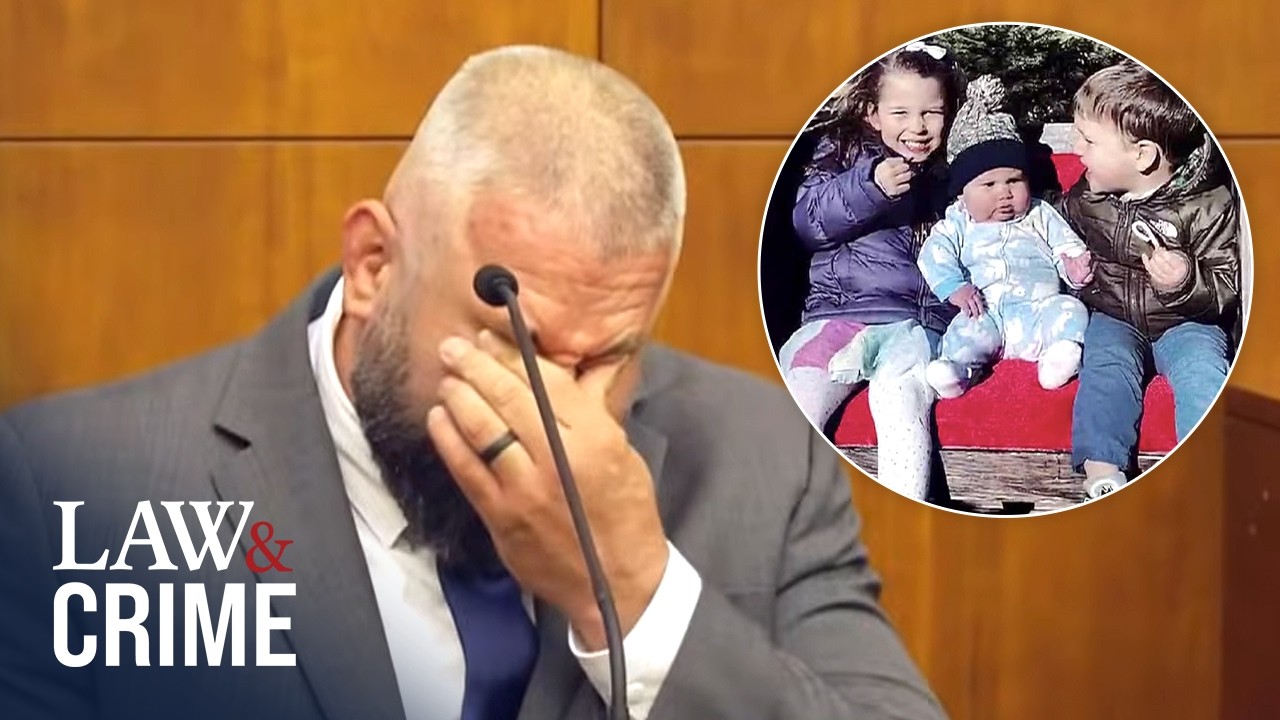 The officer’s demeanor shifted as he approached the basement stairs, a place he would later describe as a “workout area” transformed into a morgue.
Upon entering the basement, Hall and his partner followed the sound of Patrick Clancy’s voice, which led them to a back room where the first child, Dawson Clancy, lay motionless on his back, his body discolored a bluish purple. “He had his feet towards the door and his head towards the wall,” Hall said, his hands trembling slightly as he pointed to a photograph of the scene, marked as Exhibit 93. The child, later identified as 5-year-old Dawson, was shirtless, wearing only a diaper or underwear, and the officer’s voice faltered as he described the lifeless form.
“He was discolored, like a bluish purple,” he repeated, pausing to clear his throat, a moment of vulnerability that underscored the gravity of the discovery.
Hall then recounted the desperate attempt to save Dawson, carrying him outside to waiting paramedics, but the officer’s focus quickly shifted to the other children. “When Patrick said ‘them’ instead of ‘him,’ I knew there were more,” Hall explained, his voice gaining a slight edge of urgency as he described the return to the basement. On the left side, he found Cora and Callan Clancy, ages 3 and 7 months, respectively, lying motionless on the floor as emergency medical technicians worked frantically.
“They were just there, not moving,” he said, his eyes fixed on a point in the distance, as if reliving the moment. The photographs, Exhibits 95 and 96, showed the grim tableau, with the children positioned near a blood stain and a black exercise band.
The officer’s testimony took a more clinical turn as he detailed the aftermath, including the discovery of an open window with blood marks on the shingles, evidence of Lindsay Clancy’s attempted suicide. Hall described her as semi-conscious, moaning in pain, but his focus remained on the children, a point he emphasized when asked about the father’s demeanor. “He was very upset,” Hall said, his voice cracking again as he recalled Patrick Clancy’s words: “I can’t wake them up, I can’t get them up.”
 The officer’s emotional response was palpable, a rare glimpse into the human cost of such a tragedy, as he struggled to maintain his professional composure.
Throughout his testimony, Hall’s voice wavered, particularly when discussing the children’s physical state, a detail that seemed to haunt him. “I called for paramedics, and Officer Josephine picked up the child,” he said, his words trailing off as he described the frantic race to the ambulance. The courtroom, already heavy with grief, seemed to hold its breath as Hall described the second search, finding Cora and Callan in the basement.
“They were motionless, and the medics were working on them,” he said, his voice barely above a whisper, a stark contrast to the authoritative tone he had used earlier.
The officer’s testimony also highlighted the chaos of the scene, with multiple responders arriving and the father’s emotional state adding to the confusion. Hall recalled directing paramedics to the basement, his own training kicking in despite the overwhelming nature of the call. “I asked if they needed any equipment,” he said, his voice steadying as he described fetching a heart monitor.
But the emotional toll was evident when he recounted the moment he looked up from the backyard and saw the open window, a silent testament to the violence that had occurred. “There was an open window with blood marks around it,” he said, his eyes narrowing as if trying to process the image.
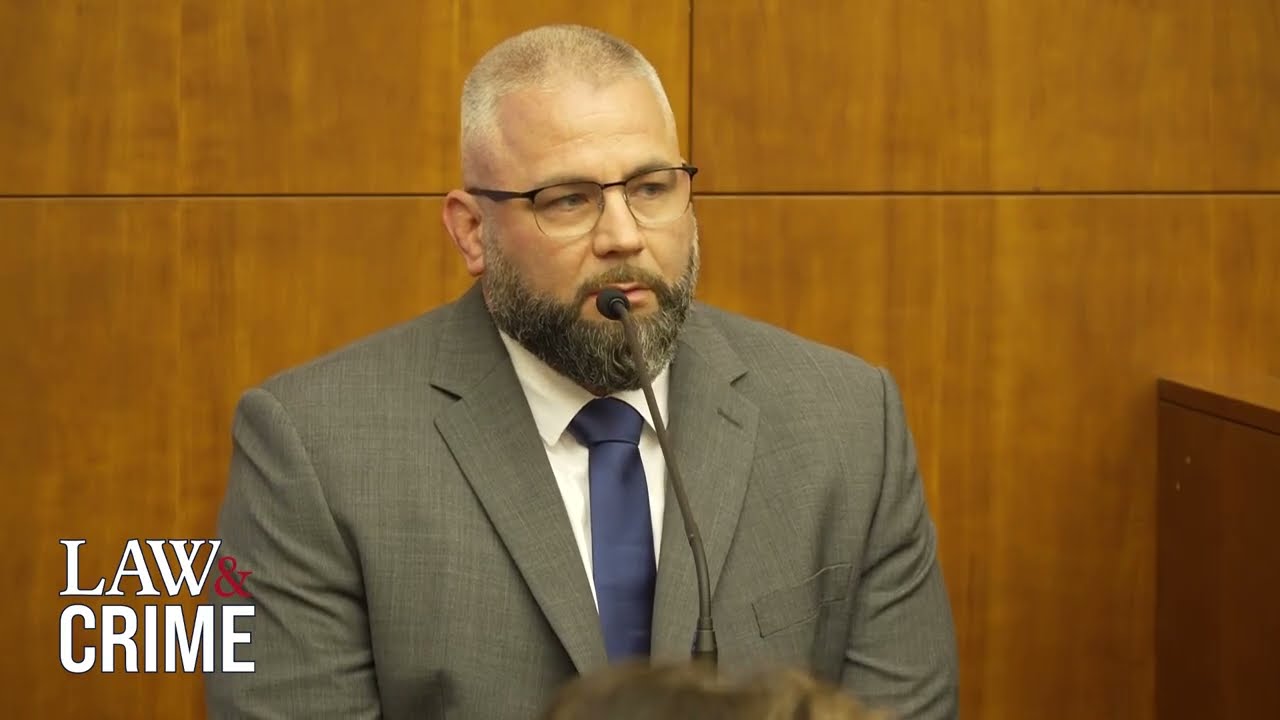 The defense, led by Attorney Sprague, attempted to challenge Hall’s recollection, but the officer remained resolute, his testimony consistent with the physical evidence. The photographs, admitted as exhibits, showed the children’s positions, the exercise bands, and the blood-stained window, all corroborating Hall’s account. The jury, composed of 12 individuals, listened intently, their faces a mix of shock and sorrow as the officer’s words painted a vivid, heartbreaking picture.
Hall’s voice cracked again when he described the children’s discoloration, a detail that seemed to linger in the air, a reminder of the fragility of life.
As the cross-examination concluded, Hall was thanked for his service, a moment that seemed to break his composure further. “Thank you for your incredible service,” the prosecutor said, to which Hall simply nodded, his eyes glistening. The judge then allowed him to step down, and he left the stand with a heavy step, his shoulders slumped, a visible sign of the weight he carried.
The trial, which has drawn national attention, continues with additional testimony expected from medical experts and other first responders, but Hall’s emotional account has set a somber tone for the proceedings.
Outside the courtroom, legal analysts noted the significance of Hall’s testimony, particularly his emotional response, which humanized the tragedy for the jury. “When a seasoned officer breaks down on the stand, it speaks volumes about the horror of the scene,” said one expert. The case, which has sparked debates about mental health and maternal filicide, remains in the spotlight as the prosecution builds its case against Lindsay Clancy, who faces multiple charges including murder.
 Hall’s testimony, while devastating, has provided a crucial foundation for the narrative of that fateful night, a night that will forever be etched in the memory of all who heard it.
The officer’s words, though clinical at times, carried an undercurrent of grief that resonated with the courtroom. “I just kept replacing the oxygen mask on her face,” he said of Lindsay Clancy, a task that seemed almost mundane in the context of the horror around him. But it was his description of the children, their stillness, and their discoloration that lingered, a stark reminder of the lives lost.
As the trial progresses, the emotional impact of Hall’s testimony is likely to influence the jury’s perception, a powerful testament to the human cost of the tragedy.
In the days following his testimony, Hall has been praised for his bravery in recounting such a painful experience, but the officer himself has remained silent, a reflection of the trauma he endured. The Duxbury Police Department has offered support, but the scars of that night are evident. For the community, the trial has been a painful reminder of the events that shook the small town, and Hall’s testimony has brought that pain to the forefront, a necessary step in the pursuit of justice.
As the legal proceedings continue, the world watches, waiting for answers in a case that has left so many questions unanswered.