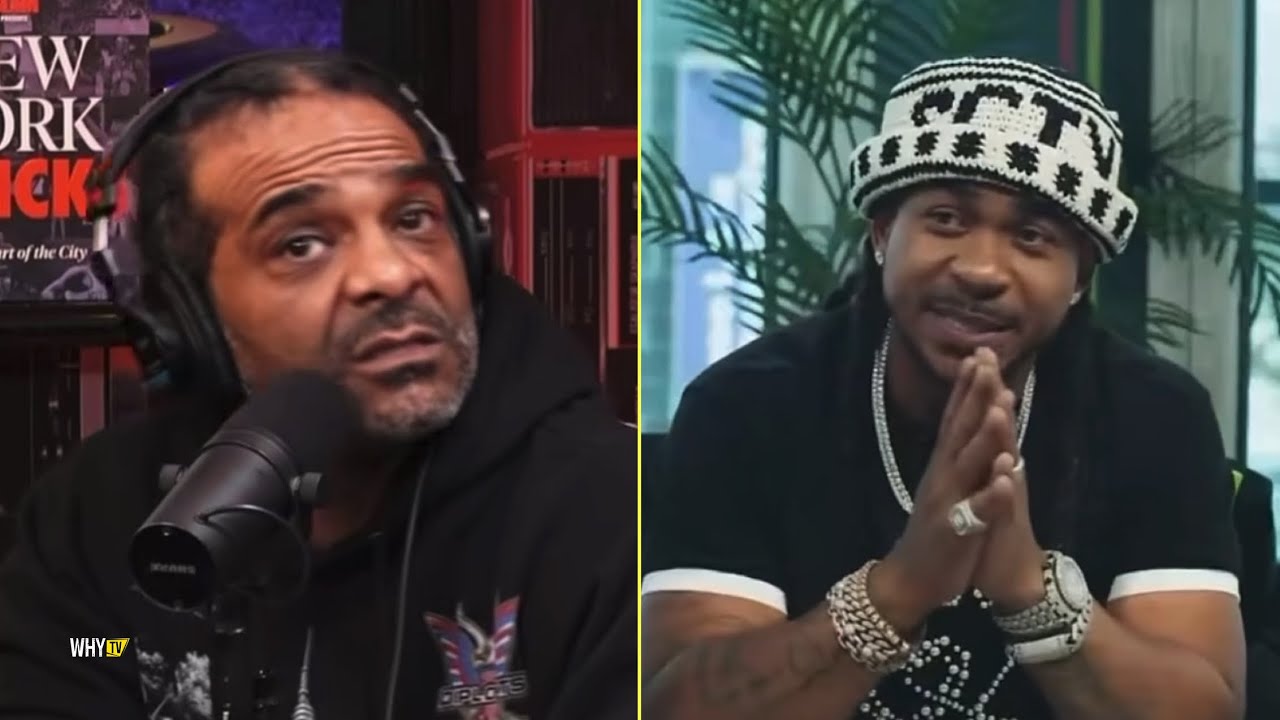
The air in the room thickened the moment the name left his lips. Jadakiss, the undisputed king of the stoic face and the lethal one-liner, had finally addressed the elephant in the room that had been stomping through the underground hip-hop circuit for months. Sitting across from Memphis Bleek, the conversation shifted from legacy and nostalgia to a direct, unfiltered acknowledgment of the tension that has been simmering between him and Buffalo’s own 38 Spesh.
It was not a screaming match, nor a theatrical meltdown, but a cold, calculated check that sent a clear message through the industry: Jadakiss has not forgotten, and he is not hiding from the smoke.
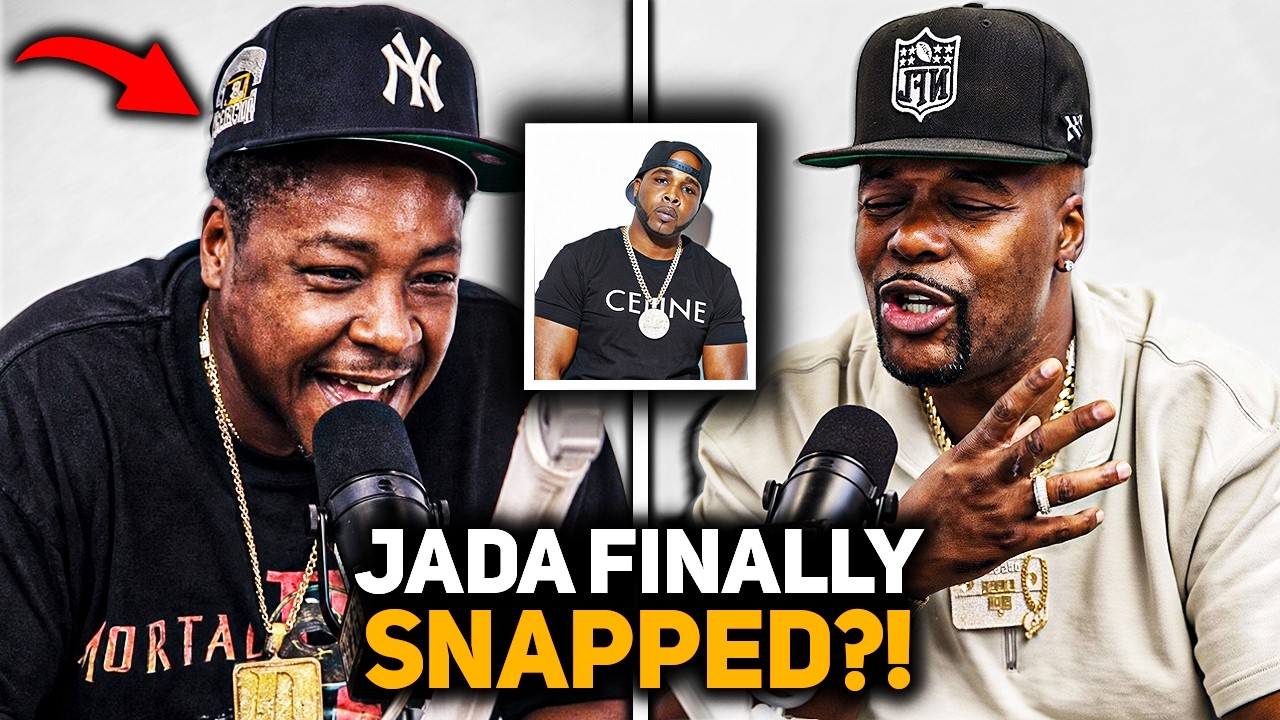 The catalyst for this entire powder keg traces back to a single record, a collaboration with Benny the Butcher that was supposed to solidify the bond between the Griselda-adjacent movement and the LOX dynasty. According to the narrative that has been circulating, 38 Spesh felt slighted, claiming that Kiss failed to deliver a verse or show up in the way that was expected. What started as a behind-the-scenes grievance quickly metastasized into public commentary, with Spesh taking subtle and not-so-subtle jabs at Kiss’s character, his work ethic, and even his position in the hierarchy of New York rap royalty.
For weeks, the internet speculated, fans chose sides, and the silence from the Yonkers veteran became deafening.
That silence was broken during a recent sit-down, and the delivery was vintage Jadakiss. He did not raise his voice. He did not threaten violence.
He simply stated the facts as he saw them, painting a picture of a career built on showing up for the culture. He spoke about wanting his legacy to be one of a man who came through when called upon, a man who helped elevate those coming up behind him. Then, with surgical precision, he dropped the bomb: “For the most part, I came through when you called me, except for 38.
He might be the only person I said I ain’t come through for.” The statement hung in the air, a direct acknowledgment that immediately validated the ongoing feud.
It was a masterclass in psychological warfare. By admitting that 38 Spesh is the “only person” he has ever let down, Kiss simultaneously acknowledged the grievance while isolating Spesh as an outlier in a decades-long career of reliability. It flips the script, suggesting that if everyone else has received the “Kiss came through” treatment, perhaps the problem lies not with the giver, but with the receiver.
This subtle implication is far more damaging than any diss track could ever be, because it questions the very foundation of Spesh’s complaint, framing it as a unique anomaly rather than a pattern of behavior.
However, the conversation took an even more intriguing turn when Memphis Bleek attempted to interject, seemingly trying to relate to the situation or add his own perspective on missed connections. Kiss shut that down with the swiftness of a closing elevator door. “Don’t add on to this,” he commanded, effectively checking Bleek in real-time.
This was not just about silencing a side comment; it was about controlling the narrative. Kiss was making it clear that this specific issue, this specific grievance, belonged solely to him and 38 Spesh. He did not want a pile-on, nor did he want Bleek to inadvertently diminish the weight of the single exception he was acknowledging.
This check on Bleek was a power move. It demonstrated that Kiss is operating on a different frequency, one where he dictates the terms of the discourse. He allowed the 38 Spesh topic to be broached, he addressed it with a few carefully chosen words, and then he closed the door.
He refused to let it become a free-for-all therapy session about who didn’t get a verse from him. This level of composure is a direct reflection of the “say nothing” jewel he claims to have learned from Jay-Z, a tactic that allows him to navigate firestorms without getting burned. He is in the fire, but he is moving through it with an almost supernatural calm.
The root of the animosity, according to the timeline pieced together by fans and insiders, revolves around the track “Sunday School” with Benny the Butcher. Reports suggest that Kiss may not have initially known the full extent of Spesh’s involvement, or perhaps there was a miscommunication regarding the sequencing and promotion of the record. Regardless of the technical details, Spesh felt that Kiss did not give him his proper due, and worse, that Kiss was avoiding a future collaboration.
The feeling of being snubbed by a legend he respects clearly festered, turning from professional disappointment into a personal crusade.
38 Spesh’s subsequent comments have been pointed, questioning Kiss’s authenticity and suggesting that the Yonkers rapper operates under the shadow of others, specifically referencing his long-standing affiliation with Fat Joe. This was a line crossed. Criticizing a missed feature is one thing; questioning a man’s independence and legacy is another.
In the code of the streets and the rap game, that is a declaration of war on a man’s character. Kiss, however, refused to take the bait in the traditional sense. He did not fire back with a barrage of insults.
Instead, he used the platform to reinforce his own legacy of generosity.
He spoke of wanting to help the “dudes on the corner,” the hungry artists who genuinely need a push. He contrasted this with established figures like Bleek, implying that veterans do not need his charity; they have already secured their bag. This distinction is crucial because it frames Kiss’s role as a benefactor to the culture, not a transactional mercenary.
 He wants his funeral to be attended by fifteen rappers who can stand up and testify that “Kiss came through for me.” This is the legacy he is building, and 38 Spesh’s public complaint threatens to tarnish that specific narrative.
The irony is that 38 Spesh is not a “dude on the corner.” He is a respected lyricist in his own right, the head of BSF, and a man who has carved out a significant niche in the underground. He does not need a handout.
This is why Kiss’s framing of the situation is so effective. By positioning Spesh as the exception to a rule of generosity, he subtly suggests that perhaps Spesh’s expectations were misplaced. If you are already established, why would you need Kiss to validate you?
The question hangs in the air, unanswered, and it makes Spesh’s continued agitation seem almost desperate for relevance.
But Spesh’s perspective is equally valid in the context of respect. For him, it is not about needing a verse to survive; it is about the principle of a promise made and a promise broken. If Kiss gave his word, directly or indirectly, and did not follow through, that is a breach of professional etiquette that stings regardless of one’s status.
Spesh has framed his frustration around the idea that Kiss is avoiding him, that he is ducking the opportunity to “redeem” himself. He has publicly invited Kiss to “come outside,” a challenge that sounds more like a schoolyard taunt than a professional negotiation.
This public back-and-forth has placed Kiss in a precarious position. If he ignores Spesh, he looks like he is ducking. If he engages fully, he elevates Spesh to a level of rivalry that he may not deserve.
His solution, as evidenced in the recent interview, is to acknowledge the situation without elevating it. He says, “I’m still trying to burn you,” a phrase that is equal parts competitive fire and dismissive humor. It tells Spesh that the desire to out-rap him is still there, but it also tells the audience that Kiss does not view this as a life-or-death beef.
It is just another battle in the endless war of lyricism.
The dynamic between the two is further complicated by their mutual connections. The Buffalo scene, spearheaded by Benny the Butcher and Westside Gunn, has deep ties to the LOX and Dipset. These are not strangers from different planets; they are neighbors in the same sprawling metropolis of hardcore hip-hop.
When Spesh takes shots at Kiss, he is not attacking an outsider; he is attacking an elder statesman of the very culture he claims to represent. This makes the betrayal feel more profound, but it also makes Spesh look like an ingrate to those who venerate Kiss’s contributions.
Kiss’s mention of the “Dip Set” and the battles of the past, referencing the legendary clashes with Jim Jones and Juelz Santana, serves as a reminder of his pedigree. He has been in the trenches of lyrical warfare for over two decades. He has traded bars with the best to ever do it, from Big Pun to Jay-Z.
He has nothing to prove. This history is his armor. When 38 Spesh throws a dart, it bounces off the decades of classic verses and mixtape moments that define Kiss’s career.
The young lion is nipping at the heels of an old bull, but the bull has been in this pasture for a long time.
The “check” on Memphis Bleek is perhaps the most telling moment of the entire interview. It reveals that Kiss is hyper-aware of how narratives can spiral out of control. If Bleek had been allowed to chime in with his own grievances, the story would have shifted from “Kiss vs.
38 Spesh” to “Kiss vs. Everyone He Has Ever Worked With.” By cutting Bleek off, Kiss contained the blast radius.
 He ensured that the only story coming out of that room was the one he wanted to tell: the story of a man who is generous to a fault, with a single, notable exception.
This leaves 38 Spesh in a difficult position. He has successfully forced Kiss to speak his name, but the response was not the explosive confrontation he might have hoped for. Instead, Kiss treated him like a minor footnote in a larger discussion about his own greatness.
That is a bitter pill to swallow. For an artist who prides himself on his lyrical prowess and his business acumen, being reduced to a “gripe” in someone else’s legacy speech is arguably worse than being ignored entirely. It is a dismissal disguised as an acknowledgment.
The question now is whether Spesh can pivot. He has the ammunition to continue the war of words, but continuing it without a substantive response from Kiss makes him look like he is talking to a wall. He could release a diss record, but that carries the risk of being seen as trying to capitalize on a legend’s name for attention.
He could let it go, but that would mean accepting the L in the court of public opinion. The ball is firmly in his court, and the choices are all fraught with peril.
Meanwhile, Kiss has moved on, or at least he has projected the image of moving on. He is focused on his legacy, his contributions, and his desire to be remembered as a man of his word. He has used this controversy to reinforce his brand as a reliable, consistent force in hip-hop.
Whether he actually sends 38 Spesh a verse in the future remains to be seen, but the door, which was already slightly ajar, now appears to be sealed shut. The “I don’t think he’ll ever do a song with me again” line from Spesh’s camp might just be the prophecy that fulfills itself.
The broader hip-hop community is watching this unfold with a mixture of amusement and concern. On one hand, it is fascinating to see a legend like Jadakiss navigate a modern-day beef with the stoicism of a bygone era. On the other hand, it is sad to see two incredibly talented artists, who should be collaborating to strengthen the culture, at odds over what appears to be a breakdown in communication.
The “collectively we got to bring hip hop up” sentiment that Kiss expressed is the ideal, but the reality is often mired in ego and miscommunication.
As the dust settles on this latest interview, the scoreboard is unclear. Kiss has maintained his composure, reinforced his legacy, and checked his friend Bleek for trying to hijack the narrative. Spesh has gotten the acknowledgment he craved, but it came wrapped in a backhanded compliment that frames him as the sole blemish on an otherwise pristine record.
The beef is not over, but the temperature has dropped. Kiss has effectively taken the heat out of the situation by refusing to engage with the emotional intensity that Spesh has brought to the table.
This is the power of experience. Kiss knows that beefs are won not by the loudest voice, but by the one who controls the story. He has controlled the story by making it about his legacy of helping others, rather than about a single missed verse.
He has turned a potential negative into a reinforcement of his positive attributes. It is a masterclass in public relations, executed with the same cool precision that he applies to his rhyme schemes. He is not sweating the pressure; he is applying it.
The silence that preceded this interview was strategic. It allowed the narrative to build, to reach a fever pitch, and then to be deflated with a few casual sentences. Kiss waited for the perfect moment, in front of a friendly audience with Memphis Bleek, to address the situation on his own terms.
He did not give 38 Spesh the satisfaction of a rushed response. He gave him a measured, calculated response that served his own interests first and foremost. That is the mark of a true veteran.
For 38 Spesh, the path forward is unclear. He has the talent to go bar-for-bar with anyone, including Kiss. But a lyrical battle might not be the win he thinks it is.
 If he out-raps Kiss on a track, he will be accused of disrespecting a legend. If he loses, his credibility takes a hit. It is a no-win scenario.
The only way to “win” would have been to handle the initial disappointment privately, but that ship has sailed. He has chosen the public route, and now he must live with the consequences of that choice.
The industry is rife with stories of missed connections and broken promises. What makes this one different is the stature of the men involved. Jadakiss is a top-tier lyricist whose opinion is valued across the globe.
38 Spesh is a respected underground general who has earned his stripes through hard work and dedication. Their clash represents a generational divide, a difference in how business is conducted, and a clash of expectations. It is a microcosm of the larger tensions that exist in hip-hop between the old guard and the new school.
Kiss’s reference to the “pressure” that Puff Daddy used to put on them in the Bad Boy days is telling. It speaks to a time when the stakes were higher, and the competition was fierce. He is from an era where you had to be ready to “fight these niggas” because they could really rap.
This context suggests that Kiss views 38 Spesh’s complaints as soft, as a sign of a generation that expects things to be handed to them rather than earned through the fire. He is not impressed by the public outcry; he sees it as a lack of professionalism.
The “check” on Bleek also serves as a warning to anyone else who might be thinking of airing their grievances with Kiss in a public forum. It says, “Do not try to use my name to build your narrative.” Kiss is protective of his brand, and he will not allow it to be diluted by a chorus of complaints.
He is the captain of his ship, and he decides who gets to board. This authoritarian approach to his own legacy is what has kept him relevant for so long. He controls the message, and he controls the access.
As the story continues to develop, the focus will inevitably shift back to the music. Can Kiss and Spesh ever find common ground again? Or is this a permanent rupture?
History suggests that in hip-hop, time heals most wounds, especially when there is money to be made. But the personal nature of the shots taken might have created a scar that is too deep to mend. The respect that was once there has been replaced by a wary suspicion, and that is a difficult barrier to break down.
For the fans, this is compelling 𝒹𝓇𝒶𝓂𝒶. It is a reminder that even the most successful artists are human, prone to the same pettiness and pride that affects everyone else. It is also a reminder of the fragile nature of alliances in the music industry.
One missed call, one misplaced verse, can unravel years of camaraderie. The Jadakiss and 38 Spesh situation is a cautionary tale about the importance of communication and the dangers of letting ego dictate your actions.
In the end, Jadakiss has emerged from this initial exchange looking like the bigger man. He addressed the issue, took a modicum of responsibility, and then pivoted to his larger legacy. He did not grovel, and he did not attack.
He simply stated his truth and moved on. This is the demeanor of a champion. He is not interested in a mudslinging contest with someone he views as a peer, not an equal.
He is focused on the bigger picture, and that focus is what will ultimately define his legacy.
38 Spesh, on the other hand, has been put in a box. He can either continue to complain and look like a bitter artist, or he can channel this energy into his music and prove his greatness through his art. The ball is in his court.
The world is watching to see how he responds. Will he take the high road, or will he double down on the disrespect? The next move will determine how this chapter of hip-hop history is written.
The tension is palpable, and the resolution is far from certain.