Two former NBA players are forcing the WNBA to answer a question its own rules never clarified: what does it mean to be a woman? Enes Kanter Freedom, the 6-foot-10 former NBA player, made it official, submitting a letter declaring for the 2027 WNBA draft. “If simply declaring who you are is all that’s required, then I meet every single requirement necessary to compete in the WNBA,” he said. He wasn’t alone.
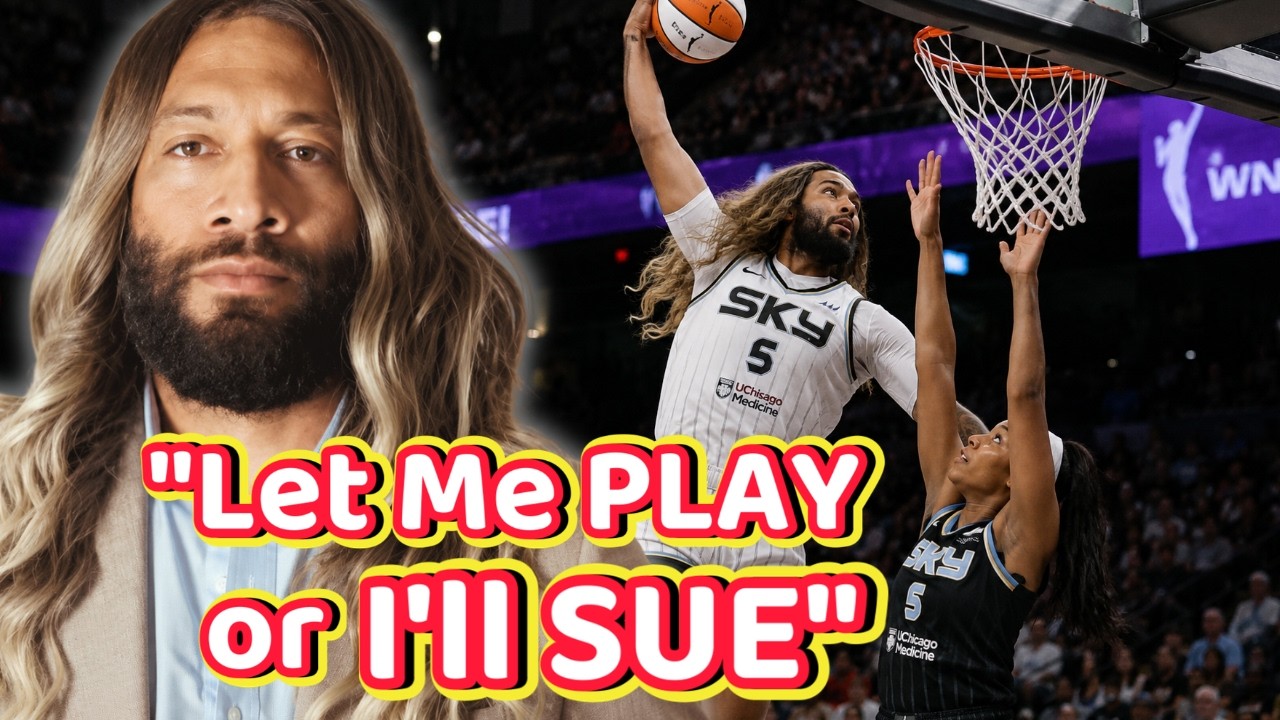
Royce White, another former NBA player and a Minnesota Senate candidate, also announced he wanted a shot at the league, posting a photo of himself in a wig with the hashtag #LetHerPlay. The WNBA’s official stance is that only women are eligible to play, but the league has never defined what constitutes a woman. Now, with two biological men publicly demanding entry, the league was being forced to confront the issue head-on. The commissioner had already sent a memo to teams saying a task force made up of team presidents and general managers would be meeting in the coming days to address it.
Indiana’s Sophie Cunningham had publicly called for biological men to be barred from women’s sports, placing herself at the center of the growing debate. But when Royce White sat down for an interview, he wasn’t interested in giving a straight answer. Asked if he was trying to force the league to define womanhood, he laughed it off. “You know, I’m just having a blast being a woman.
I never knew, in 35 years I’ve been alive, born in 1991, I never knew I could be a woman. I always trusted the science. Now it would appear that I’m a sometimes-identifying black transgender lesbian, and I can’t tell you how liberating it is, although I’ve experienced a lot of hate in the last few days. ”
The interviewer pressed him, asking if WNBA players were resentful of what he was doing.
“Why would they be resentful? We’re going to elevate the game. We’re going to put more eyeballs on these young women’s hard work, their lifelong hard work. I’m a black woman, and I want to be respected as a black woman by the WNBA and everybody else.
It’s time that we put this toxic cis-normative culture behind us and allow men, biological or assigned male at birth, people like myself, to come out and be their true authentic self. ”
Then came the question that mattered most. What if no WNBA team picked him? “Well, I think based on my body of work in the game of basketball, what I bring to a team, what I bring to the league in terms of athleticism and skill, it would be a clear case of discrimination, and we plan to pursue every legal route possible to hold the WNBA to their standards.
”
Meanwhile, Enes Kanter Freedom released his own statement, insisting he wasn’t trying to mock anyone. “I am definitely not here to mock, make fun of, or disrespect any community or personal choices. I am simply asking that the current rules be applied equally to everyone. The rules that represent the very values many WNBA players and coaches have publicly advocated for.
”
For a long time, people assumed this was all a joke, a political stunt meant to make a point. But with declarations submitted and threats of lawsuits on the table, it looked like it had gotten real. My take on this is simple. When I was a kid, I wanted to play football in the county leagues.
I remember being weighed before I could join. I played for the 65-pound team. They weighed every single one of us and placed us accordingly. We had 65, 75, and 85-pound teams.
I was small, so I went on the 65-pound squad. And you know what? We still played teams of kids who were way bigger than us. They dominated us.
I was on the offensive line, a 65-pound kid getting bowled over while my quarterback was in all kinds of trouble. I got my butt handed to me. But that experience holds the solution to this entire mess. We classified people based on objectively quantifiable or observable characteristics.
How do you observe weight? You put someone on a scale. How do you observe age? You check their birth certificate.
How do you observe sex? You have a doctor attest to it. How do you observe skill? You give a test, and you make the varsity team or you don’t.
At no point did anyone ask, “How do you feel inside? ” That never came into play. Now, there are leagues where the point is just fun and exercise and camaraderie. Maybe those don’t need to be so strict.
But when there’s a record on the line and real stakes, you qualify based on objective reality, not internal feelings. It’s been the way sports have been played for thousands of years. It’s been working forever. Why should we suddenly say, “Well, how much you weigh?
Yeah. How many years you’ve played? Yeah. Your skill level?
Yeah. But how do you feel inside? How do you feel today? Let’s put you on a team based on your internal feelings about yourself.
”
It doesn’t have to be about discrimination. It’s not about telling somebody they’re not welcome. It’s saying, “You are welcome, based on the team that fits your objectively observable and quantifiable characteristics. ” You’re totally welcome on that team.
You’re just not welcome on the other one. That’s the way it’s always been. And it works.


