The rapper known as Hot Boy Turk fired back at critics with a fiery, impromptu lecture on success and entrepreneurship after being spotted performing on a public street corner, a moment that online trolls quickly seized upon to declare his career over. In a video obtained exclusively by this outlet, the artist, who rose to fame as a member of the legendary Hot Boys collective, did not shy away from the camera. Instead, he launched into a detailed, profanity-laced monologue that dismantled the very notion of his so-called downfall, framing the street performance not as a sign of desperation but as a calculated move in a much larger business strategy.
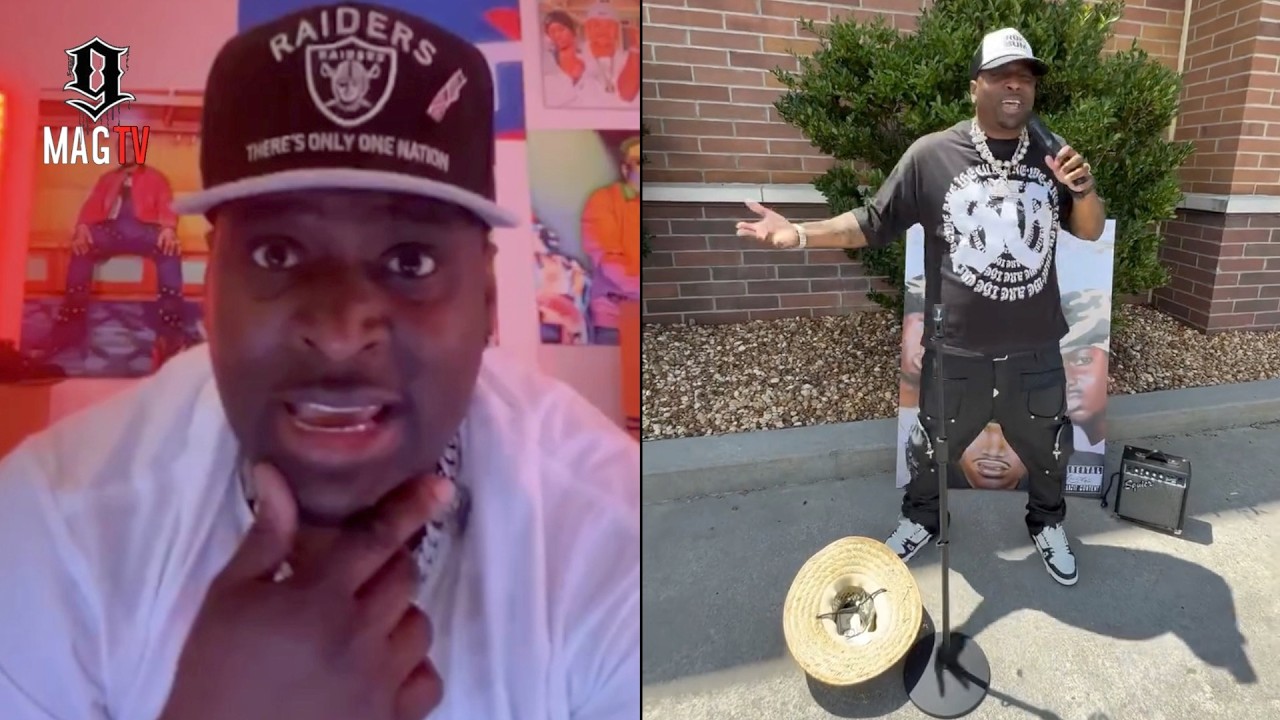 The confrontation began when a commenter on a live stream accused Turk of having “fallen off,” a taunt that has dogged many 90s-era rappers in the age of streaming and social media. Turk, visibly unbothered, responded by directly addressing the core assumption behind the insult. “Don’t get mad because my mother brand is what it is, man,” he said, his voice steady and deliberate. “So, before I be a bum that y’all think I’mma be a broke bum.” He then pivoted to a broader critique of the mindset that equates public visibility with failure, arguing that his presence on the street was a form of guerrilla marketing, a tactic he insists is more valuable than a traditional stage show.
The video transcript reveals a man deeply engaged in the mechanics of modern monetization, a stark contrast to the image of a washed-up artist. Turk detailed his understanding of the YouTube algorithm, explaining how a single eight-minute video can be loaded with multiple advertisements. “Every thousand view I might get $11, every thousand view I might get $30,” he stated, breaking down the revenue streams that critics often overlook. He emphasized that his work is not a single paycheck but a portfolio of income sources, including feature deals, product sales, and the long-term value of content ownership. This, he argued, is the difference between a hater and a businessman.

Turk’s response was not merely a defense but a masterclass in what he calls “building real ownership.” He urged his audience to understand that success is not a comparison game. “Your success is the goals that you set,” he said. “And when you achieve those goals, that’s success. Don’t let your success be what somebody else think your success should be.” This philosophy, he explained, is what allows him to remain calm in the face of public ridicule. He described the online attacks as “devilstrations,” a term he used to describe distractions designed to derail his focus. The street performance, in this context, was just another step in a journey that includes his family and a long-term vision for a business empire.

The rapper also touched on the psychology of his critics, suggesting that their need to put him in a box stems from their own insecurities. “You make them uncomfortable when you certain about who you is,” he said. He accused trolls of being stuck in a scarcity mindset, viewing every opportunity as a last chance rather than a stepping stone. “They feel like this all they got,” he explained. “Once you get in that mindset, dog, you become selfish, cutthroat snakeish conniving by any means necessary.” Turk contrasted this with his own approach, which he described as generous and collaborative, even giving away “samples” of his knowledge for free to build a larger audience.

The video, which aired on 9MagTV, is a raw and unfiltered look at the intersection of hip-hop, hustle, and the gig economy. Turk’s willingness to engage directly with his detractors, rather than ignoring them, is a testament to his belief in transparency as a marketing tool. He acknowledged that many people create 𝒻𝒶𝓀𝑒 pages to troll his live streams, but he views this attention as a form of validation. “They going to recommend they going to tell somebody else,” he said of his free content. “The world big. I got to give. That’s my 10%.” This philosophy, rooted in the idea that giving away value creates more value, is central to his current strategy.
As the music swelled in the background, Turk concluded his diatribe with a call to action for his followers. He urged them to block “unhealed mindsets” and to focus on their own elevation rather than the opinions of others. “What the devil meant for bad, God meant for good, man,” he said. “He going elevate me every time. Do it.” The performance, which some saw as a low point, was reframed as a high point of clarity and purpose. For Hot Boy Turk, the street corner is not a symbol of failure but a platform for a new kind of success, one that is measured not in chart positions but in ownership and resilience.