The war inside G-Unit has taken yet another explosive turn, with 50 Cent finally breaking his silence on the exact moment he decided Lloyd Banks had to go, and the reason is far more personal, ego-driven, and deeply rooted in pride than any fan could have ever guessed.
In a candid conversation that has just surfaced, the hip-hop mogul sat down and revealed the conversation that effectively ended his working relationship with one of the most technically gifted rappers to ever hold the G-Unit banner. The revelation is stunning not just for what was said, but for how petty and psychologically complex the entire dispute actually was.
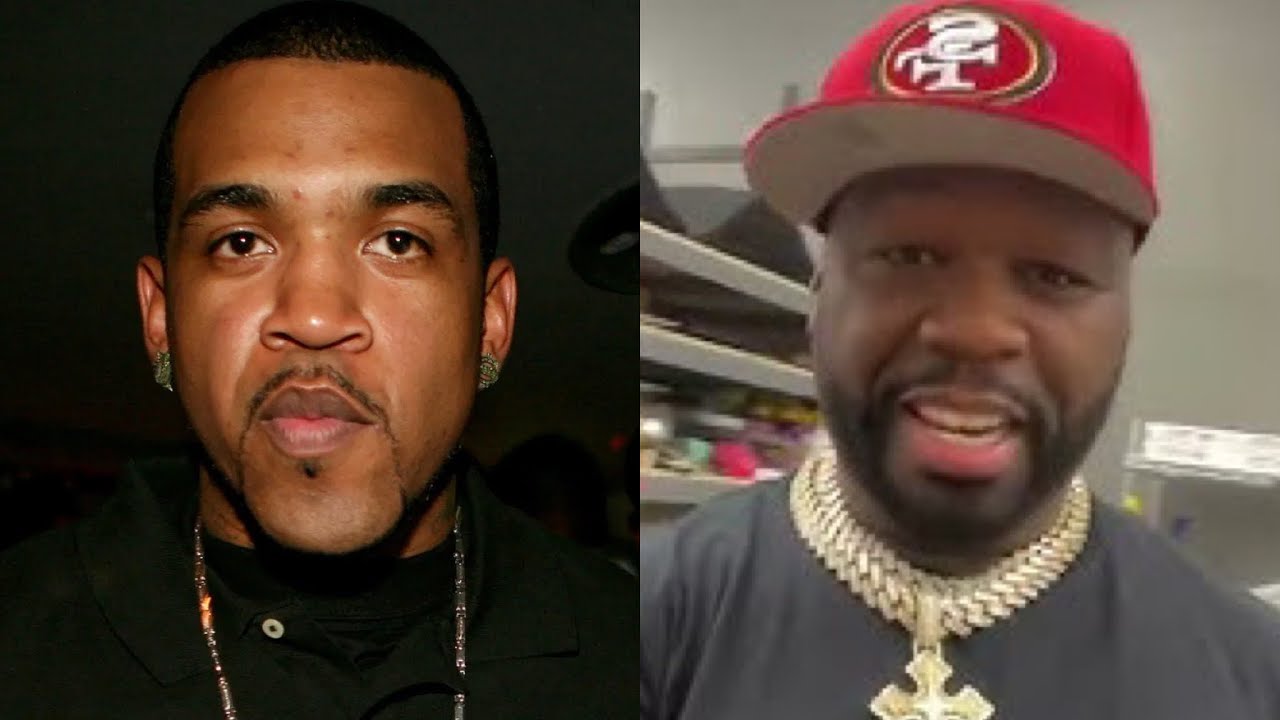 Fifty Cent, whose real name is Curtis Jackson, has never been one to shy away from confrontation. He has feuded with some of the biggest names in entertainment, business, and even politics. But this particular falling out cuts to the core of the original G-Unit lineup, the trio of 50 Cent, Lloyd Banks, and Tony Yayo that took over hip-hop in the early 2000s.
The story begins with what should have been a moment of triumph. Banks was featured on 50 Cent’s debut album “Get Rich or Die Tryin’,” specifically on the iconic track “Don’t Push Me” alongside Eminem. It was an astronomical co-sign, placing Banks in the studio with two of the most dominant forces in the genre at that time.
That album would go on to become one of the most celebrated debut records in hip-hop history, selling millions of copies and cementing 50 Cent’s status as a cultural force. Banks had a front-row seat to that historic moment, and he was given a feature slot on one of its standout tracks.
According to 50 Cent, that opportunity was a gift. Banks was the only member of the group who was given a chance to rap on that historic album, and 50 Cent made it painfully clear that this was not something he had to do. He emphasized that nobody knew who Lloyd Banks was before that moment.
The rapper turned television mogul pointed out that placing Banks on a record with Eminem was an extraordinary gesture, one that opened doors that would otherwise have remained permanently closed for a then-unknown artist from Southside Jamaica, Queens.
But the friction did not come from a lack of gratitude on the surface. It came from a bizarre and revealing conversation about live performances and song selection. Fifty Cent asked Banks what record he actually wanted to perform during his shows.
Banks was apparently stuck, unable to answer the question with any conviction.
That silence spoke volumes to 50 Cent, who has always prided himself on understanding the business of music and the importance of connecting with audiences through live performances. For him, a rapper who could not name his own standout record was a rapper who did not understand his own craft.
Fifty Cent, ever the businessman and artist, pointed to “P’s and Q’s” as the hardest record on Banks’ album. The track, which featured 50 Cent himself, was clearly the standout in 50’s eyes. When he asked Banks why he did not perform that song during his live shows, the response he received was nothing short of 𝓈𝒽𝓸𝒸𝓀𝒾𝓃𝑔.
Banks fired back with a question of his own. He asked 50 why he should perform that song, essentially questioning whether 50 wanted it performed because he was featured on it. The implication was that Banks resented being pushed toward a song that was a collaboration between the two of them.
It was a moment of defiance that caught 50 Cent completely off guard. He had expected Banks to embrace the suggestion and recognize the value of the track. Instead, Banks turned the question back on him, suggesting that 50’s motives were about self-promotion rather than Banks’ success.
Then came the real dagger. Banks pointed out that he had not been featured on 50 Cent’s last record. This was the moment the conversation turned from a simple creative disagreement into a full-blown confrontation that would ultimately spell the end of his time in G-Unit.
Fifty Cent was incredulous. The audacity of Banks, the man he had lifted from obscurity, questioning why he was not included on 50’s latest project was apparently too much to bear. Fifty Cent responded with the level of bluntness that has become his trademark, telling Banks that he was not obligated to put him on any of his records.
He made it clear that he viewed the creative process as his own domain, and that he would not be pressured into featuring artists simply because they were part of his crew. If the music did not call for their presence, they would not be on the record, period.
In fact, 50 Cent framed the entire dynamic in a way that flipped the script completely. He said that him being on Banks’ records was the favor, not the other way around. It was a stark and uncompromising declaration of where the power in the relationship truly lay.
The math was simple in 50 Cent’s eyes. He did not need Banks on his records. He was the biggest star in the group by a wide margin, and his commercial success did not depend on the involvement of any other member.
 He was the draw, the name, the brand.
The relationship had always been one where 50 was lifting up the other members, not relying on them for creative or commercial success. When Banks questioned that dynamic, when he suggested that 50 owed him something, the foundation of their partnership crumbled completely.
Fifty Cent went further, explaining that the entire exchange revealed something deeply troubling about Banks. He said Banks could not even articulate what the actual problem was when asked directly. The feelings of resentment had clearly been building for years, but Banks could not verbalize the source of his frustration.
The revelation has sent shockwaves through the hip-hop community, reigniting debates about loyalty, ego, and the complex relationships inside one of the most iconic rap groups of the modern era. It also sheds new light on 50 Cent’s managerial style and his expectations for artists under his umbrella.
This is not the first time G-Unit has experienced internal turmoil. The group has been plagued by infighting for nearly two decades. The Game was the first to clash with 50 Cent, and their feud became one of the most public and vicious in hip-hop history, complete with diss tracks, press conferences, and accusations traded across every possible medium.
The Game’s association with Dr. Dre and Aftermath Entertainment created an immediate tension that never fully resolved. He wanted to be viewed as an equal, while 50 Cent demanded deference to his leadership.
The collision of those two massive egos produced some of the most memorable beefs in rap history.
Young Buck followed, engaging in his own bitter war of words with 50 Cent, including financial disputes, 𝓵𝓮𝓪𝓴𝓮𝓭 phone calls, and accusations that played out in the media and courtroom for years. The financial entanglements of the group were clearly a source of ongoing friction.
Tony Yayo, notably, has remained loyal to 50 Cent throughout all of it. He has weathered every storm, supported 50 through every controversy, and appears to have solidified his place in the inner circle as a result. His status as the last remaining original member is a testament to his unwavering loyalty.
Now, with Banks added to the list of fallen soldiers, only Tony Yayo remains from the original core. The group that once dominated the charts and the streets simultaneously has been reduced to a shell of its former self, kept alive primarily by nostalgia and the occasional reunion performance.
The podcast host where this clip surfaced, O’Shea, offered his own perspective on the falling out. He ranked Banks as one of the best members of G-Unit from a pure rapping standpoint, placing him just behind 50 Cent and The Game in the group’s internal hierarchy. In his estimation, Banks was always a top-tier lyricist.
He acknowledged that being around 50 Cent is likely extremely difficult given the mogul’s personality, his willingness to say outrageous things, and the way he carries himself with an unshakable confidence that borders on arrogance. It is part of what made 50 Cent a star, but it also created constant friction with those closest to him.
The podcast host expressed hope that a G-Unit reunion could eventually happen, drawing comparisons to the Hot Boys, Bone Thugs-N-Harmony, and the St. Lunatics, all of whom found their way back to the stage together after years of separation and conflict. Nostalgia has become a powerful force in the modern music industry.
But the question remains whether a reunion is even possible given the depth of the wounds described in this latest revelation. The issues between 50 Cent and Banks appear to go beyond simple contractual disputes or financial disagreements. This was a fundamental clash of egos and expectations.
Fifty Cent’s perspective is clear. He views himself as the architect of G-Unit, the man who built the platform and gave the other members their opportunities. In his mind, any success they achieved was tied to his vision and his willingness to share the spotlight with them.
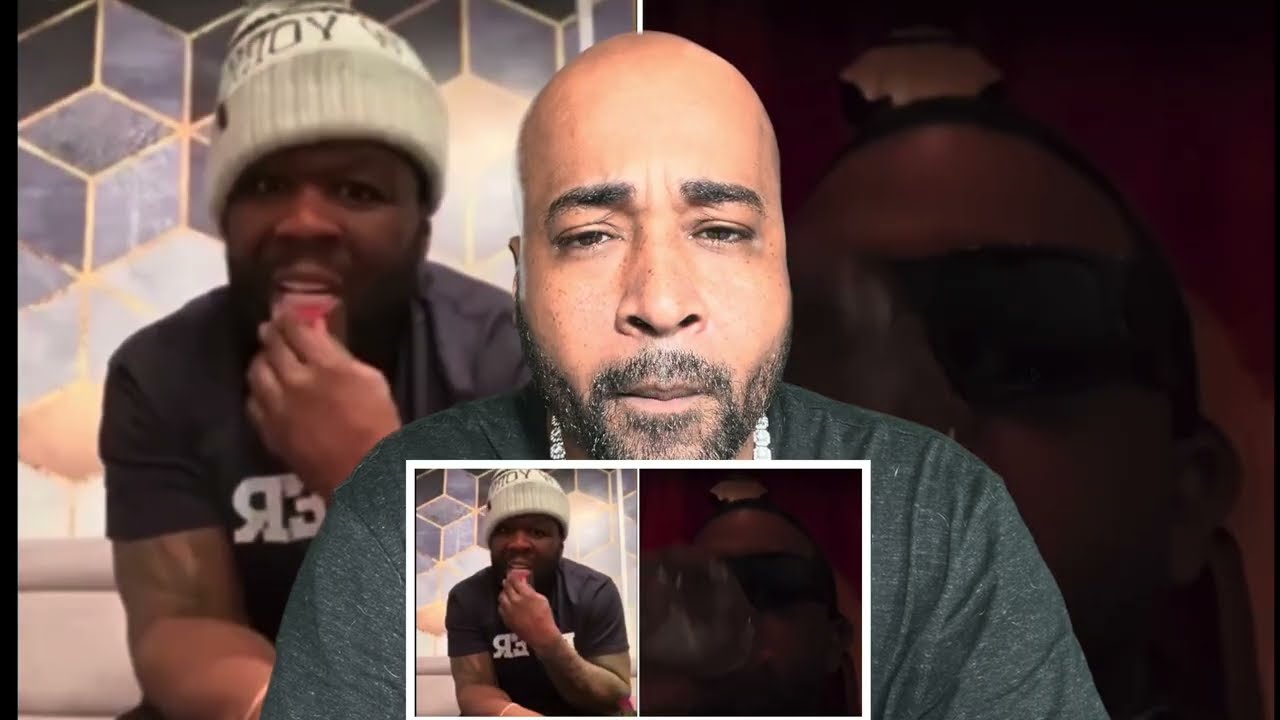 Banks, for his part, seems to have felt that he contributed his own artistry and lyrical prowess to the group, and that his absence from 50 Cent’s later projects was a sign of diminishing respect or a shifting relationship. The disparity between these two views is massive and irreconcilable.
The music industry is filled with stories of groups falling apart over money, drugs, and romantic entanglements. But this particular breakup appears to be rooted in something more subtle: the psychology of mentorship, gratitude, and the complicated feelings that arise when one person dominates a partnership.
For 50 Cent, the issue was about loyalty and recognition. He put Banks on a record with Eminem. He featured him on his debut album.
He gave him a platform that no one else in the group received. The expectation was loyalty and a recognition of that generosity.
For Banks, the issue appeared to be about equity and respect. He saw himself as a peer, not just a protégé. When he noticed he was being left off 50 Cent’s projects, he felt a shift in the dynamics that he was not willing to accept silently, so he spoke up.
The exchange about “P’s and Q’s” was merely the spark that ignited a powder keg of resentment that had been building for years. When Banks suggested that 50 only wanted him to perform the song because it was a collaboration, he opened the door to a much larger conversation about the nature of their relationship.
Fifty Cent did not hesitate to walk through that door and deliver a brutal verdict. He made it clear that his role in Banks’ career was a gift, not a mutual exchange. He positioned himself as the sole benefactor, not the partner, and he demanded that the relationship be understood strictly on those terms.
The clip has already begun to circulate widely across social media platforms, with fans and commentators weighing in on both sides of the argument. Some side with 50 Cent, pointing to the undeniable fact that he was the engine behind G-Unit’s commercial success. Others side with Banks, arguing that his lyrical talent was a crucial component of the group’s appeal.
What is undeniable is that this new information changes the historical narrative of G-Unit’s decline. Fans have long speculated about the reasons behind Banks’ departure, with many assuming it was a financial dispute or a desire to pursue a solo career. The reality, according to 50 Cent, is far more personal.
The legacy of G-Unit is complicated. The group produced some of the most iconic music of the early 2000s, with hits that remain staples of hip-hop playlists to this day. The chemistry between the members was electric, and their music reflected a cohesion that is rare in the genre.
But behind that music was a constant undercurrent of tension. The personalities involved were all strong, ambitious, and hungry for success. Fifty Cent’s drive was unmatched, but that same intensity made it difficult for others to stand alongside him as equals rather than subordinates.
The question now is what happens next. Will Banks respond to 50 Cent’s comments? Will this spark a new war of words between the two former collaborators?
Or will it remain a one-sided story, remembered as the moment when 50 Cent explained why he made the decision to cut ties?
For the fans who grew up on G-Unit, this is a painful reminder of what was lost. The group’s original lineup was special, and the chemistry between 50 Cent, Banks, and Yayo was the foundation upon which an entire empire was built. Seeing that foundation crack and crumble has been difficult to watch.
The podcast host’s commentary highlights a broader truth about the music industry. Groups that define an era often struggle to maintain their relationships as individual members grow, evolve, and develop their own identities. The very qualities that make a group successful can also be the qualities that tear it apart.
 In the case of G-Unit, the ambition that drove 50 Cent to superstardom was the same ambition that made it impossible for him to tolerate what he perceived as ingratitude or a lack of respect from his protégés. He built the machine, and he felt entirely entitled to dictate how it operated.
Lloyd Banks, for his part, has maintained a relatively low profile in recent years, releasing music independently and staying out of the kind of public feuds that have consumed other former G-Unit members. But this revelation may force him to address the story publicly.
The entertainment world will be watching closely to see how this develops. Fifty Cent has a track record of using controversy to fuel his projects, and this story is already generating significant buzz. It would not be surprising to see this topic addressed in future interviews or even in his television shows.
For now, the story stands as a cautionary tale about the fragility of creative partnerships and the absolute importance of communication. What started as a simple question about which song to perform live ended in the destruction of one of hip-hop’s most formidable alliances.
The term “favor” is central to understanding 50 Cent’s mindset. He views the opportunities he provided to Banks as favors, gestures of goodwill that were not required and should have been met with gratitude. When Banks failed to acknowledge that dynamic, he crossed a line that could not be uncrossed.
Banks’ perspective, while not fully articulated in the clip, seems to be rooted in a belief that the group was a collaborative effort. He brought his own talent to the table, and he expected that contribution to be recognized and reciprocated. The two worldviews were fundamentally incompatible.
The music business is brutal, and the stories of successful artists turning on each other are legendary. But there is something uniquely poignant about this particular breakup, perhaps because it involved the core members of a group that meant so much to so many fans around the world.
As the story continues to unfold, one thing is certain: the legend of G-Unit will never be the same. The image of a unified group conquering the hip-hop world has been replaced by a more nuanced and tragic picture of competing egos and broken relationships.
The fans are left to wonder what could have been. What if Banks had answered the question about “P’s and Q’s” differently? What if the two men had found a way to communicate their expectations clearly?
Would G-Unit have survived the challenges that ultimately destroyed it?
These are questions without answers. The past cannot be rewritten, and the wounds that were opened in that studio conversation have clearly never fully healed. Fifty Cent is still angry, and Banks is clearly still excluded from the inner circle.
The clip ends with a sense of finality. Fifty Cent makes it clear that he does not need Banks on his records, and he does not believe he is obligated to provide those opportunities. The door seems firmly closed, at least from 50’s perspective.
Whether Banks will respond, whether time will heal these wounds, and whether a reunion is ever possible remains to be seen. For now, the hip-hop community is left to process this latest chapter in the ongoing saga of one of its most iconic groups.
The story of G-Unit is a story of rise and fall, of triumph and tragedy, of collaboration and conflict. It is a story that continues to evolve, and this latest revelation adds a new layer of complexity to an already rich and complicated history.
As the entertainment world absorbs this news and the conversation continues online, the demand for more details, more context, and more understanding will only grow. The fans who made G-Unit a household name deserve to know the truth, and now, piece by piece, that truth is coming to light.


