A Las Vegas courtroom is set to become the stage for one of the most anticipated trials in hip‑hop history, as 60‑year‑old Dwayne “Keffe D” Davis faces murder charges for the 1996 shooting death of Tupac Shakur. The question now gripping the legal world: will Davis’s own words, captured in interviews, a memoir, and jailhouse calls, finally seal his fate?
For 27 years, the Shakur family has waited for justice. On September 7, 1996, the rap icon was gunned down on the Las Vegas Strip after a Mike Tyson fight. Davis, a former alleged Southside Compton Crips leader, was arrested in September 2023.
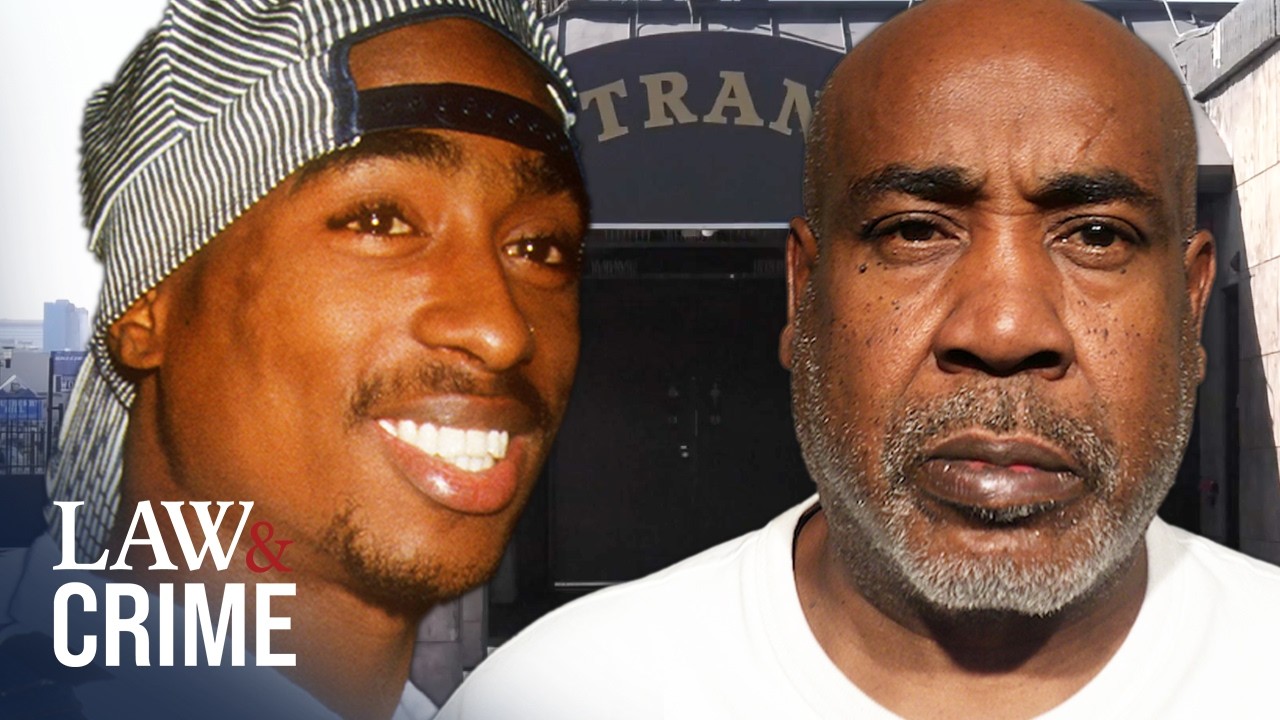 Prosecutors say he orchestrated the retaliation shooting that killed Shakur and wounded Death Row Records CEO Suge Knight.
Davis has pleaded not guilty, but the evidence against him is largely self‑generated. In a 2019 memoir, “Compton Street Legend,” he described being in the white Cadillac that pulled up alongside Shakur’s BMW and opening fire. He wrote that he provided the gun and was present when the shots were fired.
“Luckiest one, I guess. Hit that corner, gave a little chase. Boom, boom, boom,” he said in a recorded interview.
The defense argues the memoir was fictionalized for profit. Davis has claimed a ghostwriter wrote the book and that he never read it. But the judge ruled that Davis adopted those statements as his own, making them admissible.
The prosecution will also play jail calls where Davis appears to boast about his role and threaten others.
The case hinges on Nevada’s accomplice liability law. Even if Davis did not pull the trigger, prosecutors say he was the “shot caller” who devised the plan, obtained the weapon, and directed the shooters. The actual shooter, Davis’s nephew Orlando Anderson, died in 1998.
Under state law, Davis can be convicted of first‑degree murder even if he never fired a bullet.
 Davis’s own words are the cornerstone of the state’s case. In a 2008 interview with Las Vegas police, he admitted being in the car and handing the gun to the rear passengers. “I got in the car with … and we ran into them,” he said.
“We went up to the light on Sunset and Flamingo … and that BMW hanging out the window. Hey, this Tupac.”
The defense is expected to attack the reliability of those statements, arguing they were made under duress or as part of a plea deal for an unrelated case. Davis’s attorneys have also tried to suppress evidence seized from his home, claiming police exaggerated the urgency of the search. The judge denied that motion.
A separate legal twist emerged when Davis was released on a $750,000 bond in 2023, posted by music manager Cash Jones, known as Wack 100. Prosecutors grilled Jones about the source of the money, suggesting it was not a legitimate gift. Davis himself testified that he told his wife to “throw her … off my back” to get her to sign bond papers.
The bond was later revoked.
In April 2025, while awaiting trial, Davis was found guilty of battery by a prisoner and challenge to fighting after an altercation in jail. That conviction could be used to impeach his credibility if he testifies. “He used to be big bro … I do dirty,” Davis said in a jail call played in court.
 Davis has waived his right to have the jury decide his sentence if convicted of first‑degree murder. That means Judge Carli Kierny will determine whether he faces 20 years to life, 20 to 50 years, or life without parole. The gang and deadly weapon enhancements would add consecutive time.
The trial is expected to last several weeks. Jury selection is wrapping up, and opening statements could begin as early as next week. The prosecution will call former investigators, forensic experts, and possibly Suge Knight, who is serving a 28‑year sentence for a fatal hit‑and‑run.
Knight has said he does not want to testify, calling it “worse than taking a gun and shooting that man in the head.”
Davis’s defense has also subpoenaed Sean “Diddy” Combs, though not to implicate him. Instead, they want Combs to deny allegations that he was involved, hoping to show that Davis is a storyteller who exaggerates for attention. The judge has not yet ruled on that subpoena.
The case has drawn global attention because it marks the first criminal trial in the murder of Tupac Shakur, a cultural icon whose death has spawned countless conspiracy theories. For decades, the investigation stalled. Then Davis began talking—to police, to reporters, and in his book.
“He put himself squarely in the middle of the conspiracy,” said retired LAPD detective Greg Kading, who interviewed Davis in 2008 and 2009. “He acquired the gun, gave the gun to the shooter, and was present in the vehicle when they hunted down and located both Tupac and Suge Knight.”
 The prosecution will argue that Davis’s own words are the most damning evidence. “After all this time, will someone finally face justice?” the sidebar host asked.
The answer may rest on whether a jury believes that a man who confessed in print, on video, and in phone calls can now claim he was just telling stories.
Davis remains in custody at the Clark County Detention Center. He has been diagnosed with cancer and has complained about the jail’s food, saying it is “not good for an ex‑cancer patient.” His health could become a factor during the trial.
The Shakur family has issued statements expressing hope that the trial will bring closure. “For 27 years, the family of Tupac Shakur has been waiting for justice,” Sheriff Kevin McMahill said at the 2023 press conference announcing the arrest.
As the trial begins, the world will watch to see if Keffe D’s own words—the ones he spoke into microphones and wrote on pages—will be the very evidence that convicts him. The answer could come within weeks, but the impact will echo for decades.