A 29-year-old rapper was murdered and a second man left fighting for his life after a staggering barrage of gunfire tore through a Northwest Washington, D.C., street Wednesday afternoon, even as a separate and chilling 12-hour ultimatum issued to rap legend Fat Joe threatened to ignite a new conflict inside the hip-hop world.
The slain artist has been identified by associates and a widely circulated video report as Keyon Malik, a rising performer known professionally as Fat Swag, who was gunned down in the 1200 block of 5th Street Northwest just after 2 p. m. on July 29, 2026.
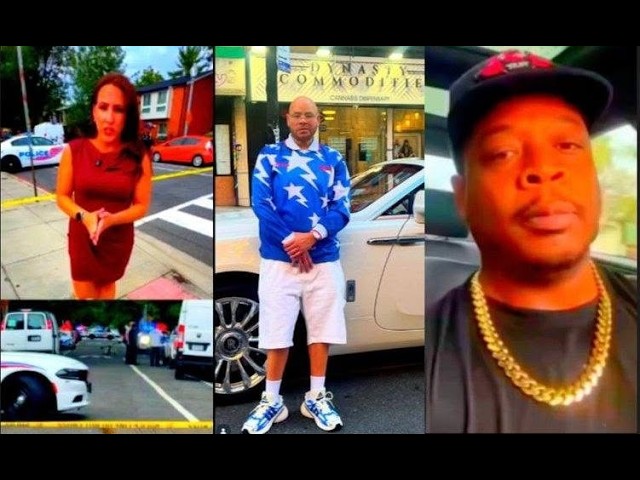 The Metropolitan Police Department confirmed two men were struck by gunfire, with one pronounced dead at a hospital and the other listed in serious condition.
A graphic video posted to the Garrison News YouTube channel, narrated by a figure calling himself OG Product, makes the explosive claim that Fat Swag was hit by gunfire more than 100 times, an allegation that police have yet to officially confirm or deny. The narrator, who describes himself as coming straight from the block, laments the death of a “very, very talented young youth” whose music career was just beginning to accelerate.
“Homeboy music shot. Sell off, sold out,” the narrator says in the video, paying tribute to the fallen artist before expressing sorrow that the next studio session Fat Swag will experience will be “upstairs in the pearly gates.” The footage shows a chaotic and heavily armed police presence converging on the corner of N and 5th Streets, with emergency responders desperately working to save the wounded.
Aerial and ground-level video from the scene reveals at least 36 evidence markers scattered across the pavement, each marking a shell casing, bullet fragment, or other forensic clue, painting a picture of an attack of extraordinary intensity. The sheer volume of expended ammunition suggests a coordinated assault rather than a simple street dispute, and authorities are treating the case as a targeted homicide.
This is not the first time gunfire has shattered the peace of this specific corridor. Residents recall with anguish that a 5-year-old child was among multiple people shot here earlier this year, and the community has been living in a state of heightened anxiety and grief ever since. Wednesday’s violence has renewed painful questions about public safety in the neighborhood.
The D. C. residents who live within earshot of the shooting told reporters they were deeply shaken but not surprised when they heard the thunderous pops of gunfire echo through the afternoon air.
That grim resignation is a damning indictment of the persistent cycle of violence that continues to plague the nation’s capital and other urban centers across America.
As of Wednesday evening, no arrests have been announced in connection with the shooting, and police are desperately seeking witnesses and information. The department has activated its anonymous tip line and is pleading with anyone who saw the attack or has knowledge of the perpetrators to come forward immediately.
But the shooting is only one half of an explosive story that has set social media ablaze. In the very same video that reported on the D. C.
murder, a hardened former convict said to have just completed a 20-year federal prison sentence in Rochester stepped forward with a bone-chilling message directed squarely at Fat Joe, the legendary Terror Squad leader.
The unidentified man, described in the video as “a old G from Rochester who just served 20 impeccable years for the white man,” wasted no time in issuing his demand. His voice steady and his words deliberate, he invoked a name that has haunted hip-hop circles for years: Scotty Spina, a former Terror Squad affiliate currently behind bars.
“Yo, Fat Joe. It’s been 20 years as a man in prison. We deal with paperwork, homie.
And we don’t do all that slander,” the man says, staring directly into the camera. “I got a question for you. Who is Scotty Spina?
Who is Scotty Spina? What did they do to Scotty Spina?”
The accusation is stark and potentially devastating for a veteran artist who has spent thirty years cultivating an unassailable street reputation. The man alleges that Fat Joe cooperated with authorities in the case against Spina, framing the young rapper as the victim of a catastrophic betrayal by his own mentor.
“Who is Scotty Spina? Terror Squad. What did he do to Scotty Spina?”
the man repeats relentlessly, refusing to let the question go. “You ain’t got 24 hours to respond. You got 12 hours to respond.
 You got 12 hours to respond.”
The 12-hour deadline is not merely rhetorical. The man’s tone makes unmistakably clear that the consequences of silence will be severe, with the narrator later paraphrasing the threat as “drastic measures will be taken” should Fat Joe fail to check in before the window expires.
The demand appears to be retaliation for allegations that have been swirling around 38 Spesh, the respected Rochester rapper and CEO of TCF Music Group, who has been accused in some corners of being a government informant. The man in the video adamantly defends Spesh, dismissing the accusations as baseless trash talk from jealous rivals.
The narrator, OG Product, explains that someone who had accused 38 Spesh of cooperating with law enforcement has now “backtracked” and admitted to fabricating the story, calling the original accuser “a kyapper” who was spreading lies. The retraction, however, has done little to cool the boiling outrage.
The video then launches into a profanity-laced tirade against Fat Joe, accusing him of allegedly releasing “𝒻𝒶𝓀𝑒 paperwork” designed to paint 38 Spesh as a snitch. The man labels Fat Joe a “government provocateur,” an “informer boy,” an “Uncle Tom,” and an “agent of chaos” as the temperature of the monologue continues to rise.
This is the gravest insult that can be leveled in the hyper-masculine, credibility-obsessed realm of street rap. An accusation of snitching is a death sentence in some circles, and to have it hurled at an elder statesman like Fat Joe represents a dangerous escalation of a feud that has clearly been simmering for years.
The invocation of Scotty Spina’s name is a strategic choice, as Spina is a former Terror Squad soldier who is currently incarcerated, and the implication is that Fat Joe traded his freedom for his own liberty by providing testimony or evidence against him. The man’s insistence on repeating the question is designed to pressure Fat Joe into a public response.
According to the video’s narrator, the entire dispute stems from accusations that Fat Joe “sang like Diana Ross, sang like Lionel Richie, sang like the Isley Brothers” in cooperating against Spina, a colorful metaphor for cooperation that is now being weaponized to portray the rapper as a traitor.
The stakes could not be higher. Fat Joe, a three-decade veteran of the rap game, has built his entire public persona on being an untouchable street legend, a figure whose Bronx roots and Terror Squad empire have given him an almost mythic status in hip-hop. An unaddressed snitch accusation could destroy that legacy.
The video has spread like wildfire across Twitter, Instagram, and YouTube, with fans and detractors alike weighing in on the validity of the allegations. Hip-hop media outlets are scrambling to verify the claims, though the accuser remains anonymous, a shadowy figure with undeniable prison credibility.
The fact that the accuser claims to have served “20 impeccable years” without breaking is central to his authority. He presents himself as a man who has been tested by fire, who has endured the harsh realities of federal prison, and who will not tolerate what he perceives as slander against his people.
“This is the homie calling out Fat Joe and letting Fat Joe know, no matter of fact, you don’t have 24 hours, beloved,” the narrator says, framing the ultimatum as a matter of honor and respect. “He’s giving Fat Joe 12 hours to respond and check in.”
The two stories, one of a young rapper gunned down in cold blood and another of a veteran superstar facing a violent ultimatum, may seem disconnected, but they are woven together by the same thread of street violence that pervades the genre. The same video that mourns Fat Swag also threatens Fat Joe.
Fat Swag, the slain 29-year-old rapper from D. C. , had just released a new single titled “GG T M Y N,” which the narrator translates as “Get That Money, Young Zipper.”
The track, released only days before his death, has now taken on the eerie quality of a prophecy unfulfilled.
Fans have flooded streaming services in the wake of his murder, pushing his music to new heights that he will never witness. The narrator notes that for Fat Swag, “the next time he going to see a studio session is upstairs in the pearly gates,” a heartbreaking acknowledgment of a life cut devastatingly short.
 The narrator offers his condolences, saying, “Rest up, boom in peace, boom easy. Boom in heaven to the fallen soldier,” before delivering the Fat Joe ultimatum in the same breath, an aesthetic whiplash that underscores how normalcy and menace coexist in the streets.
For law enforcement, the video presents a twofold challenge. First, it contains potential evidence and commentary about an active homicide investigation. Second, it features explicit threats against a high-profile celebrity, raising the specter of vigilante violence erupting in the coming hours.
The D. C. Metropolitan Police Department has not commented on the Fat Joe ultimatum, but sources indicate that investigators are acutely aware of the video’s contents.
The risk of retaliatory violence is considered significant, particularly given the history of violence between the factions involved.
The shooting that killed Fat Swag is itself an extraordinary event, with more than 100 shell casings recovered from the scene, according to the video. Whether the victim was truly struck more than 100 times remains to be confirmed, but the sheer volume of evidence markers at the scene speaks to a frenzied attack.
The 1200 block of 5th Street Northwest is a neighborhood that has become accustomed to trauma. The earlier shooting that wounded a 5-year-old child sent shockwaves through the community, and Wednesday’s murder has reopened wounds that had barely begun to heal.
Residents describe a persistent fear of being caught in the crossfire, of children being harmed in their own front yards. Community activists have repeatedly pleaded with city officials for increased police presence, mental health services, and youth intervention programs to address the root causes of the violence.
The death of Fat Swag is part of a broader and deeply troubling trend of young rappers dying violently across the United States. From the murders of hip-hop hopefuls in Atlanta to the feud-related killings in Los Angeles and New York, the genre continues to lose its brightest stars to gunfire.
Each new death brings renewed calls for change, but the cycle continues unabated. The confluence of rap music, street credibility, and daily life in some of America’s most marginalized communities creates a toxic cocktail that seems almost impossible to remedy.
Meanwhile, the 12-hour clock ticking down for Fat Joe has captured the attention of millions. The ultimatum is a brutal test of the rapper’s nerve and his standing in the streets, forcing a choice between public humiliation and potentially deadly confrontation.
In the history of hip-hop, public feuds have often escalated into physical violence. The East Coast-West Coast wars of the 1990s, which claimed the lives of Tupac Shakur and The Notorious B. I.
G. , stand as a grim reminder of what can happen when rap beef turns fatal.
Fat Joe, now in his fifties, is no longer a young man, and the prospect of him responding to a street ultimatum from an ex-convict is fraught with peril. His silence, however, could be interpreted as an admission of guilt by those already convinced of his betrayal.
The figure of Scotty Spina looms large over this entire 𝒶𝒻𝒻𝒶𝒾𝓇. Described in the video as a former Terror Squad member, Spina’s incarceration is the foundational grievance on which the Rochester OG builds his case. The man’s refusal to let the name drop suggests a deep personal connection to Spina’s fate.
“Who is Scotty Spina? What did they do to Scotty Spina?” he repeats, demanding answers from a man who has thus far remained silent.
This is not a question but an accusation, an attempt to force a reckoning in the public eye.
 The video’s production quality is raw and unpolished, adding to its authenticity. The man speaks directly to the camera, his face partially obscured in shadow, his voice carrying the weight of two decades in federal custody. It is a powerful and disturbing piece of media.
Whether the threat of “drastic measures” is credible remains unclear, but the history of hip-hop suggests it should not be dismissed. Men who have served long prison sentences do not typically make threats they are unwilling to back up, and the man’s demeanor indicates a willingness to follow through.
Fat Joe’s representatives have not responded to requests for comment, and his social media accounts have fallen silent in the hours since the video was posted. The hip-hop world watches with bated breath, wondering whether the veteran will respond or allow the clock to expire.
The timing could not be more precarious. With tensions already running high over the D. C.
shooting and subsequent podcast commentary, the last thing law enforcement needs is a second outbreak of violence. The next 12 hours will be critical.
The narrator, OG Product, closes the video with an appeal for viewers to like, comment, share, and subscribe, a familiar refrain that feels bizarrely out of place given the gravity of the content. He signs off with “what’s understood don’t have to be explained on the dead homies.”
For the family of Fat Swag, the feud between Fat Joe and the Rochester faction is a distant distraction. They are left to make funeral arrangements for a 29-year-old man gunned down in broad daylight, another life extinguished in an epidemic of gun violence.
A fundraising campaign has been established to support the family with funeral costs, and a candlelight vigil is planned for Thursday evening at the exact corner where the shooting occurred. Community members are expected to gather to honor the fallen rapper and demand justice.
Police have not yet established a motive for the shooting that killed Fat Swag, nor have they identified any suspects. The investigation is in its earliest stages, and detectives are canvassing the neighborhood for surveillance footage and witnesses.
The reward for information leading to an arrest and conviction is expected to be substantial, with city leaders anxious to demonstrate that they are taking the case seriously. Whether the perpetrators will be caught remains an open question.
The connection, if any, between the D. C. murder and the ultimatum to Fat Joe is unconfirmed.
It is possible that they are entirely unrelated events that happened to collide in the same 𝓿𝒾𝓇𝒶𝓁 video, but in the interwoven world of street rap, coincidences are often anything but.
As the sun sets on Washington, D. C. , the city holds its breath.
A family mourns in silence, a wounded man fights for his life in a hospital bed, a legendary rapper faces a deadline with profound implications, and a community that has seen too much death wonders what the morning will bring.
The streets are talking, and the message is grim. In a world where a rapper can be shot more than 100 times in the middle of the afternoon and a hip-hop icon can be given 12 hours to answer for his past, there is no safety, no sanctuary, and no end to the violence. The only question is who will be next.